
TrendCrypt Guide
How to Store Crypto Safely
Learn how to store crypto safely using hot wallets, cold wallets, hardware wallets, seed phrase backups, and practical security habits.
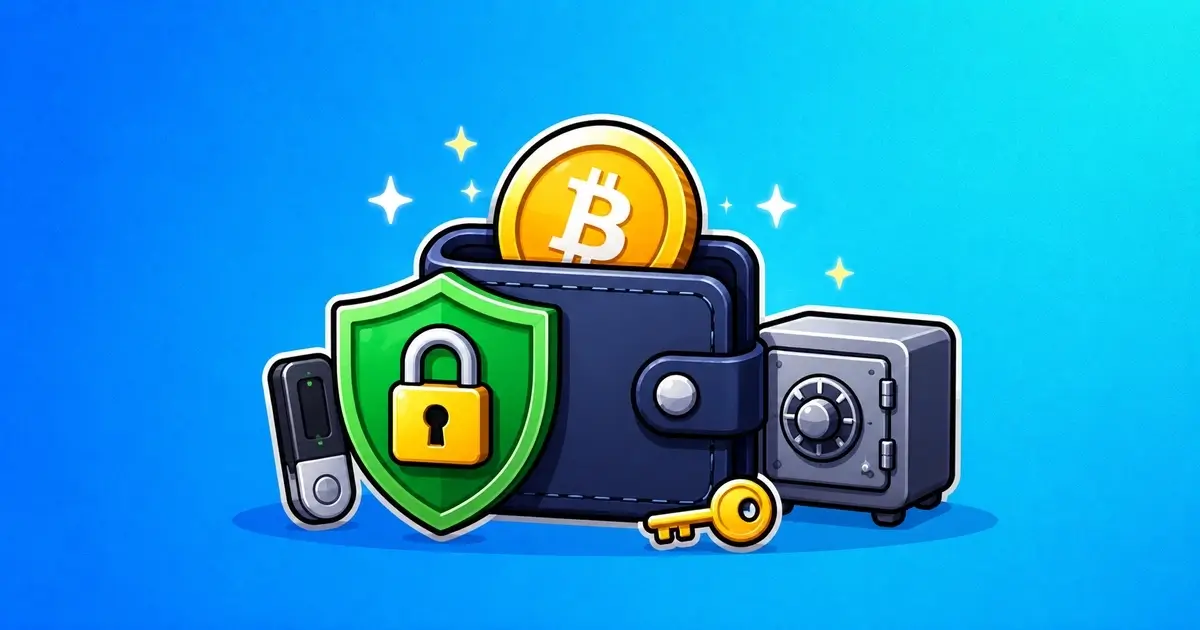
Storing crypto safely means protecting the private keys, seed phrases, devices, and accounts that control your funds. The safest setup usually combines a cold wallet for long-term storage, a smaller hot wallet for everyday transactions, strong account security, and careful habits around phishing, fake apps, and wallet approvals.
This guide is for beginners who want to understand crypto wallet safety without confusing technical language. It is also useful for crypto users who deposit, withdraw, or move funds regularly and want to reduce avoidable mistakes.
For related safety reading, see Compromised Crypto Wallet: What to Do, Are Crypto Casinos Safe?, Crypto Casino Withdrawal Times, How Crypto Casinos Work, Editorial Policy, and Responsible Gaming.
Key Takeaways
- Crypto safety starts with protecting your private keys and seed phrase
- Hot wallets are useful for convenience but should not hold large balances
- Cold wallets and hardware wallets are better for long-term storage
- Exchange wallets are convenient but depend on the platform’s security
- Seed phrases should never be shared, photographed, emailed, or stored in cloud apps
- Fake wallet apps, phishing links, malware, and SIM swaps are major risks
- Token approvals should be reviewed if you use DeFi or connect wallets to apps
- A small test transaction can prevent expensive address or network mistakes
What Does Crypto Storage Mean?
Crypto storage does not mean coins are physically stored inside an app, exchange, or device.
Most crypto assets exist on a blockchain.
What you actually protect is access.
That access usually depends on:
- private keys
- seed phrases
- wallet backups
- exchange login credentials
- two-factor authentication
- devices used to approve transactions
If someone gets control of your private keys or recovery phrase, they may be able to move your crypto.
If you lose your seed phrase and your wallet device breaks, you may permanently lose access.
This is why crypto storage is really about key management.
Why Private Keys Matter
A private key is what allows a wallet to sign transactions.
A seed phrase is usually a human-readable backup that can restore the wallet’s private keys.
That means a seed phrase is not just a password.
It is closer to a master key.
Anyone who has it may be able to restore the wallet somewhere else and control the funds.
For most users, the basic rule is simple:
Never share your seed phrase with anyone.
No real wallet support agent, exchange employee, giveaway, investment platform, or security tool should need your recovery words.
Hot Wallets vs Cold Wallets
A hot wallet is connected to the internet.
A cold wallet keeps private keys offline or away from normal internet exposure.
Both can be useful, but they should not be used for the same purpose.
Hot Wallet vs Cold Wallet
| Wallet Type | Connection | Best Used For |
|---|---|---|
| Hot Wallet | Connected to the internet | Small balances and daily transactions |
| Cold Wallet | Kept offline | Long-term storage and larger balances |
| Hardware Wallet | Physical signing device | Better protection for self-custody |
| Exchange Wallet | Custodial account | Temporary trading or beginner access |
| Paper Wallet | Printed private key or seed | Usually risky and outdated |
What Is a Hot Wallet?
A hot wallet is usually a mobile app, browser extension, or desktop wallet.
Examples include wallets used for:
- small daily payments
- connecting to blockchain apps
- testing transactions
- moving funds quickly
- interacting with DeFi or Web3 tools
Hot wallets are convenient because they are fast and easy to use.
The tradeoff is exposure.
Because they run on internet-connected devices, they can be affected by:
- phishing websites
- malicious browser extensions
- fake wallet apps
- clipboard malware
- infected downloads
- unsafe dapp permissions
A hot wallet is best treated like a spending wallet.
Keep only what you need for near-term use.
What Is a Cold Wallet?
A cold wallet is designed to keep private keys offline.
This can include:
- hardware wallets
- offline signing devices
- advanced air-gapped setups
- carefully managed multisig systems
Cold storage is usually better for larger balances and long-term holding.
The main benefit is that your private keys are not exposed to a normal internet-connected phone or laptop.
However, cold storage is not magic.
You still need to protect:
- the seed phrase
- the device PIN
- the recovery backup
- the transaction details shown on the device
- the physical location of the backup
A cold wallet can protect against many online threats, but it cannot protect you from approving the wrong transaction or giving away your seed phrase.
Hardware Wallets Explained
A hardware wallet is a physical device used to store private keys and approve transactions.
The important safety benefit is that the private key stays inside the device.
When you send crypto, the transaction is approved on the hardware wallet instead of exposing the private key directly to your computer or phone.
A hardware wallet is usually a strong choice for:
- Bitcoin storage
- Ethereum and token storage
- long-term holdings
- users who want self-custody
- people who already understand seed phrase backups
Before using a hardware wallet:
- buy from the official source or a trusted seller
- initialize the wallet yourself
- write down the seed phrase offline
- never use a pre-filled seed card
- check addresses on the device screen
- keep firmware and wallet software updated from official sources
If a device arrives with a seed phrase already written down, do not use it.
That is a serious warning sign.
Custodial vs Non-Custodial Wallets
Crypto storage also depends on who controls the keys.
A custodial wallet means a platform manages key storage for you.
A non-custodial wallet means you control the seed phrase and private keys yourself.
Custodial vs Non-Custodial Storage
| Storage Type | Who Controls Access | Main Tradeoff |
|---|---|---|
| Custodial Wallet | A platform controls key management | Easier recovery but more platform risk |
| Non-Custodial Wallet | You control the seed phrase | More control but full backup responsibility |
| Hardware Wallet | You approve transactions on a device | Strong choice for long-term storage |
| Multisig Wallet | Multiple approvals required | Useful for advanced users or teams |
| Separate Wallets | Different wallets for different uses | Reduces damage if one wallet is exposed |
Exchange Wallets
An exchange wallet is a custodial wallet.
It can be useful for:
- buying crypto
- selling crypto
- short-term trading
- converting assets
- beginners who are still learning
The downside is that you rely on the platform.
Risks may include:
- account freezes
- withdrawal delays
- platform hacks
- phishing attacks
- login compromise
- identity verification issues
- platform insolvency
For long-term storage, many users prefer moving funds from an exchange to a wallet they control.
However, self-custody also creates responsibility.
If you make a mistake with your seed phrase or transaction address, there may be no support team that can reverse it.
How to Store a Seed Phrase Safely
Your seed phrase should be stored offline.
Good practices include:
- write it down clearly
- keep it away from cameras
- avoid screenshots
- avoid cloud storage
- avoid email drafts
- avoid password managers for seed phrases unless you fully understand the risk
- keep it somewhere protected from fire, water, theft, and accidental disposal
- consider a metal backup for larger balances
- test recovery with a safe process before storing serious funds
Do not type your seed phrase into random websites.
Do not enter it after clicking a link in an email, ad, social post, or direct message.
Do not share it with “support.”
Do not send it to yourself.
Do not save it in a notes app.
A seed phrase should be treated like direct access to your funds.
Are Paper Wallets Safe?
Paper wallets were more common in earlier crypto years.
They usually involve printing or writing a private key or seed phrase on paper.
Today, paper wallets are risky for most users because they can create many problems:
- unsafe generation process
- printer memory exposure
- QR code damage
- poor randomness
- physical loss
- fire or water damage
- difficulty spending safely
- accidental full-balance exposure
For most people, a reputable hardware wallet with a properly stored seed phrase is safer than creating a paper wallet.
Paper backups can still be part of seed phrase storage, but “paper wallet” as a full storage method is usually not beginner-friendly.
Phishing and Fake Wallet Apps
Phishing is one of the biggest crypto risks.
A phishing attack tries to trick you into giving away access.
Common examples include:
- fake wallet websites
- fake browser extensions
- fake mobile apps
- fake airdrops
- fake customer support
- fake security warnings
- fake transaction approval pages
- social media impersonators
A useful habit is to avoid clicking wallet links from ads, replies, DMs, or random search results.
Go directly to official websites.
Bookmark important wallet pages after verifying them.
When installing a wallet app, check:
- official website links
- developer name
- reviews and age of the app
- whether the app asks for a seed phrase at the wrong time
- whether the download source is legitimate
A wallet app that asks for your seed phrase during a suspicious “sync,” “unlock,” or “security update” should be treated as dangerous.
Malware, SIM Swaps, and Device Risk
Crypto security is not only about wallets.
Your phone, laptop, browser, email account, and mobile number can all become weak points.
Common risks include:
- malware that changes copied wallet addresses
- keyloggers that capture passwords
- browser extensions that read sensitive data
- remote access scams
- SIM swaps used to intercept account recovery codes
- compromised email accounts used to reset exchange passwords
Practical protection steps include:
- use a password manager for normal accounts
- enable two-factor authentication
- prefer authenticator apps or security keys over SMS when possible
- keep devices updated
- avoid pirated software
- remove unused browser extensions
- use separate emails for important crypto accounts
- never install remote access software because someone tells you to “secure” your crypto
If a stranger says your wallet is at risk and asks you to move funds urgently, slow down.
Urgency is a common scam tactic.
Wallet Approvals and Smart Contract Permissions
If you use Ethereum, stablecoins, DeFi, NFTs, or Web3 apps, you may see token approval requests.
A token approval gives a smart contract permission to move a specific token from your wallet.
Approvals are normal in many blockchain apps.
The risk is that some approvals are too broad or remain active long after you stop using the app.
Before approving anything, check:
- the website URL
- the token being approved
- the amount being approved
- whether the approval is unlimited
- whether the contract is trusted
- whether the transaction shown in your wallet matches what you expected
If you actively use Web3 apps, review old approvals from time to time.
Removing unnecessary approvals can reduce future risk.
Common Crypto Storage Mistakes
Most crypto losses do not happen because blockchain technology “breaks.”
They often happen because of preventable user mistakes.
Common Crypto Storage Mistakes
| Mistake | Why It Is Risky |
|---|---|
| Saving Seed Phrase Online | Cloud leaks or device malware can expose funds |
| Sharing Recovery Words | Anyone with the phrase can restore the wallet |
| Using Fake Wallet Apps | Malware can steal keys or approvals |
| Ignoring Token Approvals | Old permissions may let contracts move tokens |
| Skipping Test Transactions | Wrong addresses or networks can cause permanent loss |
Use Small Test Transactions
A test transaction is one of the simplest safety habits.
Before sending a large amount, send a small amount first.
This helps confirm:
- the address is correct
- the network is correct
- the wallet can receive the asset
- the platform accepts that token
- the withdrawal process works as expected
This is especially important when using:
- new wallets
- new exchanges
- stablecoins on multiple networks
- crypto withdrawals
- hardware wallet addresses
- addresses copied from websites
Crypto transactions are usually irreversible.
A small test can prevent a large mistake.
Multi-Wallet Strategy
A safer crypto setup often uses more than one wallet.
For example:
- one cold wallet for long-term holdings
- one hot wallet for daily activity
- one separate wallet for testing new apps
- one exchange account for trading only when needed
This reduces the damage if one wallet is compromised.
A simple structure can look like this:
- cold wallet: long-term savings
- hot wallet: small spending balance
- test wallet: risky or unfamiliar apps
- exchange wallet: temporary buying or selling
Do not connect your main storage wallet to every app.
The more often a wallet interacts with unknown websites, the more exposed it becomes.
Multisig Basics
Multisig means multiple approvals are required before funds can move.
For example, a wallet may require two out of three keys to approve a transaction.
This can protect against one lost or compromised key.
Multisig can be useful for:
- teams
- businesses
- advanced self-custody users
- larger balances
- inheritance planning
However, multisig is more complex than a normal wallet.
If it is set up badly, it can create confusion or lock funds.
Beginners should usually start with simpler wallet security before moving to multisig.
Inheritance and Emergency Access
Crypto storage should include a plan for emergencies.
If only you know how to access your wallet, your funds may become impossible for trusted family members or heirs to recover.
A basic emergency plan may include:
- where the wallet backup is stored
- what device is needed
- which wallet software is used
- what assets exist
- who should be contacted
- what should never be shared publicly
Do not put your seed phrase directly into a normal will or public document.
A safer plan separates sensitive recovery details from general instructions.
For larger balances, consider professional legal and security advice.
Extra Safety Tips for Crypto Casino Users
Crypto users who deposit and withdraw frequently face extra operational risk.
The main danger is not only the platform.
It is also the repeated movement of funds between wallets, networks, and addresses.
Important habits include:
- use a separate wallet for deposits and withdrawals
- do not use your long-term cold wallet for frequent payments
- check the network before sending stablecoins
- confirm minimum deposit rules before sending funds
- save transaction IDs
- test withdrawals with small amounts first
- avoid keeping large balances on any entertainment platform
- understand that fast deposits do not guarantee fast withdrawals
For safer context, read Compromised Crypto Wallet: What to Do, Are Crypto Casinos Safe?, Crypto Casino Withdrawal Times, and KYC vs No KYC Crypto Casinos.
Best Crypto Storage Setup for Beginners
A beginner-friendly crypto storage setup should be simple.
Too much complexity can create mistakes.
A practical setup may include:
1. Use a reputable exchange only for buying or selling
Keep exchange balances limited.
Enable strong account security.
Use two-factor authentication.
2. Use a hot wallet for small transactions
Keep only a small amount in it.
Do not connect it to random websites.
Avoid signing transactions you do not understand.
3. Use a hardware wallet for long-term storage
Store larger balances offline.
Write the seed phrase down safely.
Never share or digitize the recovery phrase.
4. Send test transactions
Before moving a large amount, test with a small transfer.
Check the address, asset, and network.
5. Separate risky activity from savings
Do not use your main wallet for every app, promotion, token claim, or experimental platform.
Separate wallets reduce the blast radius of mistakes.
Advanced Crypto Storage Tips
More experienced users may consider:
- multisig wallets
- metal seed backups
- dedicated clean devices
- separate wallets by purpose
- hardware wallet passphrases
- address allowlisting on exchanges
- periodic approval reviews
- security keys for exchange accounts
- documented emergency access plans
Advanced tools can improve security, but only when understood clearly.
Do not add complexity just because it sounds safer.
A confusing setup can be more dangerous than a simple one.
Final Thoughts
Crypto storage is about protecting access.
The most important safety habits are simple:
- never share your seed phrase
- keep long-term funds in cold storage
- use hot wallets only for smaller active balances
- avoid fake wallet apps and phishing links
- review wallet approvals
- use test transactions
- keep exchange security strong
- plan for recovery before something goes wrong
There is no perfect storage method for every person.
The safest setup depends on how much crypto you hold, how often you move it, and how comfortable you are with self-custody.
For most users, the best approach is a layered setup: small hot wallet for activity, hardware wallet for long-term storage, careful backups, and slow decision-making before signing anything.
FAQ
What is the safest way to store crypto?
For many users, the safest setup is a hardware wallet for long-term storage, a small hot wallet for daily use, and an offline seed phrase backup.
Is a hot wallet safe?
A hot wallet can be safe for small balances, but it is more exposed because it runs on internet-connected devices.
Is a cold wallet better than a hot wallet?
A cold wallet is usually better for long-term storage because private keys are kept away from normal internet exposure.
Should I keep crypto on an exchange?
Exchange wallets can be convenient for buying, selling, or trading, but long-term storage depends on the platform’s security and withdrawal access.
What happens if I lose my seed phrase?
If you lose your seed phrase and cannot access your wallet device, you may permanently lose access to the crypto controlled by that wallet.
Can someone steal crypto with my seed phrase?
Yes. Anyone with your seed phrase may be able to restore the wallet and move the funds.
Are paper wallets safe?
Paper wallets are usually risky and outdated for most users because they can be generated, stored, damaged, or spent incorrectly.
Should I use more than one crypto wallet?
Yes, many users reduce risk by separating long-term storage, daily spending, testing, and exchange activity into different wallets.
Fake Crypto Support Scams: Warning Signs
Learn how fake crypto support accounts target users after wallet, withdrawal, deposit, KYC, or account problems by pretending to represent platforms, exchanges, casinos, wallets, or recovery teams.
Fake Crypto Tokens and Airdrops: Warning Signs
Learn how fake crypto tokens and airdrops use copied names, suspicious wallet deposits, malicious claim pages, unsafe approvals, and fake rewards to target wallet users.
Crypto Recovery Scams: Warning Signs
Learn how crypto recovery scams target people after losses, including fake recovery agents, upfront fees, wallet-verification tricks, fake investigators, and guaranteed recovery claims.