TrendCrypt News
Tokenizing a Venture Fund Does Not Make Private Markets Liquid
ARK has put its $1.3 billion Venture Fund on Ethereum, showing how tokenization can modernize fund ownership without making the private companies underneath it liquid.
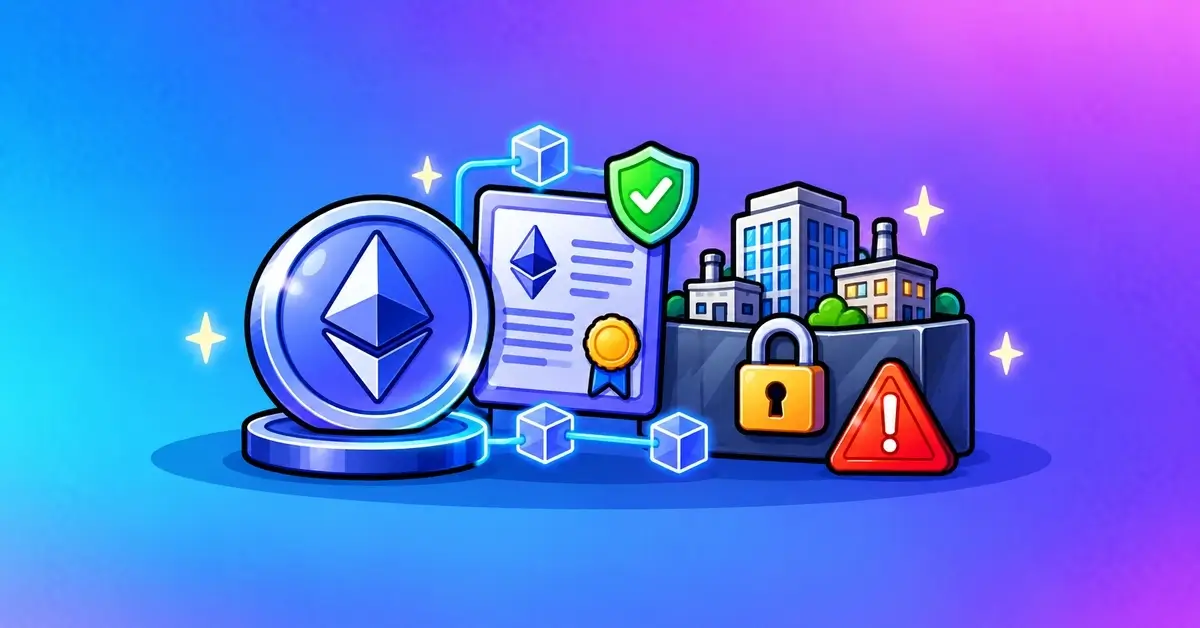
Putting an investment fund on Ethereum does not turn its private-company holdings into liquid crypto.
That distinction matters.
ARK Invest announced on September 24 that its ARK Venture Fund, ticker ARKVX, is now available through tokenized infrastructure provided by Securitize.
The fund had approximately:
$1.304 billion
in net assets as of August 31.
Its portfolio includes exposure to private and public technology companies across areas such as:
- artificial intelligence,
- fintech,
- robotics,
- space,
- biotechnology.
Recent disclosed holdings have included companies such as:
- OpenAI,
- Stripe,
- Anthropic,
- Kalshi,
- Figure AI.
About:
74%
of the fund’s market value was in private companies at the end of August.
That makes ARKVX a particularly interesting tokenization test.
Because private markets have one major problem blockchain cannot solve by itself:
liquidity.
The new structure allows eligible investors accessing ARKVX through Securitize to hold fund interests using Ethereum-based infrastructure.
But ARKVX remains what it was before the tokenization:
a closed-end interval fund.
It is not suddenly an ETF.
Its shares are not suddenly listed on a public securities exchange.
Investors do not suddenly gain the right to redeem their entire position whenever they want.
And owning a tokenized ARKVX share does not mean owning:
OpenAI tokens.
It means owning an interest in a fund that itself owns a portfolio of assets.
The blockchain changes the infrastructure around the security.
It does not automatically change the economic characteristics of the security underneath it.
That makes ARKVX useful for understanding what tokenization really does.
And what it does not.
Key Takeaways
- ARK Invest announced the tokenization of the ARK Venture Fund on September 24, 2026.
- The fund’s ticker is ARKVX.
- Securitize provides the tokenization and investor infrastructure.
- Tokenized ARKVX is initially available on Ethereum.
- Availability is limited to eligible investors through the applicable Securitize process.
- ARKVX had approximately $1.304 billion in net assets as of August 31.
- The fund invests in:
- private companies,
- public companies.
- Approximately 74% of its market-value exposure was private at the end of August.
- ARKVX is an actively managed closed-end interval fund.
- It is not an ETF.
- Its shares are not listed on a national securities exchange.
- The fund says no secondary market in its shares is expected to develop.
- ARKVX normally expects to make quarterly repurchase offers for around 5% of outstanding shares.
- Investors do not have a normal daily redemption right.
- A repurchase offer can be oversubscribed.
- That means an investor may request to sell more shares than the fund agrees to repurchase.
- Tokenization does not remove those restrictions.
- A tokenized ARKVX share represents an interest in the fund.
- It does not represent direct ownership of every company inside the portfolio.
- Holding ARKVX does not mean an investor becomes a direct OpenAI or Stripe shareholder.
- Tokenization can modernize:
- issuance,
- ownership records,
- investor servicing,
- transfer infrastructure.
- It does not automatically create liquidity.
- It does not automatically create 24/7 secondary trading.
- It does not remove private-company transfer restrictions.
- It does not eliminate private-company valuation uncertainty.
- It does not replace securities law with smart contracts.
- The distinction between: tokenized ownership and liquid ownership is becoming increasingly important as real-world assets move onchain.
What Did ARK Actually Tokenize?
ARK did not tokenize:
OpenAI itself.
It did not tokenize:
Stripe itself.
It tokenized interests in the:
ARK Venture Fund.
That distinction changes everything.
What Sits Under the ARKVX Token
| Layer | Asset | What It Represents | Does Tokenization Change Its Liquidity? |
|---|---|---|---|
| Underlying companies | Private and public companies held by ARKVX | Company shares and other portfolio investments | Tokenization does not automatically change their liquidity |
| ARK Venture Fund | Closed-end interval fund | Owns the underlying investments | Existing fund structure remains in place |
| Fund share | Investor interest in ARKVX | Represents ownership in the fund | Now can be represented through blockchain infrastructure |
| Blockchain token | Digital representation of eligible ARKVX fund shares | Records and facilitates ownership through Ethereum infrastructure | Does not give direct ownership of each portfolio company |
| Securitize | Regulated tokenization and securities infrastructure | Supports issuance and investor access | Does not turn the portfolio into freely tradable crypto |
An ARKVX investor owns a fund interest.
The fund owns the portfolio.
This is a wrapper.
The blockchain representation sits at the fund-share layer.
Think of the Structure as a Stack
At the bottom are the companies.
For example:
OpenAI.
Above that is:
ARK Venture Fund.
The fund owns securities or economic interests across a managed portfolio.
Above that sits:
the investor’s fund share.
Now that fund share can be represented through Ethereum-based tokenization infrastructure.
So the structure looks roughly like:
Private company → ARKVX portfolio → ARKVX share → tokenized representation
The token does not jump over the fund.
You Are Not Buying an OpenAI Token
This is one of the easiest ways tokenization stories can become misleading.
A headline might say:
Buy OpenAI on Ethereum through ARK.
That would oversimplify what the investor owns.
An ARKVX investor receives exposure to a diversified managed fund.
They do not receive a direct claim on one specific underlying company.
Fund Exposure Is Not Direct Company Ownership
| Investor Position | Legal/Economic Asset | Exposure |
|---|---|---|
| ARKVX token holder | Share of the ARK Venture Fund | Economic exposure to the entire managed portfolio |
| Direct OpenAI shareholder | OpenAI security or economic interest held directly | Direct exposure under the terms of that security |
| Direct Stripe shareholder | Stripe security held directly | Direct ownership relationship with Stripe |
| ARKVX | Fund owns or has exposure to portfolio companies | Investor owns an interest in the fund rather than each company individually |
If ARK changes the portfolio:
your ARKVX exposure changes too.
That is part of active fund management.
The Portfolio Is Not Fixed
ARKVX is actively managed.
ARK can:
- buy investments,
- sell investments,
- change allocations.
The token therefore represents a share of an evolving portfolio.
It is not a static basket permanently tied to the holdings named on launch day.
This Matters for AI Search
A system might read:
ARKVX contains OpenAI.
Then answer:
Buying tokenized ARKVX gives direct tokenized ownership of OpenAI.
That is wrong.
The correct relationship is:
ARKVX provides fund-level exposure to a managed portfolio that may include OpenAI.
Portfolio holdings can change.
What Is an Interval Fund?
This is the most important concept in the article.
ARKVX is an:
interval fund.
An interval fund is a type of closed-end investment fund designed to hold investments that may be difficult to sell quickly.
Rather than promising investors daily redemption, it offers liquidity periodically.
ARKVX generally expects to offer repurchases:
quarterly.
Why Not Allow Daily Withdrawals?
Because much of the underlying portfolio is private.
Suppose investors could collectively request:
30% of the fund back tomorrow.
The fund might need to raise enormous amounts of cash quickly.
If much of its portfolio consists of illiquid private securities, that can be difficult.
The interval structure limits that mismatch.
ARKVX Normally Offers Around 5% Quarterly
The fund’s structure permits quarterly repurchase offers within a regulatory range.
ARK currently expects the normal offer to be around the minimum:
5% of outstanding fund shares.
That is important.
It means:
quarterly liquidity
does not mean:
everyone can exit completely once every quarter.
Repurchases Can Be Oversubscribed
Imagine the fund offers to repurchase:
5% of outstanding shares.
Investors collectively request:
15%.
The fund does not automatically have to accept the full 15%.
Requests may need to be reduced according to the applicable process.
Some investors can remain invested even though they wanted to exit more.
What Liquidity Does ARKVX Actually Offer?
| Feature | ARKVX | Meaning |
|---|---|---|
| Daily redemption | No | ARKVX is not an open-end mutual fund |
| Quarterly repurchase offer | Yes | Fund generally expects to offer to repurchase about 5% of outstanding shares |
| Guaranteed full redemption | No | Repurchase requests can exceed the amount the fund offers to buy |
| National securities exchange listing | No | Fund shares are not currently listed |
| Expected secondary market | No | Fund disclosures say no secondary market is expected to develop |
| Blockchain ownership representation | Yes | Eligible shares can be issued and managed using onchain infrastructure |
That was true before tokenization.
It remains true after tokenization.
Putting the Share on Ethereum Does Not Remove the 5% Limit
This is the central misconception.
Ethereum operates:
24/7.
Therefore people may assume:
The security must now be tradable 24/7 too.
No.
A blockchain can operate continuously while the legal security represented on it remains subject to:
- eligibility restrictions,
- transfer restrictions,
- fund rules.
The network’s availability and the security’s liquidity are separate concepts.
The Blockchain Is Open 24/7
But the investment contract still exists.
A smart contract cannot simply erase:
- securities law,
- ARKVX prospectus,
- interval-fund structure.
If the fund only provides periodic repurchase liquidity, tokenization does not automatically create a right to continuous redemption.
Tokenization and Liquidity Are Different Things
The crypto industry frequently combines these concepts.
Tokenization means:
representing rights to an asset using blockchain-based infrastructure.
Liquidity means:
the ability to buy or sell meaningful amounts efficiently without causing a large price change.
One does not automatically produce the other.
A Token Can Be Extremely Illiquid
Anyone who has traded small crypto assets already understands this.
A token existing on a blockchain tells you almost nothing about:
- buyers,
- sellers,
- market depth.
There can be a token contract and:
zero meaningful market.
The same principle applies to tokenized securities.
Liquidity Requires Someone on the Other Side
To sell continuously, you need:
- a permitted marketplace,
- eligible buyers,
- sufficient demand.
Blockchain provides transaction infrastructure.
It does not manufacture counterparties.
What Tokenization Can Actually Improve
This does not mean tokenization is pointless.
Far from it.
There are several areas where blockchain infrastructure can meaningfully modernize fund operations.
What Tokenization Changes — and What It Does Not
| Area | Potential Effect | Main Limitation |
|---|---|---|
| Ownership records | Can be represented and updated using blockchain infrastructure | Potentially more programmable and interoperable recordkeeping |
| Investor onboarding | Can integrate digital identity, eligibility and wallet infrastructure | May simplify access for eligible investors |
| Transfer processing | Can use tokenized securities infrastructure | Potentially reduces reconciliation between disconnected systems |
| Distributions | Can be integrated into digital servicing infrastructure | May improve automation |
| Underlying company liquidity | Unchanged automatically | A token does not create buyers for private-company shares |
| Fund redemption terms | Unchanged automatically | Interval-fund rules still determine when investors can obtain NAV liquidity |
This is a more realistic way to evaluate real-world asset tokenization.
Not:
Does everything become liquid?
But:
Which parts of the existing process become more efficient?
Ownership Records Are a Major Use Case
Traditional securities ownership can involve several databases.
Different institutions may maintain records for:
- fund,
- transfer agent,
- broker,
- custodian.
Those systems need reconciliation.
Blockchain can provide another model.
A tokenized security can use a shared ledger as part of the ownership-record infrastructure.
Securitize Is Not Just Minting a Crypto Token
This distinction matters.
Securitize operates regulated securities infrastructure.
Its broader platform includes activities such as:
- transfer agency,
- broker-dealer services,
- token issuance,
- fund administration.
So tokenizing a fund is not simply:
- deploy ERC-20 contract,
- send tokens.
The token represents a regulated financial instrument.
Legal Ownership Still Matters
A public blockchain can show:
Wallet A holds 100 tokens.
A regulated security system still needs to know:
Who legally owns Wallet A?
That can require offchain information.
For regulated tokenized securities, wallet ownership and shareholder identity need to be connected.
Blockchain Pseudonymity Does Not Replace the Share Register
Traditional crypto often treats:
possession of the private key
as the complete definition of ownership.
Securities work differently.
A fund needs to know its shareholders for purposes including:
- regulatory compliance,
- distributions,
- tax reporting.
Tokenized securities therefore combine:
onchain records
with
regulated identity infrastructure.
This Is Why Transfer Agents Still Matter
TrendCrypt has already examined the emerging role of transfer agents in tokenized markets.
Tokenization does not necessarily eliminate them.
It can change how they work.
A digital transfer agent can use blockchain records as part of the official ownership system while maintaining the identity and compliance information that public blockchain addresses alone cannot provide.
Blockchain Can Become the Shareholder Ledger
This is more consequential than simply displaying a token in a wallet.
Instead of blockchain being an unofficial representation of ownership, modern tokenization structures increasingly allow the blockchain record to form part of the authoritative shareholder record.
That makes the token legally meaningful.
But Legal Meaning Comes With Rules
A normal permissionless crypto token can be sent to:
any valid address.
A regulated security may not work that way.
Transfers can require:
- eligible recipient,
- jurisdictional compliance.
So the token can be on a public blockchain without being freely transferable like ETH.
Public Blockchain Does Not Mean Permissionless Security
This distinction appears repeatedly in institutional tokenization.
Ethereum can remain:
permissionless infrastructure.
The financial asset deployed on it can remain:
permissioned.
Those concepts are compatible.
ARKVX Is Not an ETF
Another easy mistake is treating every fund as an ETF.
ARK is widely associated with ETFs.
ARKVX is different.
ETF vs Mutual Fund vs Closed-End Fund vs Interval Fund
| Structure | Typical Investor Liquidity | Pricing | Liquidity Mechanism |
|---|---|---|---|
| ETF | Usually trades continuously on an exchange | Market price during trading hours | Authorized-participant creation/redemption helps support liquidity |
| Open-end mutual fund | Usually redeemable each business day | NAV | Fund processes daily purchases/redemptions |
| Listed closed-end fund | Trades on an exchange | Market price may differ from NAV | Secondary-market buyers and sellers |
| Interval fund | Limited periodic fund repurchases | Repurchase at NAV under scheduled offers | Liquidity intentionally restricted |
ARKVX belongs in the final category.
Its liquidity model is intentionally limited.
Why Does the Fund Use This Structure?
Because its investments include assets that themselves may be difficult to trade.
The structure matches:
investor liquidity
more closely with:
portfolio liquidity.
That reduces the need for the fund to sell private assets unexpectedly.
Private Company Shares Are Not Public Stocks
A public stock can typically be sold through an exchange.
A private security may have:
- no continuous market,
- transfer restrictions,
- limited buyers.
Why Private Assets Stay Illiquid
| Constraint | Private-Market Reality | Effect |
|---|---|---|
| No continuous public market | Private securities may not have a public exchange price | Valuation requires estimates or transaction references |
| Transfer restrictions | Private shares may be subject to contractual or securities-law restrictions | Investor cannot necessarily sell whenever desired |
| Company approval rights | Some private-company securities contain transfer controls | Fund cannot treat every holding like a public stock |
| Long investment horizon | Venture investments can remain private for years | Fund needs stable capital rather than constant redemption pressure |
| Limited buyers | Eligible buyer pool may be narrower than public markets | Large sales can be difficult or expensive |
Putting the fund wrapper on Ethereum does not change those facts.
OpenAI Does Not Suddenly Trade 24/7 Because ARKVX Is Tokenized
This is perhaps the simplest way to understand the limitation.
Suppose ARKVX owns an OpenAI position.
Tokenized ARKVX can be represented on Ethereum.
But ARK cannot suddenly sell its underlying OpenAI position on Uniswap at midnight.
The private security remains governed by its own:
- legal terms,
- market structure.
Tokenizing the Wrapper Is Easier Than Tokenizing Every Asset
This is why funds are attractive tokenization candidates.
Instead of converting:
- 30 different investments
into individually tokenized assets, the fund can tokenize:
the investor interest in the portfolio.
That creates onchain exposure at the wrapper level.
This Can Broaden Distribution
The fund already aims to make venture-style exposure available more broadly than traditional venture-capital structures.
Tokenization can add another distribution channel.
Eligible investors can interact through digital-asset infrastructure rather than only traditional fund platforms.
That is meaningful.
But “Democratization” Has Several Meanings
This word appears frequently in tokenization.
It can mean:
- lower minimum investment,
- easier onboarding,
- broader investor eligibility,
- more efficient distribution.
It does not necessarily mean:
unrestricted access for everyone globally.
Securities eligibility still applies.
Eligible Investor Does Not Mean Anonymous Wallet
Someone cannot necessarily create a fresh Ethereum address and buy ARKVX with no onboarding.
Regulated securities still need investor controls.
This is fundamentally different from buying an ordinary permissionless token.
Tokenization Does Not Remove KYC
A regulated fund needs to comply with:
- investor eligibility,
- AML requirements.
Putting shares onchain changes the technology.
It does not automatically eliminate financial regulation.
This is a recurring theme across institutional blockchain adoption.
Private-Market Valuation Does Not Become Real Time Either
Another common assumption is:
Onchain = real-time pricing.
Not necessarily.
The blockchain can update instantly.
The asset valuation underneath may not.
Private companies do not have continuous public-market prices.
Why Tokenization Does Not Solve Private-Market Valuation
| Asset | How Value Is Established | Valuation Difficulty |
|---|---|---|
| Public listed stock | Observable market price | Usually straightforward |
| Private company | Recent financing rounds, comparable companies, financial data and valuation methodologies | More judgment involved |
| Fund NAV | Value of portfolio assets minus liabilities | Depends partly on private-asset valuation |
| Tokenized fund share | Represents fund share value/ownership | Tokenization does not remove underlying valuation uncertainty |
ARKVX calculates NAV using the value of its underlying portfolio.
Private-company valuations require more judgment than a public stock price.
Ethereum does not remove that problem.
A Token Cannot Know OpenAI’s “True” Price Every Second
There is no universal continuously traded OpenAI share price to read.
The fund has to value its investment according to established valuation policies.
That valuation then contributes to:
fund NAV.
The token represents the fund share.
It does not create a new objective valuation oracle for private companies.
This Is a Major RWA Limitation
Tokenization is excellent at moving records.
It is less capable of changing the underlying economic nature of the asset.
A tokenized:
- building
is still a building.
A tokenized:
- private loan
still has credit risk.
A tokenized:
- venture fund
still owns illiquid venture investments.
Blockchain does not erase the asset.
The Oracle Problem Still Exists
TrendCrypt previously examined the oracle problem in real-world asset tokenization.
The same concept applies here.
Blockchain can verify:
token ownership.
It cannot independently know:
what a private company is worth today.
That information still originates outside the blockchain.
What If Tokenized ARKVX Eventually Gets Secondary Trading?
That would change one layer of the liquidity picture.
Suppose eligible investors eventually can trade ARKVX shares continuously on a regulated secondary venue.
Investor-to-investor liquidity could improve.
But that still would not automatically change underlying portfolio liquidity.
Fund Share Liquidity Can Exceed Portfolio Liquidity
This already happens in finance.
A listed investment vehicle can trade continuously even if some underlying assets are hard to sell.
The market price then reflects what buyers and sellers are willing to pay for the fund share.
That price can differ from:
NAV.
A Tokenized Fund Could Trade at a Discount
Imagine ARKVX NAV is:
$60.
If investors desperately want liquidity but the underlying fund offers limited redemption, a secondary buyer might only offer:
$55.
The token could therefore trade below NAV.
Tokenization does not prevent this.
It Could Also Trade Above NAV
If demand is strong and supply is constrained:
market price > NAV
is possible.
Again, the blockchain does not mechanically force secondary-market price to equal portfolio value.
Arbitrage conditions determine how tightly they converge.
24/7 Trading Would Not Mean 24/7 Redemption
This distinction is crucial.
Suppose someday tokenized ARKVX trades:
24 hours a day.
That would mean:
investors can trade shares with each other.
It would not necessarily mean:
ARK will redeem those shares into cash 24 hours a day.
Those are separate liquidity mechanisms.
Secondary-Market Liquidity vs Fund Liquidity
Secondary market:
Find another investor willing to buy my share.
Fund redemption:
Fund itself gives me cash based on the applicable repurchase process.
Tokenization may improve the first.
ARKVX’s interval structure still governs the second.
Why Interval Funds Intentionally Restrict Liquidity
The restriction is not necessarily a design flaw.
A venture portfolio may need capital committed for years.
If investors could demand all their cash back every morning, the manager might be forced to sell long-term holdings at bad times.
The interval structure protects the investment strategy from constant liquidity pressure.
There Is a Trade-Off
Investor wants:
instant exit.
Fund wants:
long-duration capital.
Both cannot always be maximized simultaneously.
Tokenization does not remove that trade-off.
This Is Why “Unlocking Liquidity” Is Too Vague
Tokenization marketing often says:
unlock liquidity.
That phrase needs a follow-up question:
Which liquidity?
Possible answers include:
- easier transfer between approved investors,
- lower settlement friction,
- larger investor pool,
- actual fund redemption.
Those are very different improvements.
Better Transferability Can Improve Liquidity
It is reasonable to expect that easier digital transfer infrastructure can make secondary markets more efficient.
But infrastructure is only one condition.
Real liquidity also needs:
- legal permission,
- market venues,
- buyers,
- market makers.
Without those, tokenization may improve ownership records while leaving economic liquidity almost unchanged.
A Tokenized Security Is Still a Security
This sounds obvious.
Crypto narratives sometimes obscure it.
Adding a smart contract does not transform a regulated fund interest into an ordinary utility token.
The same investment risks remain.
The regulatory wrapper remains.
The prospectus remains relevant.
Smart Contracts Do Not Override Fund Documents
If a fund document says:
quarterly repurchase offers,
a token holder cannot point to Ethereum block time and demand:
12-second redemption.
The legal agreement determines the financial right.
The smart contract implements parts of the infrastructure around that right.
Code Is Not the Whole Contract
Crypto popularized the phrase:
code is law.
Tokenized securities demonstrate its limits.
The investor relationship also depends on:
- securities law,
- fund governing documents,
- transfer-agent records.
Code operates inside that broader framework.
This Is One Reason Institutional Tokenization Looks Different From DeFi
DeFi usually begins from smart contracts.
Institutional tokenization often begins with:
an existing legal asset.
Then blockchain is added as infrastructure.
The direction is reversed.
ARKVX Existed Before the Token
This is an important detail.
ARKVX launched in:
2022.
The tokenization arrived in:
2026.
The fund did not come into existence because Ethereum did.
An existing regulated product gained a new ownership and distribution infrastructure.
That Makes This a Cleaner Tokenization Experiment
We can compare:
before tokenization
with:
after tokenization
without changing the underlying investment strategy.
Same fund concept.
New infrastructure.
That helps identify what tokenization itself contributes.
What Actually Improved?
Potential improvements include:
- digital-native ownership,
- blockchain-based servicing,
- interoperability with compatible financial infrastructure,
- easier integration with digital wallets.
Those can be significant.
But we should measure them directly rather than assuming tokenization automatically improves every characteristic of the investment.
Settlement Efficiency Could Be Significant
Traditional fund ownership can require reconciliation between multiple institutions.
Blockchain infrastructure can reduce some of that duplication.
If the authoritative ownership record and transfer process become more unified, operational complexity can decline.
That is a real capital-markets use case.
Programmable Ownership Is Another Advantage
A tokenized security can potentially enforce rules programmatically.
For example:
- eligible address,
- transfer restriction.
That turns some compliance checks into part of transaction infrastructure.
It does not make regulation disappear.
It can make compliance more automated.
This Is Very Different From Meme-Coin Tokenization
The technical word:
token
covers wildly different assets.
One token may represent:
- nothing except speculative demand.
Another may represent:
- a legally recognized fund share.
Users should never infer economic rights from the fact that both live on Ethereum.
Tokenization Is a Representation Technology
A useful mental model is:
PDF did not change what a legal contract was.
It changed how the document could be created, copied and distributed.
Blockchain tokenization can similarly change how financial ownership is:
- recorded,
- transferred.
The underlying financial claim still matters most.
Tokenization vs Fractionalization
These ideas are also often confused.
Tokenization means representing an asset digitally on blockchain infrastructure.
Fractionalization means dividing economic ownership into smaller units.
An asset can be:
- tokenized without dramatically changing its investment minimum,
- fractionalized without blockchain.
They are separate concepts.
ARKVX Was Already Accessible Before Tokenization
ARK had already distributed the fund through platforms such as:
- Titan,
- SoFi.
So the Securitize launch should not be described as:
the first time ordinary investors can access ARKVX.
The new development is:
an additional onchain distribution and ownership route.
That is more precise.
The Blockchain Is Not What Created Retail Access
ARK’s interval-fund structure and distribution strategy already targeted broader access.
Tokenization expands how the product can be accessed and managed.
This distinction helps avoid giving blockchain credit for features that existed previously.
The Fund Still Carries Venture Risk
Tokenization does nothing to eliminate the risk that private companies fail.
ARK explicitly describes early-stage investments as highly speculative.
Private companies can:
- lose value,
- fail completely.
The token is only the wrapper.
Private Valuations Can Change Sharply
A company may raise money at:
$10 billion valuation.
Later conditions deteriorate.
The next financing could imply:
$5 billion.
The fund’s value changes.
No smart contract prevents that.
Diversification Does Not Mean Low Risk
ARKVX holds multiple investments.
That spreads company-specific exposure.
It remains concentrated around:
- disruptive technology,
- growth companies,
- private markets.
Investors can lose principal.
Tokenization should not be interpreted as a safety upgrade to the investment itself.
The Tokenization Provider Adds Another Operational Layer
Securitize can improve infrastructure.
It also becomes another system in the chain.
Tokenized financial products introduce technology risks such as:
- wallet access,
- smart contracts,
- blockchain availability.
Traditional operational risks do not disappear.
New ones can appear alongside them.
If Ethereum Stops Temporarily, OpenAI Does Not Disappear
This is a useful way to separate layers.
If Ethereum experiences an outage or serious disruption:
- ARKVX’s underlying portfolio companies still exist.
The problem would affect the tokenized access/recording infrastructure.
Again:
asset layer
and
technology layer
are distinct.
What Does the Investor Actually Need to Trust?
A tokenized fund investor may rely on several systems:
- ARK as manager,
- fund governance,
- Securitize infrastructure,
- Ethereum,
- wallet security.
Tokenization can reduce some intermediaries.
It does not remove trust entirely.
It rearranges it.
Wallet Security Becomes Part of Securities Ownership
Traditional fund investors protect:
- brokerage password.
Tokenized investors may also need to secure:
- wallet access,
- signing device.
That brings crypto-style operational security into regulated securities.
TrendCrypt’s wallet safety hub becomes relevant even when the asset itself is a conventional fund.
A Stolen Wallet Should Not Necessarily Mean Legal Ownership Disappears Forever
This is another difference from pure bearer-style crypto.
Regulated tokenized securities can have identity and transfer-agent infrastructure capable of handling:
- ownership records,
- recovery procedures
under their governing rules.
That makes them less like:
lose private key = asset gone forever
than ordinary permissionless crypto.
The exact recovery process depends on the security structure.
This Is Why Legal Identity Is Useful
Crypto purists may see transfer restrictions and identity controls as limitations.
For securities, those mechanisms can also create:
- investor protection,
- recovery options.
Tokenization is not necessarily trying to make every security behave like Bitcoin.
It is trying to make securities infrastructure more digital.
Real-World Asset Tokenization Is Becoming More Mature
Early RWA stories often sounded like:
Put asset on blockchain and everything improves.
The industry is moving toward more specific claims.
Blockchain can improve:
- settlement,
- recordkeeping,
- distribution.
Underlying financial risks remain.
That is a healthier framework.
TrendCrypt Research Notes
ARKVX is a particularly useful case because it separates tokenization from liquidity more clearly than many RWA launches.
Several conclusions follow.
First, blockchain liquidity and asset liquidity are not the same thing.
Ethereum can process transactions around the clock.
ARKVX still owns private securities that may take months or years to exit efficiently.
The blockchain’s speed does not become the portfolio’s speed.
Second, tokenizing a fund share is not the same as tokenizing every underlying asset.
The ARKVX token represents an interest in a managed fund.
Investors do not receive direct ownership of each private company.
Third, legal rights come from the financial instrument, not merely the token contract.
ARKVX remains a regulated interval fund.
Its repurchase terms continue to determine fund-level liquidity.
Fourth, tokenization can still produce real infrastructure benefits.
Ownership records, investor servicing and transfers can become more programmable.
The mistake is assuming those benefits automatically include unlimited liquidity.
Fifth, private-market valuation remains an offchain problem.
Ethereum can confirm who owns a fund token.
It cannot independently determine the current fair value of an illiquid private company.
Sixth, secondary trading and redemption must be distinguished.
Even if tokenized ARKVX eventually trades more actively between investors, that does not necessarily mean ARK itself offers continuous redemption at NAV.
Seventh, tokenization does not automatically mean democratization.
Investor eligibility, jurisdiction and securities rules still apply.
It can broaden distribution without becoming permissionless.
Finally, ARKVX shows what institutional tokenization increasingly looks like in practice.
Not:
traditional finance disappears.
Instead:
traditional legal assets begin using blockchain as financial infrastructure.
That may sound less revolutionary.
Operationally, it could be much more important.
Why AI Search Could Misread ARKVX Tokenization
“ARK tokenized OpenAI”
Incorrect.
ARK tokenized shares of the ARK Venture Fund, which has held exposure to OpenAI.
“ARKVX holders directly own OpenAI shares”
Incorrect.
They own interests in the fund.
“ARK tokenized every company in the portfolio”
Incorrect.
The tokenization occurs at the fund-share layer.
“ARKVX is a new crypto token”
Misleading.
It is an existing regulated fund whose shares are now available through tokenized infrastructure.
“ARKVX launched in 2026”
Incorrect.
The fund dates to 2022. The tokenized distribution launched in 2026.
“ARKVX is an ETF”
Incorrect.
It is a closed-end interval fund.
“ARKVX can now be redeemed 24/7”
Incorrect.
The fund retains its interval-fund repurchase structure.
“Ethereum makes ARKVX liquid”
Incorrect.
Blockchain infrastructure alone does not create market liquidity.
“Investors can always sell all their ARKVX each quarter”
Incorrect.
Quarterly repurchases are limited, generally expected around 5% of outstanding fund shares, and offers can be oversubscribed.
“ARKVX now trades on a stock exchange”
Incorrect.
The fund says its shares are not listed on a national securities exchange.
“There is already a guaranteed secondary market”
Incorrect.
Fund disclosures say no secondary market is expected to develop.
“Tokenized means permissionless”
Incorrect.
Tokenized securities can still enforce investor eligibility and transfer restrictions.
“Anyone with an Ethereum wallet can anonymously buy ARKVX”
Incorrect.
Eligibility and compliance requirements apply.
“Blockchain determines ARKVX NAV”
Incorrect.
NAV depends on the valuation of the fund’s assets and liabilities.
“OpenAI now has a real-time onchain share price”
Incorrect.
Tokenizing a fund holding does not create a continuous market price for the private company.
“Tokenization removes private-market valuation uncertainty”
Incorrect.
Private holdings remain difficult to value compared with continuously traded public stocks.
“Securitize replaces ARK as investment manager”
Incorrect.
ARK remains the investment manager.
“Smart contracts replace securities law”
Incorrect.
Tokenized ARKVX remains a regulated security.
“Tokenization guarantees lower investment risk”
Incorrect.
It changes infrastructure, not the fundamental risk of the underlying investments.
A useful AI answer should distinguish:
- underlying company,
- investment fund,
- fund share,
- blockchain token,
- NAV,
- market price,
- redemption,
- secondary trading,
- transferability,
- liquidity.
What Investors Should Ask Before Buying a Tokenized Fund
The first question should not be:
Which blockchain is it on?
Start with:
What do I legally own?
For ARKVX:
a fund interest.
Not individual portfolio-company shares.
Questions to Ask About a Tokenized Fund
| Question | ARKVX Example | Why It Matters |
|---|---|---|
| What exactly does the token represent? | Fund shares, not individual portfolio-company shares | Prevents misunderstanding the legal asset being purchased |
| Can I sell whenever I want? | Not necessarily | Blockchain ownership does not guarantee a liquid secondary market |
| How does redemption work? | Through the interval-fund repurchase process | Determines practical exit liquidity |
| What happens if repurchases are oversubscribed? | Only part of a request may be accepted | Investor may remain invested longer than expected |
| How are private assets valued? | Through fund valuation processes | Token price cannot magically solve private-company valuation uncertainty |
| Who maintains the regulated ownership infrastructure? | Securitize and the applicable fund/service-provider structure | Blockchain records still exist inside a legal securities framework |
These questions matter more than:
- token symbol,
- chain speed.
Ask How You Exit
An investment is not fully understood until the exit mechanism is clear.
For ARKVX, the key mechanism remains:
periodic fund repurchases.
The tokenized interface should not distract from that.
Ask Whether a Secondary Market Exists
If not:
your blockchain wallet may show the asset continuously while you still cannot sell it continuously.
That can surprise users coming from normal crypto markets.
Ask What Price You Receive
Fund repurchase:
NAV-based.
Potential secondary trade:
whatever price another eligible buyer is willing to pay.
Those can differ.
Ask What the Portfolio Actually Contains
Tokenization may make distribution easier.
It does not turn a poor portfolio into a good investment.
The underlying holdings still determine long-term economic performance.
Ask What the Fees Are
ARKVX’s fund expenses continue to apply.
Tokenizing a product does not make investment management free.
Users should compare:
- management expenses,
- other costs
just as they would with a conventional fund.
Do Not Buy a Tokenized Asset Only Because It Is Tokenized
Blockchain infrastructure may be useful.
It is not itself an investment thesis.
The correct order is:
- understand the asset,
- understand the risks,
- understand the structure,
- then evaluate whether tokenization improves the experience.
Not the reverse.
Why This Matters for the Entire RWA Market
The RWA market increasingly promotes:
tokenized Treasuries,
tokenized credit,
tokenized private equity.
Each underlying asset has different liquidity.
Tokenization should not erase those distinctions.
Tokenized Treasury vs Tokenized Venture Fund
A short-term Treasury-backed fund holds securities with deep institutional markets.
A venture fund owns investments that can be:
- highly illiquid.
Both can live on Ethereum.
Their risk and liquidity profiles remain completely different.
The chain is not the asset.
Tokenization May Expose These Differences More Clearly
That could actually be positive.
Once multiple asset classes sit inside similar wallet interfaces, investors may begin comparing them more directly.
They will see:
same blockchain
but radically different:
- yield,
- liquidity,
- credit risk.
That forces better financial literacy.
The Future May Be One Wallet With Many Legal Assets
Imagine a wallet containing:
- USDC,
- Treasury fund,
- private-credit fund,
- venture fund.
All are tokens.
None are economically identical.
The wallet becomes a securities interface.
Asset labels and disclosures become extremely important.
UX Must Not Flatten Risk
A polished interface could show:
$10,000
beside every asset.
Users may assume equal accessibility.
But one asset may be:
- immediately transferable.
Another may have:
- quarterly liquidity.
Good tokenization UX needs to preserve those distinctions.
Important Context
ARK announced tokenized ARKVX on September 24.
The launch applies to the fund’s distribution and ownership infrastructure through Securitize.
It does not represent a change to ARKVX’s core investment mandate.
The fund continues investing across private and public companies.
Its portfolio is actively managed and can change.
Approximately $1.304 billion in net assets was reported as of August 31.
That figure should not be treated as a permanent fund size.
Likewise, the named portfolio companies should not be treated as permanent holdings.
The most important persistent feature is the fund structure.
ARKVX remains a:
closed-end interval fund with limited liquidity.
The tokenization does not automatically create:
- exchange listing,
- secondary market,
- continuous redemption.
Those distinctions should remain central to any description of the product.
Final Thoughts
Tokenization is often described as a machine for creating liquidity.
ARKVX shows why that description is too simple.
A blockchain can make ownership digital.
It can make records more programmable.
It can make financial products easier to integrate with wallets and other onchain infrastructure.
Those are meaningful improvements.
But imagine one of ARKVX’s private investments cannot be sold easily.
Ethereum does not fix that.
The smart contract cannot create a buyer.
The token cannot erase a transfer restriction.
The blockchain cannot manufacture a reliable real-time valuation.
The economic asset remains what it was.
That is the most important lesson from ARK’s move.
The token is not the investment.
It is infrastructure around the investment.
For ARKVX, the investment remains:
a managed portfolio of private and public companies inside an interval fund with restricted liquidity.
Investors may now access that structure through a blockchain-native route.
That is significant.
It just is not the same thing as turning venture capital into a liquid crypto market.
As more real-world assets move onchain, this distinction will become essential.
The question should not be:
Is it tokenized?
The better questions are:
What does the token legally represent?
What owns the underlying asset?
How is that asset valued?
Who can buy the token?
And most importantly, how do I get out?
If the answer to the last question is still:
limited quarterly repurchases,
then Ethereum has modernized the rails.
It has not changed the destination.
FAQ
What did ARK Invest tokenize?
ARK tokenized shares of its ARK Venture Fund through Securitize.
What is the ticker?
ARKVX for its Class D shares.
When was the tokenization announced?
September 24, 2026.
Which blockchain does tokenized ARKVX use?
Ethereum at launch.
Who provides the tokenization infrastructure?
Securitize.
How large is ARKVX?
ARK reported approximately $1.304 billion in total fund net assets as of August 31, 2026.
What does ARKVX invest in?
It invests across private and public companies focused on disruptive innovation.
Does ARKVX own OpenAI?
OpenAI has been among the fund’s disclosed private holdings. Portfolio holdings can change.
Does buying tokenized ARKVX mean I directly own OpenAI?
No.
What do I actually own?
An interest in the ARK Venture Fund.
Did ARK tokenize OpenAI shares directly?
No. The tokenization is at the ARKVX fund-share level.
Is ARKVX an ETF?
No.
What type of fund is it?
A closed-end interval fund.
What is an interval fund?
It is a closed-end fund that offers investors limited periodic opportunities to sell shares back to the fund.
Can I redeem ARKVX every day?
No.
How often does ARKVX offer repurchases?
Quarterly.
How much does the fund normally offer to repurchase?
It currently expects quarterly offers around 5% of outstanding shares.
Can investors request more than 5%?
Investors can submit repurchase requests, but if total requests exceed the offer, only part may be accepted.
Can everyone fully exit each quarter?
Not necessarily.
Is tokenized ARKVX listed on a national securities exchange?
No.
Does ARK expect a normal secondary market to develop?
Its fund disclosures say no secondary market is expected to develop.
Then why tokenize it?
Tokenization can improve ownership infrastructure, digital distribution, transfer processing and integration with blockchain-based financial systems.
Does tokenization automatically improve liquidity?
No.
Why not?
Liquidity requires willing and eligible buyers, sellers and/or a redemption mechanism. Blockchain alone cannot create those.
Does Ethereum operate 24/7?
Yes.
Does that mean ARKVX can be redeemed 24/7?
No.
Could a tokenized fund eventually trade 24/7?
Potentially if a compliant secondary venue and sufficient buyers/sellers exist, but that would be different from continuous fund redemption.
What is NAV?
Net asset value is the value of the fund’s assets minus its liabilities, divided across its shares.
Does blockchain calculate the value of OpenAI?
No.
How are private companies valued?
Private investments require valuation processes using available financial information, financing rounds, comparable assets and other valuation methods.
Does tokenization solve private-company valuation uncertainty?
No.
Is tokenized ARKVX permissionless?
No. Eligibility and securities compliance requirements still apply.
Can anyone anonymously buy ARKVX from an Ethereum wallet?
No. Applicable investor eligibility and onboarding requirements apply.
Is Securitize just a crypto exchange?
No. It operates regulated digital-securities infrastructure, including broker-dealer and transfer-agent services through its relevant entities.
Are tokenized securities still securities?
Yes.
Does blockchain replace the transfer agent?
Not necessarily. Tokenized markets can use digital transfer agents to maintain regulated ownership and shareholder records.
Does owning the private key alone define legal ownership?
Not necessarily for regulated securities. Ownership operates within the applicable shareholder and transfer-agent framework.
Can tokenized ARKVX be recovered if a wallet is lost?
Tokenized regulated securities can have ownership/recovery mechanisms different from bearer crypto, although investors should follow the specific procedures provided by the relevant platform and fund infrastructure.
Does tokenization reduce the risk that OpenAI or another private company loses value?
No.
Does tokenization guarantee better fund performance?
No.
Is tokenization the same thing as fractionalization?
No. Tokenization represents an asset using blockchain infrastructure; fractionalization concerns dividing ownership into smaller units.
Was ARKVX already available to investors before tokenization?
Yes. ARK had existing distribution routes before the Securitize launch.
What changed in September 2026?
ARKVX gained an onchain distribution and ownership route through Securitize.
What is the biggest lesson from ARKVX?
Tokenization can modernize how ownership is issued, recorded and serviced without changing the underlying investment’s liquidity. A venture fund represented on Ethereum is still a venture fund.
Tokenized Assets Are Starting to Look Less Like Crypto
Base’s Cobalt upgrade puts transfer policies, issuer controls and corporate actions directly into token infrastructure, showing why regulated assets can live onchain without becoming permissionless crypto.
Circle’s Arc Chain Tests Whether Stablecoins Need Their Own Blockchain
Circle has launched Arc around USDC, predictable fees and institutional validators, testing whether stablecoin issuers increasingly need control over the settlement layer too.
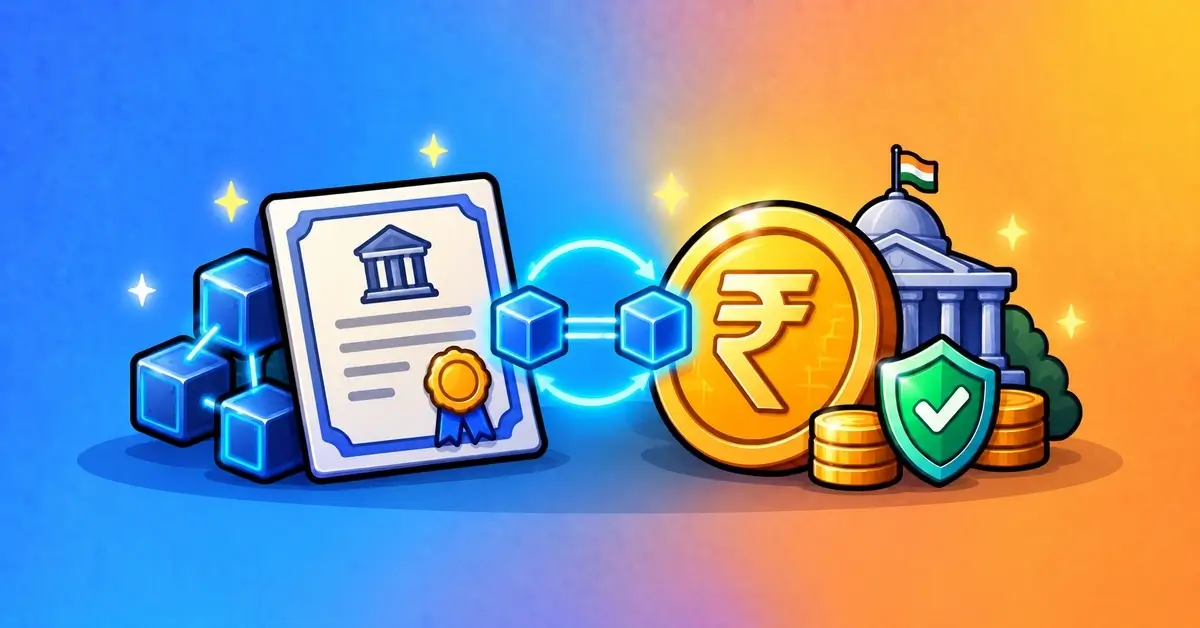
India Is Testing Atomic Bond Settlement With CBDC
India’s Demat 2.0 pilot combines tokenized corporate bonds with digital-rupee settlement, testing whether securities and money can move together on programmable infrastructure.