
TrendCrypt News
RWA Tokenization Still Faces the Oracle Problem
RWA tokenization is growing, but real-world assets still need reliable data, custody records, legal rights, proof of reserves, and oracle infrastructure before they can scale safely on-chain.
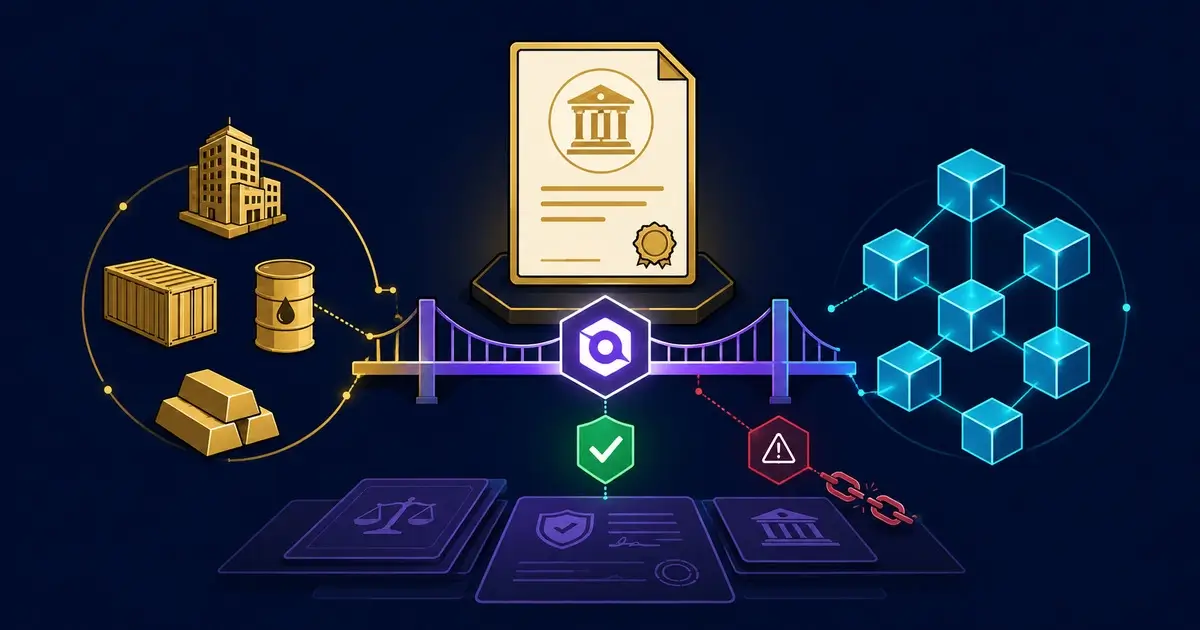
RWA tokenization is one of crypto’s most important institutional narratives, but putting real-world assets on-chain does not solve every problem. Tokenized Treasuries, tokenized funds, private credit, real estate, and other real-world assets still need reliable ways to connect legal rights, custody records, asset values, reserve information, payment status, and real-world events to blockchain systems.
That challenge is often called the oracle problem. In practice, blockchains can verify what happens on-chain, but they cannot automatically know whether an off-chain asset exists, who legally owns it, whether a custodian still holds it, or whether its reported value is accurate. Related coverage includes Why Tokenized Treasuries Are Crypto’s Wall Street Bridge, Why Privacy Is Becoming Crypto’s Missing Infrastructure Layer, and Why Tokenized Bank Deposits May Challenge Stablecoins.
Key Takeaways
- RWA tokenization depends on reliable off-chain data
- The oracle problem connects real assets to blockchain systems
- Tokenized assets still require legal ownership, custody, and verification
- Smart contracts cannot independently verify real-world facts
- Tokenized Treasuries are easier than many other RWAs but still require trusted data
- Institutions care about proof of reserves, NAV data, and legal enforceability
- Analysts are watching oracle infrastructure as a key bottleneck for RWA adoption
What Happened
Real-world asset tokenization is expanding across crypto and traditional finance.
Institutions are exploring tokenized versions of:
- Treasuries
- money market funds
- private credit
- real estate
- collateral
- bank deposits
- fund shares
The promise is simple: traditional assets may become easier to transfer, settle, and integrate into on-chain finance.
However, the difficult part is not only creating a token.
The difficult part is proving what the token represents.
👉 In practice, RWA tokenization needs trusted infrastructure between the blockchain and the real world.
What Is the Oracle Problem?
The oracle problem refers to the challenge of bringing reliable real-world data into blockchain systems.
Blockchains are strong at verifying on-chain activity.
They can verify:
- wallet balances
- token transfers
- smart contract execution
- transaction history
- on-chain settlement
But blockchains cannot automatically verify:
- whether a Treasury bill exists
- whether a custodian holds an asset
- whether a borrower defaulted
- whether a fund’s NAV is correct
- whether legal ownership transferred properly
That information comes from outside the blockchain.
This is why oracles, custodians, auditors, administrators, and legal systems remain important for tokenized real-world assets.
On-Chain Tokens vs Off-Chain Assets
| Feature | On-Chain Tokens | Off-Chain Assets |
|---|---|---|
| Location | Recorded on blockchain | Exists outside the blockchain |
| Verification | Can be checked on-chain | Requires external proof or records |
| Ownership | Token balance shows wallet ownership | Legal ownership depends on documents and custody |
| Settlement | Can move through smart contracts | May require banks, custodians, or legal transfer agents |
| Main Risk | Smart contract or wallet risk | Legal, custody, valuation, and data risk |
Why RWA Tokenization Needs Off-Chain Data
RWA tokenization depends on off-chain data because real-world assets do not live natively on a blockchain.
A tokenized Treasury does not become valuable only because a token exists.
It becomes valuable because users trust that the token is connected to:
- an actual financial asset
- enforceable legal rights
- proper custody
- accurate valuation
- reliable redemption processes
- transparent reserve reporting
Important context: the blockchain can show who holds the token, but the real-world system must prove what that token actually represents.
Why Tokenized Treasuries Are Only the First Step
Tokenized Treasuries are often viewed as one of the cleanest RWA use cases because U.S. Treasury-linked products are relatively standardized and widely understood.
They may be easier than tokenizing:
- private credit
- real estate
- invoices
- commodities
- complex funds
- illiquid assets
However, even tokenized Treasuries still require:
- custody records
- fund administration
- NAV reporting
- compliance checks
- redemption rules
- settlement processes
Related articles:
- Why Stablecoins Are Quietly Becoming Crypto’s Biggest Real-World Use Case
- Why More Crypto Companies Are Building Around Stablecoins
- Why More Crypto Platforms Are Focusing on Real-World Payments
Tokenized Treasuries may prove the model, but broader RWA tokenization requires much stronger verification infrastructure.
Legal Rights vs On-Chain Tokens
One of the biggest challenges in RWA tokenization is the difference between holding a token and owning a legal claim.
A wallet may hold a token, but that does not automatically answer:
- what legal rights the token holder has
- who enforces those rights
- what happens if the issuer fails
- whether the token can be redeemed
- which jurisdiction governs the asset
- who maintains the official ownership record
This distinction matters because real-world assets are not only technical objects.
They are also legal objects.
👉 In practice, successful RWA tokenization depends on connecting smart contracts with enforceable legal frameworks.
Why RWA Tokenization Needs Oracles
| Need | Why It Matters |
|---|---|
| Asset Existence | Confirms whether the real-world asset actually exists |
| Custody Records | Shows who holds or controls the underlying asset |
| NAV Data | Updates fund or asset value for token holders |
| Reserve Reporting | Supports transparency around backing and collateral |
| Payment Status | Confirms interest payments, redemptions, or defaults |
Why Institutions Care About Verification
Institutions care about verification because tokenized assets must be trusted by investors, regulators, custodians, and counterparties.
Institutional users may require:
- proof of reserves
- independent audits
- custody confirmation
- NAV reporting
- redemption processes
- compliance documentation
- clear legal ownership structures
Without reliable verification, tokenized assets can become risky wrappers around unclear claims.
That is why asset verification may become one of the most important parts of blockchain infrastructure.
How Oracles Connect Real Assets to Smart Contracts
Oracles act as bridges between external information and smart contracts.
For RWA tokenization, oracles may help connect blockchains to:
- asset prices
- reserve reports
- custody records
- interest payments
- default events
- fund NAV updates
- compliance status
- redemption data
A smart contract can then use that information to trigger actions or update records.
However, the oracle is only as reliable as the data source behind it.
Main Data Sources for Tokenized Assets
| Data Source | Why It Matters |
|---|---|
| Custodians | Confirm where assets are held |
| Fund Administrators | Provide NAV and fund-level records |
| Auditors | Support reserve and financial verification |
| Transfer Agents | Track legal ownership and investor records |
| Market Data Providers | Supply pricing, rates, and asset valuation data |
Key Risks Analysts Are Watching
The oracle problem creates several risks for RWA tokenization.
Main Risks Around the Oracle Problem
| Risk | Why It Matters |
|---|---|
| Bad Data | Incorrect off-chain data can trigger wrong on-chain outcomes |
| Custody Failure | Tokens may not match real asset control |
| Legal Uncertainty | Token ownership may not equal enforceable legal ownership |
| Oracle Manipulation | Data feeds can become attack targets |
| Jurisdictional Risk | Different legal systems may treat tokenized assets differently |
What Happens Next
Analysts are watching several developments across RWA infrastructure:
- better proof-of-reserves systems
- stronger custody reporting
- regulated tokenized fund structures
- institutional oracle networks
- tokenized collateral systems
- Ethereum and Layer 2 settlement infrastructure
- compliance tools for tokenized assets
- legal frameworks for on-chain ownership
Related coverage:
- Crypto Security Threats Are Evolving
- Why Regulators Are Paying More Attention to Stablecoins in 2026
- Layer 2 Networks Continue Growing as Ethereum Users Search for Lower Fees
The key question is whether tokenized asset infrastructure can become reliable enough for large-scale institutional use.
Important Context
The oracle problem does not mean RWA tokenization is impossible.
It means tokenization is more than smart contracts.
A serious RWA system needs:
- trusted data sources
- legal agreements
- custody infrastructure
- asset verification
- compliance processes
- reliable settlement
- clear redemption rules
This is why tokenized finance may develop more slowly than purely crypto-native assets.
In practice, the winners may be platforms that combine blockchain efficiency with real-world legal and financial infrastructure.
Final Thoughts
The oracle problem still holds back RWA tokenization because real-world assets need more than tokens. They need verified ownership, accurate data, trusted custody, enforceable legal rights, and reliable settlement infrastructure.
Tokenized Treasuries may be one of the clearest early use cases, but broader RWA markets will require stronger systems for connecting off-chain facts to on-chain contracts.
In practice, RWA tokenization may become one of crypto’s most important infrastructure trends only if the industry solves the verification problem behind the assets.
FAQ
What is the oracle problem in crypto?
The oracle problem is the challenge of bringing reliable real-world data into blockchain systems.
Why does RWA tokenization need oracles?
RWA tokenization needs oracles because blockchains cannot automatically verify off-chain assets, custody records, NAV data, payment status, or legal events.
How do blockchains know real-world assets exist?
They rely on external systems such as custodians, auditors, administrators, legal records, and oracle networks.
Why are tokenized Treasuries easier than other RWAs?
Tokenized Treasuries are relatively standardized, liquid, and familiar compared with more complex assets like private credit or real estate.
What risks affect tokenized real-world assets?
Major risks include bad data, custody failure, unclear legal rights, oracle manipulation, compliance issues, and jurisdictional uncertainty.
Can smart contracts verify off-chain assets by themselves?
No. Smart contracts can verify on-chain activity, but they need external data sources to understand real-world facts.
What happens next for RWA tokenization?
Analysts are watching proof-of-reserves systems, institutional oracle infrastructure, custody reporting, legal frameworks, and tokenized collateral markets.
Tokenized Assets Are Starting to Look Less Like Crypto
Base’s Cobalt upgrade puts transfer policies, issuer controls and corporate actions directly into token infrastructure, showing why regulated assets can live onchain without becoming permissionless crypto.
Tokenizing a Venture Fund Does Not Make Private Markets Liquid
ARK has put its $1.3 billion Venture Fund on Ethereum, showing how tokenization can modernize fund ownership without making the private companies underneath it liquid.
Circle’s Arc Chain Tests Whether Stablecoins Need Their Own Blockchain
Circle has launched Arc around USDC, predictable fees and institutional validators, testing whether stablecoin issuers increasingly need control over the settlement layer too.