
TrendCrypt News
Why AI Agents Need Stablecoins
AI agents may become natural users of stablecoin payment rails as autonomous software needs programmable wallets, fast settlement, micropayments, and machine-to-machine payment infrastructure.
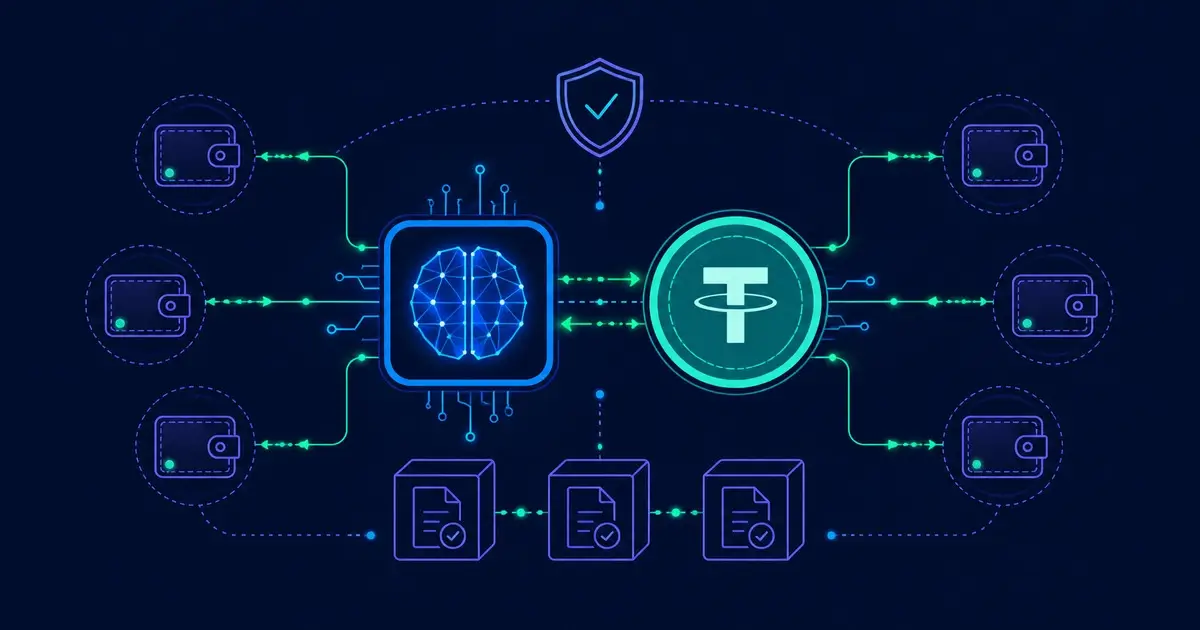
AI agents may become one of the first truly native users of stablecoin payment rails because autonomous software needs fast, programmable, low-friction payments. Traditional payment systems were designed around humans, cards, banks, forms, and manual approval flows. AI agents may need something different: wallets, spending rules, micropayments, subscriptions, API payments, and machine-to-machine settlement.
The idea is not that AI agents will replace human financial decisions overnight. The more realistic trend is that autonomous software may gradually need payment infrastructure that works better for automated tasks. Stablecoins, digital dollars, smart contracts, and crypto wallets could become a natural fit for that role. Related coverage includes AI Is Reshaping Crypto Companies, Why Stablecoins Are Quietly Becoming Crypto’s Biggest Real-World Use Case, and Why More Crypto Companies Are Building Around Stablecoins.
Key Takeaways
- AI agents may need payment systems designed for software, not only humans
- Stablecoins could support machine-to-machine payments and API billing
- Autonomous wallets may allow agents to make approved transactions
- USDC and other stablecoins are becoming part of broader payment infrastructure
- Traditional card and banking rails may be less flexible for agentic payments
- Compliance, wallet security, and spending limits remain major concerns
- Analysts are watching AI commerce as a possible stablecoin use case
What Happened
AI agents are becoming more capable of completing tasks across software systems.
At the same time, stablecoins are becoming more important in crypto payment infrastructure.
That creates a new question:
What happens when autonomous software needs to pay for something?
Possible examples include:
- paying for API access
- buying data
- renewing subscriptions
- settling usage-based fees
- paying another software agent
- triggering on-chain transactions
- managing small automated payments
👉 In practice, stablecoin rails may fit these use cases better than traditional payment systems built around human approval.
Human Payments vs AI Agent Payments
| Feature | Human Payments | AI Agent Payments |
|---|---|---|
| Primary User | Humans approve and manage payments | Software can initiate approved payment actions |
| Payment Flow | Cards, banks, apps, and manual confirmation | Wallets, rules, APIs, and automated settlement |
| Speed Needs | Often acceptable with delays | Requires fast execution and reliable confirmation |
| Payment Size | Usually larger consumer transactions | May include frequent small micropayments |
| Infrastructure Fit | Built around identity and banking rails | Built around programmable money and wallets |
What Are AI Agent Payments?
AI agent payments are transactions initiated or managed by autonomous software within approved limits.
That does not mean an AI system should have unlimited financial control.
A safer version would include:
- wallet permissions
- spending limits
- human approval thresholds
- transaction monitoring
- restricted payment categories
- compliance checks
- revocable access
For example, a user could allow an AI assistant to spend up to a small monthly limit on approved tools, API usage, or subscriptions.
This makes payments part of the agent’s workflow instead of a separate manual step.
Why Stablecoins Fit Machine-to-Machine Payments
Stablecoins may fit AI agent payments because they are digital, programmable, and easier to integrate with software systems.
AI agents do not need physical cards.
They need:
- wallets
- rules
- APIs
- settlement
- permissions
- automation
Stablecoin payments can be designed around those primitives.
Why Stablecoins Fit AI Agent Payments
| Feature | Why It Matters |
|---|---|
| Programmability | Stablecoins can interact with wallets and smart contracts |
| Settlement | Transfers can settle on-chain without card networks |
| Micropayments | Small payments may be easier than traditional rails |
| Global Access | Digital dollars can move across borders more easily |
| Automation | Rules-based payments can support autonomous software |
Why Traditional Payment Rails Were Built for Humans
Traditional payment systems were designed around human users and financial institutions.
They rely heavily on:
- cards
- bank accounts
- payment processors
- account approvals
- manual checkout flows
- fraud review systems
- identity verification
These systems work well for many consumer payments.
However, they may not be ideal for autonomous software that needs frequent, small, rules-based transactions.
For AI agents, the payment system may need to behave more like programmable infrastructure than a checkout page.
How USDC and Stablecoin Wallets Could Power AI Agents
USDC and other stablecoins may become useful for AI agents because they represent digital dollars that can move through programmable wallets.
A possible AI agent payment stack could include:
- stablecoin wallet
- spending policy
- approved merchants or APIs
- smart contract rules
- compliance monitoring
- transaction logs
- human override controls
Important context: the goal is not to remove human control.
The goal is to let software execute approved payment actions within clear rules.
Related articles:
- Why More Crypto Platforms Are Focusing on Real-World Payments
- Why Tokenized Treasuries Are Crypto’s Wall Street Bridge
- Why Stablecoin Rewards Are Crypto’s Next Regulation Battle
Who Could Use AI Agent Stablecoin Payments?
| Group | Possible Use Case |
|---|---|
| AI Assistants | Could pay for tools, APIs, data, or subscriptions |
| Developer Platforms | Could support automated usage-based billing |
| Data Providers | Could receive machine-to-machine payments |
| Crypto Wallets | Could manage permissions and spending limits |
| Payment Companies | Could build stablecoin rails for AI commerce |
Why This Matters for Crypto Infrastructure
AI agent payments could become important because they connect several crypto infrastructure trends:
- stablecoin rails
- programmable wallets
- smart contracts
- on-chain settlement
- API payments
- digital dollars
- AI commerce
This could make stablecoins useful beyond trading and speculation.
If AI agents need payment infrastructure, stablecoins may become one of the easiest ways to connect autonomous software with financial activity.
👉 In practice, this could turn stablecoins into a settlement layer for software-driven commerce.
Key Risks Analysts Are Watching
AI agent payments also create serious risks.
Autonomous wallets must be designed carefully because automated systems can make mistakes, be manipulated, or be misconfigured.
Main Risks Around AI Agent Payments
| Risk | Why It Matters |
|---|---|
| Wallet Security | Autonomous wallets need strong permission controls |
| Compliance | AI payments still require monitoring and legal safeguards |
| Fraud Risk | Automated systems can be abused if controls are weak |
| Spending Limits | Agents need clear budgets and transaction rules |
| User Trust | People must understand what agents can and cannot do |
What Happens Next
Analysts are watching several developments:
- AI agent wallet experiments
- stablecoin payment APIs
- programmable spending controls
- compliance systems for automated payments
- transaction monitoring tools
- USDC and stablecoin infrastructure
- crypto wallet permission models
The key question is whether AI agents can safely use payment rails without creating new risks for users, platforms, or regulators.
Related coverage:
- Why Privacy Is Becoming Crypto’s Missing Infrastructure Layer
- Why Regulators Are Paying More Attention to Stablecoins in 2026
- Why More Crypto Users Are Choosing USDT Over Bitcoin
Important Context
AI agent payments should not be framed as unlimited autonomous finance.
The safer model is controlled autonomy.
That means:
- users approve permissions
- agents operate within limits
- platforms monitor suspicious activity
- wallets restrict risky behavior
- humans remain responsible for high-value decisions
This is why stablecoin rails, compliance, wallet design, and transaction monitoring may all become part of the same infrastructure conversation.
Final Thoughts
AI agents may become stablecoin’s first native users because autonomous software needs payment rails that are programmable, fast, global, and compatible with machine-to-machine commerce.
Traditional payment systems were built primarily for humans. Stablecoins may be better suited for software that needs wallets, rules, settlement, micropayments, and API-based payments.
In practice, the biggest opportunity is not futuristic AI hype. It is payment infrastructure for automated software operating under clear human-approved limits.
FAQ
What are AI agent payments?
AI agent payments are transactions initiated or managed by autonomous software within approved rules, limits, and permissions.
Why would AI agents use stablecoins?
Stablecoins can provide programmable wallets, fast settlement, digital dollar payments, and machine-to-machine transaction rails.
Are stablecoins better than cards for AI agents?
For some use cases, yes. Stablecoins may be easier to integrate with automated workflows, APIs, and smart contracts.
How could USDC power AI agent payments?
USDC could be used as a digital dollar inside programmable wallets that allow AI agents to make approved payments or settle usage-based fees.
What are machine-to-machine payments?
Machine-to-machine payments are transactions between software systems, devices, or agents without requiring manual checkout for every payment.
What risks come with AI agents using crypto wallets?
Major risks include wallet security, fraud, overspending, compliance failures, and unclear user permissions.
What happens next for AI and stablecoin payments?
Analysts are watching AI wallet tools, stablecoin payment APIs, programmable spending controls, and compliance systems for automated transactions.

Bitcoin Miners Are Becoming AI Power Companies
Hut 8’s role in Anthropic’s huge AI expansion shows why grid connections, land and power infrastructure may become more valuable than Bitcoin mining itself.

Crypto Defenders Say AI Safety Rules Are Helping Attackers
Bitcoin and crypto firms say frontier AI restrictions can leave open-source defenders with weaker security tools than attackers, exposing a difficult cyber safety trade-off.
AI Agents Are Starting to Pay With Stablecoins
Coinbase is letting businesses accept x402 payments from AI agents, testing whether stablecoins can become the payment rail for autonomous software and APIs.