
TrendCrypt News
DeFi’s Next Battle Is Decentralization
DeFi regulation is increasingly focused on what decentralization actually means, including protocol control, front ends, smart contracts, governance, compliance, and market structure.
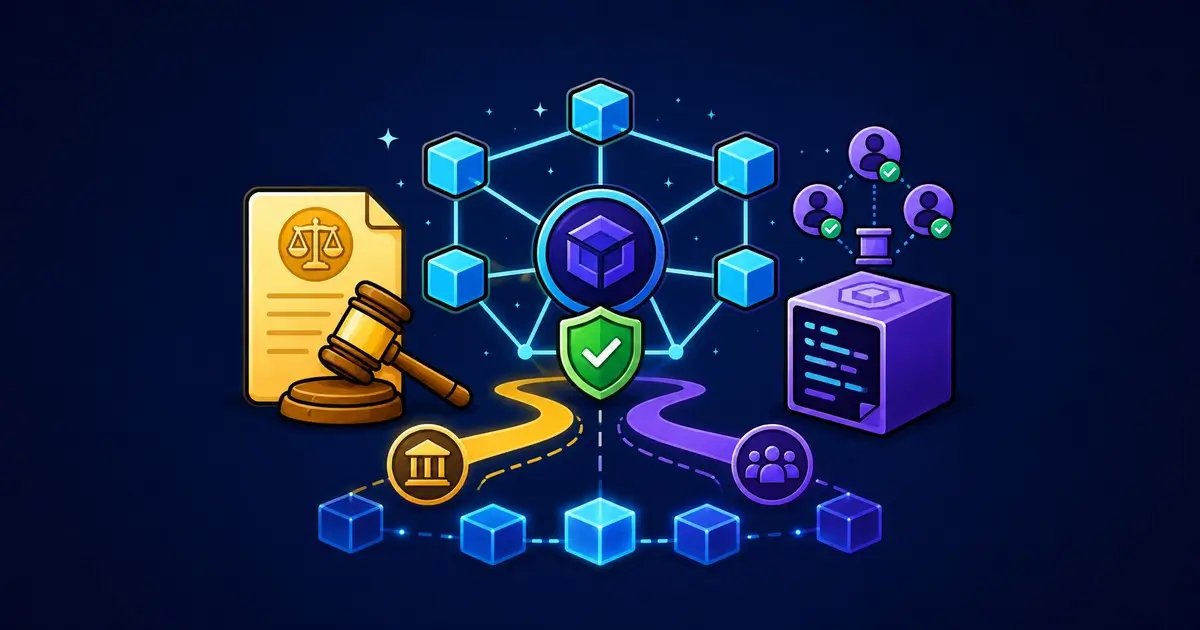
DeFi’s next major regulatory fight may be over what “decentralized” actually means. As crypto market structure rules develop, regulators are likely to look beyond branding and examine who controls the front end, who updates the protocol, who collects fees, who can pause contracts, and whether users are interacting with neutral software or a controlled financial platform.
The debate matters because decentralized finance sits between software, markets, governance, and regulation. Some DeFi protocols operate through smart contracts and non-custodial wallets, while others still depend heavily on teams, websites, admin keys, governance insiders, or front-end operators. Related coverage includes Why Regulators Are Paying More Attention to Stablecoins in 2026, Why Stablecoin Rewards Are Crypto’s Next Regulation Battle, and Why Privacy Is Becoming Crypto’s Missing Infrastructure Layer.
Key Takeaways
- DeFi regulation may increasingly focus on what “decentralized” means
- Regulators may examine control, governance, front ends, and smart contracts
- A protocol may be non-custodial but still have centralized control points
- Governance tokens alone may not prove true decentralization
- Front-end operators could become a major regulatory focus
- Compliance questions may depend on who can influence or profit from the system
- Analysts are watching decentralization tests as crypto market structure rules evolve
What Happened
DeFi regulation is moving from broad discussion to more specific questions about control.
The key issue is not only whether a project calls itself decentralized.
The deeper questions include:
- who controls the user interface
- who can upgrade smart contracts
- who collects protocol fees
- who manages governance
- who can pause or restrict activity
- who benefits financially from user activity
- whether users depend on a team or neutral software
👉 In practice, regulators may focus less on marketing language and more on actual control.
That could make decentralization one of the most important legal and structural questions in crypto.
Centralized Platforms vs DeFi Protocols
| Feature | Centralized Platforms | DeFi Protocols |
|---|---|---|
| User Access | Account-based platform access | Wallet-based protocol interaction |
| Control | Company usually controls operations | Control may be spread across contracts and governance |
| Custody | Platform may custody user funds | Users often keep wallet control |
| Compliance Model | Clear regulated operator | More complex responsibility structure |
| Main Question | Who operates the platform? | Who actually controls the protocol? |
Why Decentralization Is Becoming a Legal Question
Decentralization is becoming a legal question because financial regulation often depends on identifying responsible parties.
Traditional finance usually has clear operators:
- banks
- brokers
- exchanges
- payment companies
- market makers
- custodians
DeFi is different because many systems use:
- smart contracts
- liquidity pools
- governance tokens
- non-custodial wallets
- decentralized exchanges
- DAO governance
However, regulators may still ask whether someone meaningfully controls the system.
Important context: decentralization may not be a simple yes-or-no label. It may exist on a spectrum.
What Makes a Protocol Decentralized?
A DeFi protocol may appear more decentralized when:
- users keep custody of funds
- smart contracts operate without manual approval
- governance is broadly distributed
- no single team controls upgrades
- no single company controls access
- protocol rules are transparent and open
- users can interact directly with contracts
A protocol may appear less decentralized when:
- one team controls the main front end
- insiders hold most governance tokens
- admin keys can change core rules
- fees flow to a central company
- contracts can be paused by a small group
- users depend on one hosted interface
👉 Analysts are watching whether future rules define decentralization based on technical structure, governance structure, or economic control.
What Regulators May Check for Decentralization
| Area | What Regulators May Examine |
|---|---|
| Front-End Control | Who operates the website or app users access |
| Admin Keys | Whether insiders can pause, upgrade, or change contracts |
| Fee Capture | Who earns revenue from protocol activity |
| Governance Power | Whether token holders meaningfully control decisions |
| User Dependence | Whether users rely on a team instead of neutral software |
Front Ends vs Smart Contracts
One of the most important DeFi questions is the difference between front ends and smart contracts.
A smart contract may be decentralized on-chain, while the website that users access may still be controlled by a company or development team.
That creates a difficult regulatory distinction.
For example:
- the protocol may exist on Ethereum or another blockchain
- the main website may be hosted by an identifiable team
- the smart contracts may remain accessible directly
- most users may still rely on the website
- regulators may focus on the interface used by ordinary users
Related coverage includes Layer 2 Networks Continue Growing as Ethereum Users Search for Lower Fees, Ethereum Gas Fees Are Rising Again, and Solana vs Ethereum in 2026.
Front Ends vs Smart Contracts
| Layer | General Meaning |
|---|---|
| Front End | Website or interface users interact with |
| Smart Contract | On-chain code that executes protocol logic |
| Control Layer | Front ends can be operated by identifiable teams |
| Protocol Layer | Smart contracts may continue even if one interface changes |
| Regulatory Focus | Regulators may examine both access points and control points |
Why Regulators Care About Control
Regulators care about control because control often determines responsibility.
If a team can change fees, block users, pause contracts, upgrade logic, or control access, regulators may argue the system is not fully decentralized.
Potential control points include:
- admin keys
- upgrade authority
- governance concentration
- front-end hosting
- fee routing
- treasury control
- branding and marketing
- user support operations
In practice, regulators may ask whether the protocol behaves more like neutral infrastructure or more like a financial platform operated through software.
Why DeFi Teams Are Watching Closely
DeFi teams are watching closely because future rules could affect how protocols are built and operated.
Teams may need to rethink:
- admin key design
- governance distribution
- front-end structure
- fee collection models
- compliance controls
- DAO voting power
- protocol upgrade processes
Some teams may push toward stronger decentralization.
Others may choose more controlled compliance models.
Both paths could shape the future of decentralized finance.
Decentralization vs Compliance
The difficult question is whether DeFi can remain decentralized while still satisfying compliance expectations.
Regulators may focus on:
- AML controls
- sanctions screening
- fraud prevention
- consumer protection
- market integrity
- financial institution definitions
DeFi supporters argue that neutral smart contracts are different from centralized companies.
Regulators may respond that if real people control key parts of the system, responsibility still exists.
👉 The core debate is not whether compliance matters. It is where compliance obligations should attach in a decentralized system.
Related coverage:
- Why Tokenized Treasuries Are Crypto’s Wall Street Bridge
- Crypto Security Threats Are Evolving
- Crypto Prediction Markets Are Growing
Key Risks Analysts Are Watching
DeFi regulation could create both clarity and new risks.
Main Risks Around DeFi Regulation
| Risk | Why It Matters |
|---|---|
| Legal Uncertainty | Teams may not know when a protocol is sufficiently decentralized |
| Compliance Pressure | Some interfaces may face AML or reporting expectations |
| Governance Capture | Large token holders may control decisions |
| User Confusion | Decentralized branding may hide centralized control points |
| Innovation Risk | Overly broad rules could push teams away from public infrastructure |
What Happens Next
Analysts are watching several major questions:
- how lawmakers define decentralization
- whether front-end operators face direct obligations
- whether governance tokens count as meaningful decentralization
- how admin keys are treated
- whether non-custodial protocols receive different treatment
- how compliance rules apply to DAOs
- whether DeFi teams redesign protocols around legal clarity
The next phase of DeFi may be shaped less by slogans and more by practical control structures.
Important Context
Decentralization should not be framed as a loophole.
A better way to understand it is as a question of system design.
A truly decentralized protocol may reduce reliance on trusted intermediaries.
A partially decentralized protocol may still have identifiable control points.
A centralized platform using DeFi branding may still behave like a regulated financial business.
This distinction matters because users, regulators, developers, and investors all need clearer language around what DeFi actually is.
Final Thoughts
DeFi’s next major fight may be the meaning of decentralized because regulation increasingly depends on control, responsibility, and market structure.
Smart contracts, governance tokens, DAOs, front ends, admin keys, liquidity pools, and non-custodial wallets all matter. But no single feature automatically proves decentralization.
In practice, the future of DeFi regulation may depend on whether protocols can show they are neutral, user-controlled financial infrastructure rather than centralized platforms operating through blockchain software.
FAQ
What does decentralized mean in DeFi?
In DeFi, decentralized generally means users interact with open smart contracts without relying on a single company to custody funds or control the system.
Why is decentralization becoming a legal question?
Because regulators may need to determine who controls a protocol, who profits from it, and who should be responsible for compliance.
Can DeFi protocols be regulated?
Potentially yes. Regulation may focus on front-end operators, governance control, fee recipients, or teams with upgrade authority.
What is the difference between a front end and a smart contract?
A front end is the website or app users access. A smart contract is the on-chain code that executes protocol logic.
Why do regulators care about protocol control?
Control helps identify responsibility. If a team can pause contracts, change rules, or control access, regulators may view the system as less decentralized.
Are governance tokens enough to make DeFi decentralized?
Not always. Governance tokens may support decentralization, but concentration, voting power, admin keys, and real control still matter.
What happens next for DeFi regulation?
Analysts are watching how lawmakers define decentralization, whether front-end operators face compliance rules, and how DeFi teams redesign protocol control.

Tokenized Assets Are Starting to Look Less Like Crypto
Base’s Cobalt upgrade puts transfer policies, issuer controls and corporate actions directly into token infrastructure, showing why regulated assets can live onchain without becoming permissionless crypto.

ZetaChain Is Shutting Down Its Own Blockchain for Solana
ZetaChain holders approved winding down the project’s Layer 1 and moving ZETA to Solana, testing when maintaining an independent blockchain stops making economic sense.

Cronos Halt Exposes DeFi’s Emergency Brake Problem
Cronos stopped and restored its blockchain after a Tectonic exploit, showing why DeFi needs emergency controls without making decentralization meaningless.