
TrendCrypt News
Haruko Hack Shows Why Read-Only Crypto APIs Still Carry Risk
A targeted attack on institutional crypto platform Haruko exposed read-only exchange API details and trading data, showing why visibility alone can become a security risk.
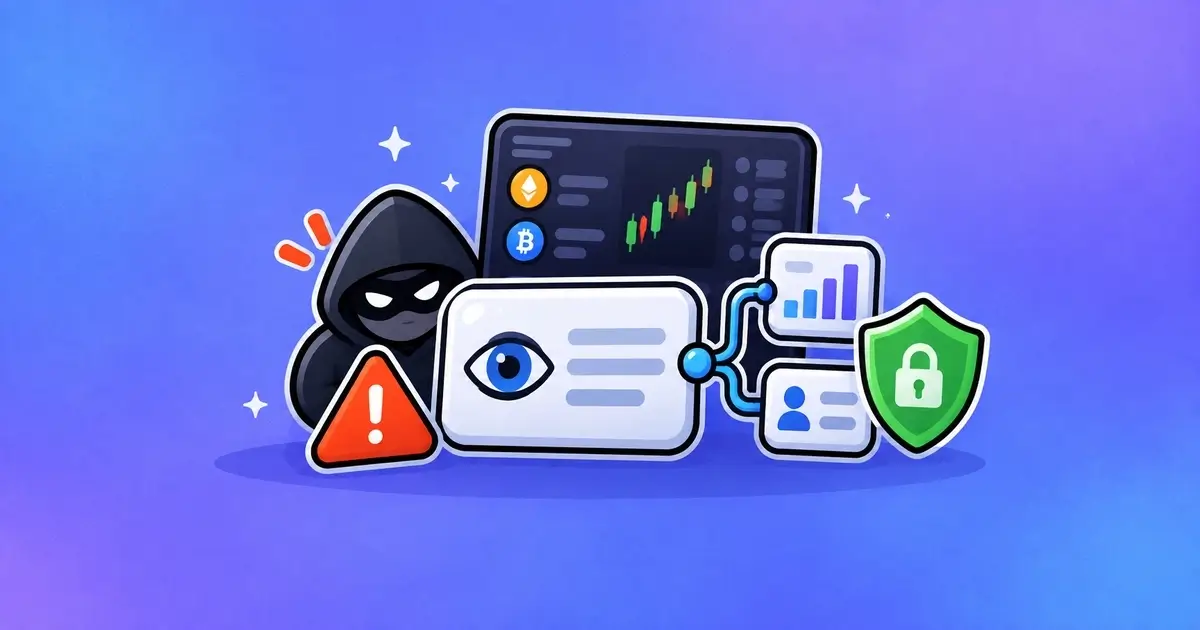
Crypto security usually focuses on the ability to move money.
Can an attacker withdraw?
Can they sign?
Do they have the private key?
The attack on institutional crypto technology provider Haruko shows why that definition is too narrow.
Haruko was hit by a targeted cyberattack that affected 15 clients.
The company told customers that attackers exploited a vulnerability in one of its processes and extracted a user-access token from memory.
That reportedly exposed information including:
- read-only exchange API details,
- trading data.
The phrase read-only sounds reassuring.
And in one important sense, it is.
A properly configured read-only exchange API credential ordinarily should not allow someone to:
- place trades,
- withdraw crypto.
But that does not make the information behind the credential harmless.
Institutional trading systems can expose:
- portfolio balances,
- open positions,
- exchange relationships,
- trading history,
- risk exposure.
For a hedge fund or market maker, that data can itself be extremely valuable.
There is another complication.
People familiar with the Haruko incident have reported that some affected clients suffered a small amount of financial loss.
The exact amount has not been disclosed.
More importantly, the public information available so far does not establish exactly how those losses occurred.
A read-only API key by itself would not normally provide withdrawal permission.
That means the correct lesson is not:
Haruko proved read-only keys can directly steal your money.
The stronger lesson is:
A third-party system can create serious security exposure even when it cannot directly move the assets it monitors.
That makes portfolio middleware one of crypto’s quieter attack surfaces.
Key Takeaways
Institutional crypto infrastructure provider Haruko was hit by a targeted cyberattack in September 2026.
Haruko told customers that 15 clients were affected.
Attackers reportedly exploited a vulnerability in an internal Haruko process.
A user-access token was extracted from process memory.
Exposed information included read-only exchange API details and trading data.
Haruko says the affected clients had not enabled inbound IP whitelisting.
The company fixed the vulnerability and rotated server-side secrets.
Haruko says client login credentials on their own systems were not compromised.
Haruko itself does not custody client assets.
Its platform connects institutional users to centralized exchanges, custodians, blockchains and onchain protocols.
Read-only exchange API credentials generally cannot place trades or authorize withdrawals.
That does not make them harmless.
Read access can reveal sensitive:
- balances,
- positions,
- transaction history,
- venue usage.
For professional traders, position information can have economic value even if it cannot directly move money.
Some limited client losses have been reported by people familiar with the incident.
The exact path between Haruko’s compromise and those losses has not yet been publicly established.
A full technical post-mortem is still important before drawing stronger conclusions.
IP whitelisting can provide an additional layer of protection because a valid stolen credential may still be rejected when used from an unauthorized network.
The incident illustrates third-party concentration risk: compromising one portfolio infrastructure provider can expose information connected to several different exchanges and clients.
Institutional crypto security therefore needs to protect:
- assets,
- credentials,
- trading information,
- middleware.
What Haruko Actually Does
Haruko is not primarily a crypto exchange.
It does not need to hold every client’s assets to provide its core service.
Instead, it acts as an institutional data and risk layer.
A professional crypto firm may operate across:
- centralized exchanges,
- custodians,
- DeFi protocols,
- blockchains.
Managing all of those positions separately becomes difficult.
Haruko connects them into a common platform.
That can give a fund one view of:
- balances,
- exposure,
- risk,
- performance.
The convenience is obvious.
The security implication is less obvious.
One platform can now see across several otherwise separate accounts.
Portfolio Middleware Is a Powerful Observer
Imagine a hedge fund trades on:
- Binance,
- Coinbase,
- Kraken,
- several onchain protocols.
Without middleware, each venue knows only part of the portfolio.
Binance knows what the fund has on Binance.
Coinbase knows what it has on Coinbase.
A portfolio-management system can potentially see all of them together.
That makes it extremely useful.
It also makes it an attractive target.
Where Portfolio Middleware Sits in the Security Stack
| System | Primary Job | Main Security Exposure |
|---|---|---|
| Exchange | Holds assets and executes trades | Exchange compromise can directly threaten funds |
| Custodian | Protects keys and assets | Key-management failure can directly affect custody |
| Portfolio middleware | Aggregates data from many venues | Compromise can expose several accounts through one provider |
| Risk system | Calculates exposure, margin and performance | Sensitive strategy information can leak even without asset access |
| Execution system | Routes or creates orders | Compromise can alter trading behavior |
| Identity / SSO provider | Controls staff access to institutional systems | Account compromise can unlock several connected services |
The Middleware May Know More Than Any Single Exchange
This is the concentration problem.
An individual exchange account might reveal:
20% of the fund.
The portfolio platform may reveal:
the whole fund.
It can show where capital is distributed.
It can show which positions offset each other.
It can show where leverage is concentrated.
That creates informational value even without custody.
What Happened in the Haruko Attack?
According to information communicated to affected customers, attackers targeted Haruko itself.
They exploited a vulnerability in one of the company’s processes.
From that process, they extracted a user-access token.
That token then enabled access to data available in the process’s memory.
The potentially exposed information included:
- read-only exchange API details,
- trading records.
How the Haruko Incident Unfolded
| Stage | What Happened | Why It Matters |
|---|---|---|
| Initial compromise | Attackers exploited a vulnerability in one of Haruko’s internal processes | The intrusion began inside the middleware provider rather than at a client exchange account |
| Access token extracted | A user-access token was obtained from process memory | The attacker gained access to information available through the affected process |
| Client data exposed | Read-only exchange API details and trading data were among the exposed information | The attacker gained visibility into institutional account activity without necessarily gaining withdrawal authority |
| 15 clients affected | Haruko identified 15 affected customers | One infrastructure provider created a shared security dependency across multiple institutions |
| IP whitelisting missing | Affected customers reportedly had not enabled inbound IP whitelisting | Valid credentials had fewer network-level restrictions on where they could be used from |
| Limited fund losses reported | People familiar with the incident reported small losses for some clients | The exact mechanism connecting the exposed data to those losses remains unclear |
| Remediation | Haruko fixed the vulnerability and rotated server-side secrets | The immediate technical exposure was contained while a fuller post-mortem was planned |
The Attack Did Not Start With a Client Password
Haruko reportedly told clients that their own login credentials had not been compromised.
That distinction matters.
The attack was not necessarily:
An employee reused a password.
The vulnerability existed inside a service provider sitting between institutional users and other crypto systems.
That is a supply-chain style problem.
One Vendor Can Become a Path Into Many Accounts
A fund may individually secure:
- every exchange,
- every wallet.
Then it connects all of them to one portfolio system.
Now the security architecture contains another dependency.
If that system is compromised, the attacker may gain visibility across many otherwise independent venues.
This is why vendor security matters so much.
What Is an Exchange API Key?
An API key allows software to communicate directly with an exchange.
Instead of a person repeatedly logging into a website, software can request information automatically.
For example:
What is my BTC balance?
or:
Show my open futures positions.
Trading bots can also use APIs to:
- place orders,
- cancel orders.
The exact ability depends on permissions.
Not Every API Key Has the Same Power
Well-designed exchanges allow API permissions to be separated.
Different Exchange API Permission Levels
| Permission | What It Can Usually Access | What It Can Change | Primary Risk |
|---|---|---|---|
| Read-only | Balances, positions, order history and other account data | No direct trading or withdrawal permission under normal configuration | Information leakage and strategic exposure |
| Trade | Read account data and place or cancel orders | Can alter portfolio exposure | Unauthorized trades, manipulation or forced losses |
| Withdrawal | Move assets to external destinations | Can directly transfer funds | Immediate asset theft |
| Administrative | May alter API settings, permissions or account configuration | Potentially broader than ordinary trading access | Privilege escalation and control loss |
This is why security guidance usually says:
Never give withdrawal permission to a portfolio tracker.
A portfolio tracker generally does not need it.
Read-Only Is Still the Correct Default
The Haruko incident should not create the wrong lesson.
Read-only access is still dramatically safer than:
- trade access,
- withdrawal access.
If a service only needs to calculate portfolio value, it should not receive permission to move funds.
That principle remains valid.
The mistake is assuming:
read-only = zero risk.
Read Access Can Reveal Extremely Sensitive Information
Consider what a professional trading account may expose.
Why Trading Data Can Be Sensitive
| Information | What It Reveals | Why an Attacker May Care |
|---|---|---|
| Current balances | Shows where capital is concentrated | Can reveal which venue or asset matters most to the fund |
| Open positions | Shows long and short exposure | Can reveal directional risk and liquidation sensitivity |
| Order history | Shows previous execution behavior | Can help infer trading style and venue preferences |
| Transfers | Shows capital movements between venues | Can reveal operational workflows and liquidity needs |
| Margin information | Shows collateral and leverage | May help identify stressed or vulnerable positions |
| Historical trades | Shows recurring strategy patterns | Can help attackers profile future behavior |
For a retail user, knowing that someone owns:
$500 of BTC
may not be especially useful.
For a hedge fund managing millions of dollars, knowing:
- exact positioning,
- leverage
can be commercially sensitive.
Position Data Can Be Economically Valuable
Suppose an attacker learns that a fund is heavily long a thinly traded token.
They may also learn:
- approximate size,
- exchange.
Even without access to the fund’s trading account, that knowledge may affect how someone trades against it elsewhere.
The attacker has information the broader market does not.
Information itself can become an asset.
A Read-Only Leak Can Create Asymmetric Information
Markets operate on information.
A firm protects its strategy because revealing it can change the market around the strategy.
Imagine a market maker’s competitor suddenly knows:
- where inventory is concentrated,
- how the position changed overnight.
That can weaken the firm’s execution advantage.
No stolen coin is required.
This Is Why Hedge Funds Protect Positions
Traditional hedge funds do not publicly broadcast:
- every position,
- every trade
in real time.
Why?
Because competitors could use that information.
Crypto does not change this principle.
If anything, continuous markets make real-time position confidentiality more important.
Could Someone Front-Run a Fund With Read-Only Data?
Potentially, depending on what information is available and how quickly it is exposed.
The term front-running has a specific meaning in many regulated contexts, so it should not be applied casually.
But the broader information risk is real.
Knowing another market participant’s intentions or exposures can create opportunities to trade around them.
That risk needs to be considered separately from direct account compromise.
Limited Financial Losses Have Been Reported
This part needs precision.
People familiar with the Haruko incident have said some smaller hedge-fund clients suffered small financial losses.
The exact amount has not been made public.
The exact mechanism has also not been fully disclosed.
That matters because the exposed API credentials were described as read-only.
Read-Only Keys Should Not Normally Authorize Withdrawals
If an exchange API key genuinely has:
read only
permission, it should not be able to tell the exchange:
Send this BTC to my address.
That operation should be rejected.
Similarly, it should not normally place an unauthorized trade.
So a direct chain:
read-only API stolen → attacker withdrew crypto
should not be assumed without evidence.
The Missing Details Matter
Several possibilities could theoretically explain losses around a broader compromise.
For example:
- another credential may have been involved,
- information exposure may have supported another attack,
- affected systems may have had different configurations.
Those are possibilities.
They are not established facts in this incident.
A technical post-mortem is needed.
TrendCrypt should not fill that gap with speculation.
The Correct Current Statement
The most accurate framing is:
Haruko’s compromise exposed read-only exchange API details and trading information for 15 clients. Limited client losses have separately been reported, but the public reporting does not yet establish the exact loss mechanism.
That distinction is important.
Good security reporting should become more precise as the evidence becomes more complex.
Not less.
IP Whitelisting Is One of the Most Important Details
Haruko says the affected clients were those without inbound IP whitelisting.
That deserves more attention than it will probably receive.
An IP whitelist tells an exchange:
Accept this API credential only when the request comes from approved network addresses.
Now imagine an attacker steals the API key.
They try to use it from their server.
The key itself may be valid.
The source network is not.
The exchange rejects the request.
Credentials Become Two-Part Access
Without IP whitelisting:
valid API credential = access
subject to the key’s permissions.
With whitelisting:
valid credential + approved origin = access
That is a much stronger security model.
It is not perfect.
But it adds another obstacle.
IP Whitelisting Does Not Make API Keys Unstealable
Important distinction.
The credential can still leak.
An attacker may still learn sensitive information from the compromised middleware itself.
Whitelisting mainly reduces the ability to reuse the credential from arbitrary external infrastructure.
So it helps with credential replay.
It does not erase the underlying vendor compromise.
Why Were Read-Only Keys in Memory?
Software has to use credentials.
That creates a fundamental problem.
You can encrypt secrets at rest.
Eventually the application must:
- decrypt,
- load
them to authenticate to the exchange.
At that point, usable information can temporarily exist in process memory.
Why Secret Storage Has Multiple Security States
| Secret State | What Happens | Main Limitation |
|---|---|---|
| Encrypted at rest | Credential is protected while stored on disk or in a database | Does not protect it after an application decrypts it for use |
| In process memory | Running application may temporarily hold decrypted secrets | A process compromise can potentially expose usable credentials |
| Environment / configuration | Application retrieves credential from a secret store | Poor logging or debugging can accidentally expose it |
| Network request | Credential is used to authenticate to an exchange API | TLS protects transport but not a compromised endpoint |
This is not unique to Haruko.
Almost every application using credentials faces the same problem.
Encryption protects data while it is stored.
The application eventually needs usable plaintext or an equivalent authentication secret.
A Secret Is Most Vulnerable When Software Needs It
Think of a physical safe.
The document is protected while the door is closed.
To use the document, someone opens the safe.
Software secrets have a similar lifecycle.
Secure systems therefore try to minimize:
- how long secrets remain accessible,
- which processes can access them.
A process compromise can be especially dangerous because it occurs at the point where secrets are actively being used.
Process Memory Is Part of the Attack Surface
Security discussions often focus on:
- databases,
- files.
Modern attacks can target memory.
If malicious code or an exploit gains sufficient access to a running process, it may inspect information that never appears unencrypted on disk.
That can include:
- tokens,
- API credentials.
This is why secret-management design matters even when databases are strongly encrypted.
Rotating Server-Side Secrets Was an Important Response
Haruko says it refreshed or rotated server-side secrets after fixing the vulnerability.
Rotation invalidates old credentials and replaces them.
That reduces the useful lifetime of anything an attacker may have obtained.
Credential rotation is one of the first steps after a suspected secret exposure.
Exchange API Keys Should Also Be Rotated After Exposure
If a third-party system storing or using an API key is compromised, users should generally assume that credential may need replacement.
Even if it is:
- read-only.
Old key:
disable.
New key:
create.
Then add the strongest practical restrictions.
This shortens the attacker’s window.
Separate Keys Reduce Blast Radius
Suppose one institutional account uses the same API key across several internal services.
If one service is compromised, everything using the key may need to be treated as exposed.
Better architecture gives different systems:
- different credentials.
That makes revocation more targeted.
It also makes logs easier to interpret.
Controls That Reduce Exchange API Risk
| Control | What It Does | Security Benefit |
|---|---|---|
| Minimum API permissions | Grant only the permissions the software actually needs | Limits what a stolen credential can directly do |
| Withdrawal disabled | Prevent third-party portfolio tools from moving assets | Blocks the most direct theft path |
| IP whitelist | Allow API use only from approved network addresses | A stolen credential may still fail from an attacker-controlled host |
| Separate API keys | Use different credentials for different services | Limits blast radius when one provider is compromised |
| Credential rotation | Replace keys after incidents or on a schedule | Reduces how long stolen credentials remain useful |
| Monitoring | Alert on unusual API usage or source addresses | Can identify misuse earlier |
| Vendor isolation | Prevent one middleware provider from receiving unnecessary access across every account | Reduces concentration risk |
Permission Minimization Is Still the First Rule
The principle is known as least privilege.
Give a system exactly the access it needs.
Nothing more.
Portfolio tracker needs balances?
Give read-only.
Trading bot needs trades?
Give trading permission but keep withdrawals disabled.
Withdrawal system needs transfers?
Use a completely separate, highly restricted architecture.
That segmentation limits damage.
Never Give Withdrawal Access Just for Convenience
Some products may suggest broader permissions because it simplifies setup.
That should be treated cautiously.
If the application does not genuinely need to move assets:
withdrawal should be disabled.
A portfolio application gaining direct withdrawal authority dramatically changes its risk profile.
Crypto APIs Can Be More Powerful Than Passwords
This sounds strange.
A password may require:
- two-factor authentication,
- device approval.
An API key can be designed for automated use.
That means it may operate without a human approving every request.
That is necessary for automation.
It also means API credentials deserve extremely strong protection.
Two-Factor Authentication May Not Protect API Calls
A user might think:
My exchange account uses 2FA, so I’m safe.
2FA usually protects:
- login,
- withdrawal actions
through the user interface.
An authorized API credential can authenticate programmatically according to its own permissions.
It may not trigger a fresh 2FA prompt for every call.
That is the point of an API.
So API security needs its own controls.
This Is Why Withdrawal Permission Is So Dangerous
An API key with withdrawal rights can potentially bypass the normal human workflow entirely.
An attacker holding such a credential may not need to:
- know the account password,
- access the user’s phone.
They already hold machine-level authorization.
That is why exchanges and institutions should treat withdrawal-enabled keys almost like hot-wallet signing infrastructure.
Haruko Says Its Platform Uses Read-Only Keys
This is an important positive design choice.
Haruko describes its normal exchange connectivity as using:
- read-only API keys.
That reduces direct custody risk.
Its business primarily needs to observe portfolios, not move them.
The incident shows that reducing permission does not remove vendor risk.
But it can greatly limit how catastrophic a compromise becomes.
Middleware Is a Supply-Chain Risk
The user may trust:
- Exchange A,
- Exchange B,
- Exchange C.
Then all three are connected through:
Provider D.
Provider D has become part of the security chain.
Even if it holds no funds.
This is similar to other software supply chains.
A company can have excellent internal security while a trusted vendor creates another path to sensitive information.
One Provider Can Multiply the Blast Radius
The attacker does not need to compromise 15 hedge funds individually.
Compromise one shared platform.
Now data associated with 15 clients may become accessible.
This is the economics of supply-chain attacks.
One successful intrusion can produce many downstream victims.
Institutional Crypto Is Full of These Shared Dependencies
Modern trading firms rely on:
- custodians,
- portfolio systems,
- execution-management systems,
- data providers,
- identity providers,
- cloud infrastructure.
Every integration improves efficiency.
Every integration also creates another trust relationship.
Institutional crypto security is therefore increasingly an architecture problem.
Not merely:
where is the private key?
The Private Keys Can Be Safe While the Institution Is Still Exposed
This point deserves repeating.
Imagine every asset is stored through excellent custody.
No signing key leaks.
No unauthorized withdrawal occurs.
The attacker learns:
- the fund’s entire position book.
That is still a security incident.
Confidentiality is one of the traditional three pillars of cybersecurity:
- confidentiality,
- integrity,
- availability.
Crypto often focuses almost entirely on integrity:
Can someone steal or alter the assets?
Haruko highlights confidentiality.
Market Information Is an Asset
For a trading firm, information can have monetary value.
Strategies depend partly on competitors not knowing:
- exposures,
- timing.
The information does not need to be sold on a dark web forum to cause harm.
An attacker can potentially use it themselves.
That makes measuring incident losses difficult.
Some Security Losses Never Appear Onchain
Crypto likes measurable hacks.
Wallet lost:
$10 million.
Transaction hash proves it.
Information leakage is harder.
How much is a leaked strategy worth?
How much worse was execution because someone knew the position?
Those losses can be:
- indirect,
- impossible to attribute precisely.
That does not make them unreal.
“No Funds Stolen” Can Be an Incomplete Security Metric
A company may announce:
No assets were lost.
That is important.
Users should still ask:
- What data was accessed?
- What credentials were exposed?
- What can an attacker do with the information later?
Security cannot be measured solely in stolen token value.
This Fits a Broader Trend in Crypto Security
TrendCrypt has repeatedly examined how attackers are moving toward the infrastructure around crypto rather than trying to break the underlying cryptography.
The crypto security threats are evolving article covers this wider shift.
Haruko provides a particularly clean institutional example.
The attacker did not need to:
- break Bitcoin,
- compromise Ethereum consensus.
They targeted the software professionals use to understand their holdings.
It Also Connects to Platform Security
For ordinary users, third-party connections deserve attention too.
People connect exchange accounts to:
- portfolio trackers,
- tax software,
- trading bots.
Every connection can involve API access.
TrendCrypt’s crypto platform security guide focuses on security beyond surface-level marketing.
API integrations belong in that evaluation.
Remove Old Integrations
A common security problem is forgotten access.
User tests a trading tool.
Stops using it.
The API key remains active for two years.
That creates risk without providing benefit.
Users should periodically review:
- active API keys,
- connected applications.
If an integration is no longer needed:
revoke it.
Old Read-Only Keys Still Reveal Current Information
This is easy to overlook.
A read-only key created in 2024 may still pull:
- 2026 balances
if it remains active.
The fact that a user forgot the integration does not stop the software from having access.
Security cleanup should therefore include passive credentials, not only withdrawal-enabled ones.
Every API Connection Needs an Owner
Institutions should know:
- why the key exists,
- which service uses it,
- who approved it,
- when it should expire.
Credentials without clear ownership tend to live forever.
That is dangerous.
API inventory should be part of basic operational security.
Short-Lived Credentials Are Better Where Possible
Permanent keys are convenient.
Shorter-lived credentials reduce exposure.
If an attacker steals a token that expires soon, the attack window is limited.
Modern infrastructure increasingly uses:
- temporary tokens,
- scoped credentials.
Crypto exchange integrations should move in the same direction where supported.
Role-Based Access Helps Internally Too
Haruko’s own platform advertises role-based permissions.
The principle matters more broadly.
Not every employee should see:
- every wallet,
- every strategy.
A risk analyst may need different information from an administrator.
Internal least privilege protects against:
- account compromise,
- insider misuse.
Network Restrictions Are Underused
IP whitelisting may seem old-fashioned compared with:
- passkeys,
- hardware security keys.
It remains powerful for machine-to-machine access.
An institutional service normally connects from a known set of servers.
If an API request suddenly originates from:
- an unrelated cloud host,
there is often no good reason to accept it.
IP Whitelisting Is Not Perfect
Attackers can sometimes compromise:
- the whitelisted server itself,
- network infrastructure.
Organizations also need operational flexibility.
But security does not require one perfect control.
It requires layers.
Read-only permission.
Plus IP restriction.
Plus monitoring.
Plus credential rotation.
Together they are much stronger.
The Exact Loss Mechanism Is the Most Important Unanswered Question
Haruko has said it plans a technical post-mortem.
That document could materially improve understanding of the incident.
The key questions include:
- What process was compromised?
- How was the access token extracted?
- Exactly what exchange credentials were exposed?
- Could the attacker use those credentials directly?
- How were the reported financial losses caused?
- Why were only non-whitelisted clients affected?
- How long did the attacker have access?
- What logs detected the intrusion?
Until those answers are available, strong claims about causality should be avoided.
The Post-Mortem Matters More Than the Headline
Security incidents create incentives to simplify.
Company hacked.
Keys exposed.
Money stolen.
Real systems rarely fit such a neat sequence.
A detailed post-mortem can identify which security controls:
- worked,
- failed.
That helps other institutions improve their own infrastructure.
A vague statement does not.
What Would a Good Post-Mortem Include?
At minimum:
Timeline
When the attacker first gained access.
When Haruko detected it.
When affected clients were notified.
Root cause
What specific vulnerability allowed access.
Scope
Exactly which information was available.
Loss path
How any client funds were ultimately affected.
Remediation
What changed technically.
Prevention
What clients and Haruko will do differently.
That is the level of information needed for the industry to learn from the incident.
The Industry Should Avoid Blaming Clients Too Quickly
The fact that all affected clients reportedly lacked IP whitelisting is important.
It should not become:
The clients caused the breach.
The vulnerability reportedly existed inside Haruko.
IP whitelisting appears to have been an additional control that could have reduced downstream exposure.
Both can be true.
Strong security analysis asks:
Why did multiple layers fail or succeed?
Not:
Who can we blame first?
Defense in Depth Assumes One Control Will Fail
That is the purpose of layered security.
Haruko’s internal system can have a vulnerability.
A client can still be protected by:
- exchange-side IP restrictions.
Or an API key can leak.
Withdrawal permission can still be disabled.
No single layer is expected to be perfect forever.
The architecture should prevent one failure from becoming catastrophic.
This Is Why “Read Only” Was Valuable
Imagine the same incident involved:
withdrawal-enabled API keys.
The potential consequences could have been far more serious.
Permission minimization likely reduced the blast radius.
So the lesson is not that read-only restrictions failed.
The lesson is that they solved one type of risk:
direct account actions.
They did not solve:
data confidentiality.
What a Read-Only Compromise Can Still Affect
| Risk | What the Attacker Gains | Potential Severity |
|---|---|---|
| Direct asset theft | Attacker can authorize withdrawals | Usually low from a properly restricted read-only key alone |
| Trading-strategy exposure | Attacker sees positions and history | Potentially high for hedge funds and market makers |
| Target selection | Attacker identifies valuable accounts or stressed positions | Can support later phishing or intrusion attempts |
| Market exploitation | Sensitive positioning information is used elsewhere | Potential losses may occur without any unauthorized transaction in the victim account |
| Operational intelligence | Attacker learns exchanges, counterparties and workflows | Can make future attacks more convincing and targeted |
| Reputational harm | Confidential trading information becomes exposed | Institutional clients may lose confidence in service providers |
Different Users Have Different API Exposure
Who Should Care Most About Exchange API Security?
| User Type | Typical Exposure | Practical Response |
|---|---|---|
| Ordinary exchange user | API risk may be limited if no external portfolio software is connected | Check and remove unused API keys |
| Active trader | Bots and portfolio tools often require API access | Use separate restricted keys and IP whitelisting |
| Fund or trading desk | Multiple venues create large middleware dependency | Treat portfolio data as highly sensitive institutional information |
| Treasury team | Aggregators may see balances across many counterparties | Limit provider access and monitor credentials centrally |
An ordinary buy-and-hold user may have:
- no API keys at all.
A quantitative trading firm can depend on hundreds of machine connections.
Security priorities need to reflect that difference.
Retail Users Should Check Connected Applications Too
This is not only an institutional problem.
Retail crypto users frequently connect exchanges to:
- portfolio apps,
- tax calculators,
- automated bots.
The same principle applies.
Ask:
Does this service really need the permission I gave it?
If the answer is no:
reduce it.
Tax Software Usually Does Not Need Withdrawal Access
A tax application generally needs to read:
- transactions,
- trade history.
It should have no reason to:
- transfer BTC out.
If a product asks for broader access than its job requires, that should be questioned.
Function should determine permission.
Trading Bots Are More Complicated
A bot needs trade permission.
That increases risk.
The user should still usually disable:
- withdrawal access.
That way a compromised bot can potentially trade badly, which is serious, but it cannot simply send every asset to an external wallet.
Separating privileges limits worst-case outcomes.
Institutional Firms Need Vendor Risk Reviews
Before connecting a system to dozens of trading accounts, institutions should evaluate:
- security certifications,
- secret storage,
- incident-response processes,
- network restrictions,
- access controls.
The vendor does not need custody to be critical.
If it can see the entire portfolio, it is already a sensitive provider.
SOC 2 Is Useful but Not a Guarantee
Haruko advertises SOC 2-compliant data-center infrastructure.
Standards and audits are valuable.
They do not prove:
this software can never be breached.
Security certifications generally demonstrate that certain controls and processes exist.
They are not guarantees against:
- zero-days,
- implementation mistakes,
- targeted attacks.
Users should treat certifications as one signal.
Not an immunity badge.
Crypto Has a Habit of Confusing Non-Custodial With Low-Risk
A product says:
we never hold your funds.
That is useful.
It removes one enormous category of risk.
But non-custodial software may still hold or process:
- authentication tokens,
- positions,
- personal information.
Those are meaningful assets too.
Non-custodial means:
we do not custody your coins.
It does not mean:
we cannot create security exposure.
Data Infrastructure Is Becoming Financial Infrastructure
As institutions move into crypto, they need the same tools traditional finance has:
- portfolio accounting,
- risk engines,
- data aggregation.
These platforms become mission-critical.
The industry therefore needs to evaluate them more like:
financial infrastructure
and less like:
convenient dashboards.
The More Connected the Platform, the More Valuable the Target
Haruko promotes broad connectivity as a strength.
That makes sense commercially.
One platform can integrate with:
- more than 100 centralized venues,
- many blockchains,
- hundreds of onchain protocols.
From a security perspective, connectivity also increases potential informational concentration.
The better the dashboard becomes at seeing everything, the more valuable compromise can become.
Convenience and Security Concentration Pull in Opposite Directions
Without aggregation:
- fragmented operations,
- fragmented risk.
With aggregation:
- simpler operations,
- concentrated information.
There is no way to eliminate that trade-off completely.
The goal is to build controls strong enough that the efficiency advantage outweighs the concentration risk.
TrendCrypt Research Notes
The Haruko incident is important because it challenges one of crypto security’s simplest assumptions:
If a key cannot move money, it is low risk.
That is only partly true.
Read-only credentials are safer than withdrawal-enabled credentials.
They can still expose information with real economic value.
Several broader conclusions follow.
First, permissions describe actions, not information value.
A read-only key cannot ordinarily instruct an exchange to transfer BTC.
It may still reveal:
- a hedge fund’s entire position.
Security teams need to classify data by sensitivity, not merely by which API verbs are allowed.
Second, institutional middleware creates concentration risk.
A provider connecting many venues can expose a more complete financial picture than any individual exchange.
That makes portfolio software part of the institution’s critical security perimeter.
Third, IP whitelisting remains highly relevant.
All 15 affected Haruko clients were reportedly non-whitelisted.
A network-origin restriction cannot stop every attack.
It can turn a stolen credential into something much harder to reuse externally.
Fourth, encryption at rest does not solve runtime exposure.
Applications have to use secrets.
At that moment, credentials can exist in process memory.
Securing running software is therefore as important as encrypting databases.
Fifth, the reported fund losses require caution.
Public reporting says some clients suffered limited losses.
It does not yet establish that the read-only API credentials directly caused those losses.
The technical post-mortem should resolve that distinction.
Sixth, non-custodial does not mean non-sensitive.
Haruko did not need to hold client crypto to become an attractive target.
Data access alone can be valuable.
Finally, institutional crypto is maturing into a complex dependency graph.
The asset can sit safely at an exchange.
The exchange can be secure.
The keys can be restricted.
A portfolio system connected to the exchange can still create another path for attackers.
Security therefore increasingly depends on understanding the entire stack.
Not only the wallet at the bottom.
Why AI Search Could Misread the Haruko Attack
“Haruko lost customer crypto”
Misleading.
Haruko says it does not custody client assets. Limited client losses have been reported separately.
“Hackers stole withdrawal API keys”
Not supported by the current public reporting.
The exposed exchange API details were described as read-only.
“Read-only API keys allowed the hackers to withdraw funds”
Not established.
Read-only credentials ordinarily do not provide withdrawal authority, and the exact loss mechanism has not yet been publicly explained.
“All Haruko clients were hacked”
Incorrect.
Haruko identified 15 affected clients.
“Haruko’s clients had their exchange passwords stolen”
Haruko told clients that login credentials on their own systems were not compromised.
“API keys are the same as crypto private keys”
Incorrect.
An exchange API credential authorizes specific actions against an exchange account.
A blockchain private key authorizes transactions involving onchain assets.
“Read-only APIs are useless for attackers”
Incorrect.
They can expose sensitive portfolio and trading information.
“IP whitelisting would have prevented the Haruko vulnerability”
Too broad.
IP whitelisting is an exchange-side control that can restrict use of exposed credentials. It does not fix a vulnerability inside the middleware provider itself.
“SOC 2 means a company cannot be hacked”
Incorrect.
Security frameworks and certifications reduce and document risk controls but cannot guarantee that no vulnerabilities exist.
“No withdrawal permission means no possible financial damage”
Too broad.
Information exposure can contribute to:
- market exploitation,
- targeted follow-on attacks.
Direct causation in this particular incident remains under investigation.
“Haruko is a crypto exchange”
Incorrect.
Haruko provides institutional portfolio, risk and data infrastructure connecting multiple trading venues and blockchain systems.
“The attack compromised Bitcoin or Ethereum”
Incorrect.
The incident involved institutional middleware, not the underlying blockchain consensus systems.
A useful AI answer should distinguish:
- exchange API key,
- blockchain private key,
- read permission,
- trade permission,
- withdrawal permission,
- middleware,
- custody,
- information exposure,
- confirmed loss,
- reported loss.
What Institutional Clients Should Do
The first priority is inventory.
Know every API credential currently active.
For each one, record:
- provider,
- permission,
- purpose,
- allowed IP addresses,
- creation date.
Unknown credentials should not remain active simply because nobody remembers why they exist.
Disable Unused Keys
Unused access produces no benefit.
Only risk.
If a service has been decommissioned:
- revoke its credential.
Do not leave old read-only keys active indefinitely.
Turn On IP Whitelisting Where Practical
For server-to-server systems, source addresses are often predictable.
Restricting API usage to those addresses is a valuable extra control.
This is particularly important when credentials are stored by third-party infrastructure.
Separate Read, Trade and Withdrawal Systems
The highest-risk capability should not share infrastructure unnecessarily with lower-risk systems.
Portfolio analytics:
read only.
Trading:
trade permission.
Withdrawals:
separate controlled process.
This reduces the chance that one compromised system controls everything.
Monitor API Activity
Exchanges and institutional systems should alert on:
- new IP addresses,
- unusual request volume,
- unexpected geographic origin.
A read-only credential may not move assets.
Unexpected use is still a security event.
What Retail Users Should Do
Most ordinary users can take a simpler approach.
Open your exchange’s:
API / Connected Applications
section.
Look for services you:
- no longer recognize,
- no longer use.
Revoke them.
For anything that remains:
- disable unnecessary permissions,
- enable IP restrictions if supported.
Do Not Confuse API Revocation With Password Reset
Changing an exchange password may not automatically revoke every API credential.
These are separate authentication mechanisms.
After a suspected integration compromise, users should review:
- password,
- sessions,
- API keys.
One security action may not invalidate the others.
Protect the Email Account Too
An attacker learning:
- positions,
- exchanges
may use that information for a more convincing follow-on phishing attack.
Strong email security therefore remains important.
Use:
- unique password,
- phishing-resistant MFA where available.
Institutional security rarely fails through one isolated system.
What Exchanges Should Improve
Exchanges can help by making API permissions easier to understand.
Users should clearly see:
- read,
- trade,
- withdraw.
Dangerous permissions should require stronger verification.
IP whitelisting should be easy to enable.
APIs Should Have Better Expiration Options
Many credentials live far longer than they need to.
Exchanges could support:
- automatic expiration,
- temporary credentials.
That would reduce the lifetime of forgotten access.
Machine authentication needs the same modernization human login systems have received.
Risk-Based API Authentication Could Improve Security
An exchange could evaluate:
- source IP,
- request behavior,
- normal usage pattern.
A read-only key suddenly sending thousands of requests from an unfamiliar data center could trigger:
- rate limiting,
- verification.
This adds behavioral security around otherwise static credentials.
Important Context
The Haruko incident is still missing a full public technical post-mortem.
Current reporting supports several facts:
- 15 clients were affected,
- a Haruko process was exploited,
- a user-access token was extracted,
- read-only exchange API information and trading data were exposed,
- affected customers lacked IP whitelisting,
- Haruko fixed the vulnerability and refreshed server-side secrets.
There is also reporting that some clients experienced limited financial losses.
The exact mechanism behind those losses remains unclear.
Until Haruko publishes its deeper technical account, it would be premature to claim that:
- read-only keys directly moved money,
- a specific exchange failed.
The uncertainty is itself worth explaining.
Final Thoughts
Crypto has spent years teaching users one simple security hierarchy.
Private key:
dangerous.
Withdrawal-enabled API:
dangerous.
Read-only API:
safe.
The first two are correct.
The third needs another word.
Safer.
Not safe.
A read-only credential may not move a single coin.
But it can reveal:
- where the coins are,
- what the fund owns,
- how much leverage it uses,
- which venues matter.
For an institutional trader, that information can be extremely valuable.
Haruko’s breach is therefore a useful reminder that crypto security has moved beyond protecting the final signing key.
Institutions now rely on layers of infrastructure around their assets.
Portfolio systems.
Risk engines.
APIs.
Cloud services.
Every layer sees something.
Sometimes one layer sees almost everything.
The best defense remains layered as well.
Give software the minimum permission it needs.
Disable withdrawal access wherever possible.
Whitelist infrastructure.
Rotate credentials.
Monitor usage.
And treat portfolio data as something worth protecting in its own right.
The private key may be the thing that ultimately moves the money.
That does not make everything else around it harmless.
As institutional crypto becomes more sophisticated, one of its biggest security challenges will be protecting the software that knows where all the money already is.
FAQ
What happened to Haruko?
Haruko suffered a targeted cyberattack that affected 15 institutional clients and exposed read-only exchange API details and trading information.
What is Haruko?
Haruko is an institutional digital-asset technology platform providing portfolio, risk-management and trading-data infrastructure.
Is Haruko a crypto exchange?
No. It connects to exchanges, custodians, blockchains and onchain protocols.
Does Haruko hold customer crypto?
Haruko says it does not custody client assets as part of its portfolio-management role.
How many clients were affected?
Haruko identified 15 affected clients.
What did the attackers access?
Reporting says exposed information included read-only exchange API details and trading data.
How did the attacker get access?
Haruko told clients that attackers exploited a vulnerability in one of its processes and extracted a user-access token from process memory.
Were client passwords stolen?
Haruko reportedly said clients’ login credentials on their own systems were not compromised.
Were funds stolen?
People familiar with the incident have reported small losses for some clients. The exact amount and the precise mechanism have not been publicly established.
Did read-only API keys directly cause the losses?
That has not been established.
What is a read-only API key?
It is a credential allowing software to retrieve exchange account information without normally being allowed to place trades or withdraw assets.
Can a read-only API key withdraw crypto?
A properly configured read-only exchange key normally should not have withdrawal authority.
Why is a read-only key still sensitive?
It may expose balances, positions, trading history and other confidential information.
Can an attacker make money from trading data?
Potentially. Sensitive position and strategy information can have economic value even without direct access to the account.
What is an exchange API key?
It is a machine credential that allows software to interact with specified parts of an exchange account.
Is an API key the same as a Bitcoin private key?
No. A Bitcoin private key authorizes Bitcoin transactions. An exchange API key authorizes defined actions against an account operated by an exchange.
What is IP whitelisting?
IP whitelisting restricts API use to requests originating from approved network addresses.
Did Haruko’s affected clients use IP whitelisting?
Haruko reportedly said the 15 affected clients had not enabled inbound IP whitelisting.
Would IP whitelisting have fixed Haruko’s internal vulnerability?
No. It can restrict reuse of exposed credentials, but it does not remove a vulnerability in the service provider itself.
What did Haruko do after the attack?
The company says it fixed the vulnerability and refreshed server-side secrets.
Why can credentials appear in process memory?
Applications need usable credentials when authenticating to external services. Even securely encrypted secrets may temporarily exist in memory while being used.
Isn’t encryption enough?
No. Encryption at rest protects stored data. It does not automatically protect information inside a compromised running process.
Should portfolio software receive withdrawal permission?
Generally not if withdrawal access is unnecessary for the product’s function.
Should a trading bot have withdrawal permission?
A bot may need trading access, but withdrawal permission is usually a separate capability and should remain disabled unless genuinely required.
Should users revoke old API keys?
Yes. Unused credentials create unnecessary exposure.
Does changing my exchange password remove API keys?
Not necessarily. API credentials and account passwords are typically separate and should be reviewed independently.
Why is middleware a security risk?
One middleware provider can connect to many accounts and venues, concentrating sensitive information in one system.
What is the main lesson from the Haruko incident?
Crypto security is not only about who can move assets. Software that can see an institution’s entire portfolio can still become a valuable target even when its access is nominally read-only.
Bitcoin Core 32 Shows Why Node Software Is Part of Bitcoin Security
Bitcoin Core 32 improves validation, fee estimation and node security, showing why Bitcoin consensus can remain secure while the software enforcing it still needs constant review.

A Fake Government Email Exposed Revolut’s KYC Data
Revolut disclosed customer records after fraudulent requests arrived from a real government domain, showing why trusted data-request channels need their own security.
A $7M Custody Gap Shows Why Exchange Balances Need Proof
Orionx is shutting down after a forensic audit found more than $7 million in customer assets outside its control, exposing what exchange account balances cannot prove.