
TrendCrypt News
Trezor Data Breach Shows Cold Wallets Have an Offline Risk
A Trezor shipping-partner breach exposed customer addresses and contact data, showing how hardware-wallet security can fail outside the wallet itself.
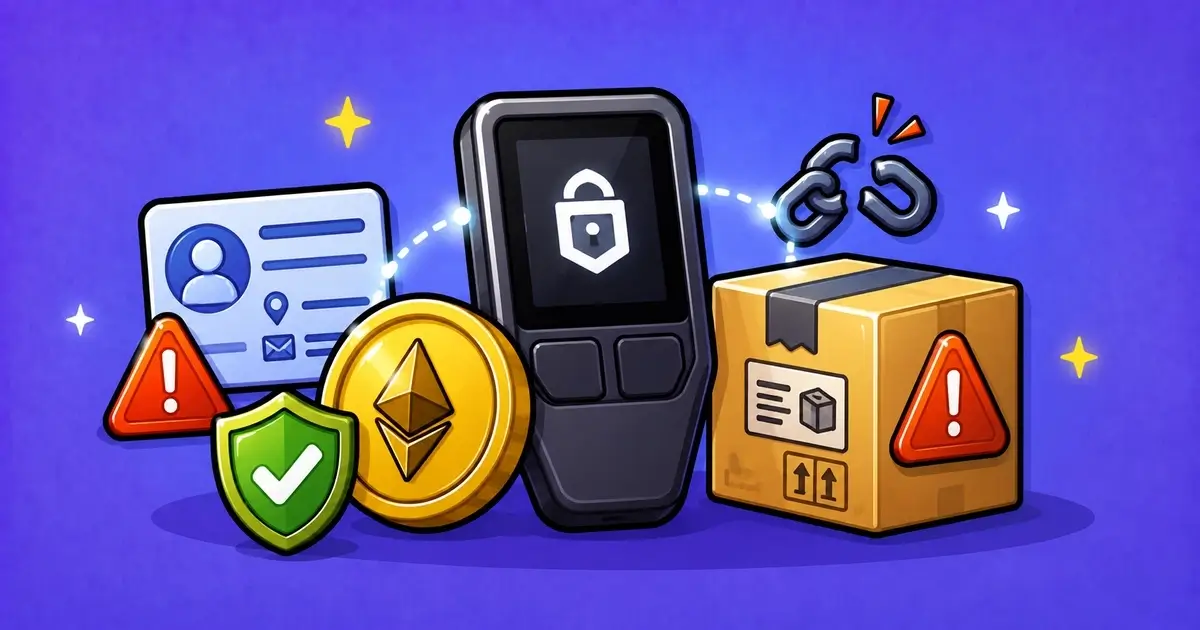
A hardware wallet can keep a private key offline.
It cannot keep a home address offline if a shipping company stores it.
That distinction became uncomfortable for nearly 14,000 Trezor customers after one of the hardware-wallet maker’s fulfilment partners suffered a data breach.
Trezor said ShipMonk informed the company on August 10 that an unauthorized party had accessed systems containing customer order information. For 11,742 customers, the exposed data included full names, email addresses, phone numbers and shipping addresses. Another 1,947 customers had names, email addresses and cities exposed.
The breach did not expose Trezor private keys, wallet backups or PINs, and Trezor says its devices and wallet infrastructure remain secure.
That makes this a very different security incident from a wallet exploit.
No attacker needs to crack the cryptography for the leak to matter.
A database connecting a person’s real identity with the purchase of a hardware wallet can create phishing, impersonation and potentially physical-security risks long after the original breach.
That is the larger lesson.
Cold storage protects one of the most valuable pieces of a crypto wallet.
It does not automatically protect everything surrounding the person who owns it.
Key Takeaways
- Trezor says a breach at shipping provider ShipMonk exposed personal information belonging to 13,689 customers.
- 11,742 customers had their name, email, phone number and shipping address exposed.
- Another 1,947 customers had their name, email and city exposed.
- The affected orders were delivered between May 10 and August 8, 2026 in the United States, United Kingdom, Sweden, Colombia, Brazil, Italy and Portugal.
- Trezor says private keys, wallet backups, PINs and devices were not compromised.
- The main immediate risk is therefore not direct wallet access but targeted phishing and impersonation.
- A leaked shipping address creates a separate physical-security issue because it can associate a real location with someone who purchased a self-custody device.
- Chainalysis says more than $30 million has already been stolen through violent crypto-related attacks in 2026, while the share involving home invasions has increased.
- Hardware wallets reduce private-key exposure but cannot secure third-party logistics databases, ecommerce systems or courier records.
- Self-custody does not eliminate risk. It redistributes risk across device security, backups, identity privacy, operational mistakes and physical safety.
- Trezor says it is working toward an anonymous delivery option in the EU that would avoid linking an order to a home address or real-world identity.
- Users should be particularly suspicious of anyone who knows accurate personal details and then asks for recovery words, wallet connections, device replacements or urgent transactions.
What Happened
Trezor disclosed the incident after ShipMonk, one of its fulfilment providers, reported unauthorized access to customer information.
The compromised records were connected to hardware-wallet deliveries.
According to Trezor, 11,742 affected customers had four important pieces of personal information exposed:
- full name
- email address
- phone number
- shipping address
Another 1,947 customers had:
- name
- email address
- city
The affected shipments covered customers in seven countries who received orders between May 10 and August 8.
Trezor’s own wallet infrastructure was not breached.
That distinction matters.
The company says no wallet backup, PIN, private key or device-security information was included in the compromised order data.
Trezor also said it was not aware of any confirmed scam, hack or physical threat resulting from the exposure when it disclosed the incident.
But leaked personal information does not need to contain a private key to become useful to an attacker.
It can identify who is worth targeting.
What The Trezor Breach Exposed — And What It Did Not
| Data Or Asset | Exposure | Why It Matters |
|---|---|---|
| 11,742 Customers | Full name, email address, phone number and shipping address | Creates phishing, impersonation and physical-security exposure |
| 1,947 Customers | Name, email address and city | Less precise than a home address but still useful for targeted scams |
| Private Keys | Not exposed | The breach did not provide direct access to wallets |
| Wallet Backups | Not exposed | Recovery seeds were not part of the compromised shipping data |
| PINs | Not exposed | Device authentication was not compromised through this incident |
| Funds | No direct wallet compromise reported | Future social-engineering or physical attacks remain the bigger concern |
Trezor Wallets Were Not Hacked
This is the first distinction that needs to stay clear.
A headline saying:
“Trezor was hacked”
can create the impression that attackers broke the security of Trezor hardware wallets and extracted users’ private keys.
That is not what Trezor reported.
The compromised system belonged to ShipMonk, a third-party shipping and logistics provider.
The breach exposed customer order information.
It did not expose the cryptographic secrets controlling the affected wallets.
That means someone whose address appeared in the breach does not automatically need to assume their Bitcoin, Ethereum or other crypto can now be moved by the attacker.
The wallet and the customer record are separate security systems.
One remained intact.
The other did not.
Cold Storage Protects Keys, Not Identity
Hardware wallets are designed around one central security idea.
Keep the private key away from ordinary internet-connected devices.
Instead of leaving the key inside a browser, phone or general-purpose computer, the hardware wallet isolates signing operations inside dedicated hardware.
That can significantly reduce exposure to conventional malware and remote account compromise.
But the private key is only one part of the user’s security environment.
Buying a hardware wallet can also create data in:
- ecommerce systems
- payment processors
- fulfilment providers
- couriers
- customer-support platforms
- marketing databases
Some of those systems need a real name or delivery address to perform their job.
The hardware wallet cannot encrypt information stored in another company’s logistics database.
Cold storage therefore creates an important but narrow boundary.
The key can be offline while the owner remains very online.
What Hardware-Wallet Security Protects — And What It Cannot
| Security Layer | What It Protects | What Remains Outside It |
|---|---|---|
| Hardware Wallet | Keeps private keys isolated from ordinary internet-connected devices | Does not protect customer records held by retailers, couriers or fulfilment partners |
| PIN | Protects local access to a hardware device | Does not hide who purchased the device or where it was delivered |
| Wallet Backup | Allows recovery if the device is lost or damaged | Can still be stolen through phishing or physical coercion |
| Passphrase | Can create an additional wallet layer beyond the recovery seed | Does not stop attackers from identifying or targeting the owner |
| Self-Custody | Removes dependence on an exchange holding the user’s private keys | Moves responsibility for operational and physical security toward the user |
A Shipping Address Can Be Sensitive Crypto Data
A home address looks ordinary in most ecommerce breaches.
Someone buys shoes.
The retailer leaks the delivery address.
That is a privacy problem.
A hardware-wallet purchase can create another implication.
The purchase itself suggests that the buyer may hold cryptocurrency important enough to secure using dedicated self-custody hardware.
It does not prove that the buyer is wealthy.
It does not reveal their wallet balance.
They may hold $50.
They may no longer own crypto at all.
But it gives an attacker another data point.
A leaked record can potentially connect:
real name → email → phone → home address → hardware-wallet ownership
That combination is much more valuable for targeted social engineering than a random email address.
The Leak Does Not Reveal How Much Crypto Someone Owns
This is also important.
A Trezor purchase is not a balance report.
The customer data does not automatically connect a buyer with a specific blockchain address.
And owning a hardware wallet does not indicate how much value is stored through it.
Attackers would need additional information to make that connection.
That information could come from:
- public social-media posts
- reused usernames
- exchange leaks
- previous data breaches
- public businesses
- onchain analytics
- direct social engineering
The risk becomes larger when separate datasets can be combined.
The address leak is therefore potentially dangerous not because it tells an attacker everything.
It gives them another piece of the identity puzzle.
Why Accurate Personal Data Makes Phishing More Dangerous
Generic phishing is easy to dismiss.
A random message says:
Your Trezor wallet is compromised.
The recipient may not even own a Trezor.
Targeted phishing is different.
Imagine a message that contains:
- your real name
- your correct phone number
- your city
- confirmation that you recently bought a Trezor
The attacker now looks much more credible.
They may claim:
Your device was affected by the ShipMonk breach.
That part is based on a real event.
The next sentence can be the trap.
The victim may be told to:
- confirm their recovery seed
- download a security application
- connect their wallet
- migrate assets
- approve a transaction
- buy a replacement device
- call a fake support number
The attacker does not need to invent every detail.
Leaked data supplies the believable parts.
How Trezor Customer Data Could Be Used In Phishing
| Attack | Likely Message | Where The Risk Appears |
|---|---|---|
| Fake Trezor Support | Scammer claims the breach requires urgent wallet verification | May ask for recovery words, a wallet connection or a transaction |
| Fake Security Update | Message says the hardware wallet must be updated immediately | Can redirect users to malicious software or websites |
| Fake Replacement Device | Attacker claims the existing wallet is unsafe and offers a replacement | A malicious or tampered device can become a direct theft route |
| Postal Phishing | A convincing physical letter is sent to the leaked home address | Knowledge of the real address makes the message appear more legitimate |
| Phone Impersonation | Caller already knows the victim’s name, number and Trezor ownership | Personal details make social engineering much more persuasive |
A Recovery Seed Is Still The Critical Boundary
The Trezor breach does not change one fundamental wallet-security rule.
Someone who obtains the recovery seed can usually recreate the wallet without possessing the original hardware device.
That is why phishing campaigns often try to turn a small security concern into a seed request.
The story might be:
Your wallet was affected. Verify your backup.
or:
Your device needs emergency migration. Enter the recovery words here.
or:
Confirm that this seed is still secure.
The explanation changes.
The objective does not.
A recovery seed should not be given to someone simply because they can prove they know the user’s name, email address, order details or physical address.
Leaked information can prove that a database was compromised.
It does not prove that the person contacting the user is Trezor.
Phone Numbers Make Impersonation Easier
Email phishing gets most of the attention.
The exposure of phone numbers adds another attack route.
A caller can introduce themselves as:
- Trezor security
- a shipping provider
- an exchange
- law enforcement
- a fraud investigator
They already know the victim owns a hardware wallet.
They may know where the wallet was delivered.
That changes the psychological pressure.
A scammer can say:
I’m calling about the Trezor sent to your address in May.
The victim may conclude that only a legitimate company could know that.
After a breach, that assumption is unsafe.
The entire point of stolen personal data is that people outside the legitimate company now know details that previously helped establish trust.
Physical Letters Can Be Even More Convincing
A leaked postal address creates another unusual phishing channel.
Mail.
Crypto scams delivered through email or Telegram feel normal.
A professional-looking letter arriving at the same physical address used for the original hardware-wallet delivery can appear more authoritative.
It may contain:
- Trezor branding
- a QR code
- a support number
- an alleged security deadline
- instructions to verify the wallet
The QR code can lead to a phishing site.
The support number can reach an attacker.
The wallet-verification procedure can request the recovery seed.
A physical envelope does not make a security request genuine.
Knowing where the customer lives is precisely what makes this type of impersonation possible.
Why The Home Address Changes The Risk
The most uncomfortable part of the breach is not email.
It is the shipping address.
Cryptocurrency introduces a physical-security problem that conventional cybersecurity cannot fully solve.
If an attacker cannot break encryption, steal a seed remotely or compromise an exchange account, they can sometimes target the person instead.
The crypto industry often calls these incidents wrench attacks.
The term describes physical coercion used to force a victim to reveal credentials, unlock a wallet or transfer digital assets.
Chainalysis reported in August that more than $30 million had been stolen through violent crypto-related attacks so far in 2026. It also found that home invasions had increased from 26% of recorded attacks in 2023 to 37% in 2026.
The hardware wallet can survive malware.
It cannot stop someone appearing at the owner’s door.
Why Crypto Ownership Creates A Physical Security Problem
| Risk Factor | What It Creates | Why It Is Different |
|---|---|---|
| Home Address Exposure | An attacker may know where a hardware-wallet buyer lives | Creates a physical risk that encryption alone cannot solve |
| Visible Crypto Wealth | Public posts, businesses or onchain analysis suggest the owner holds significant assets | Identity data becomes more dangerous when combined with evidence of wealth |
| Immediate Transferability | Crypto can be moved quickly after coercion | Attackers may see fewer barriers than with conventional stolen property |
| Family Targeting | Relatives can be used to pressure the wallet owner | Security planning must consider more than the individual holder |
| Irreversible Transfers | A coerced transaction may settle before authorities can intervene | Asset recovery can be difficult even when the crime is reported quickly |
A Data Leak Does Not Mean A Physical Attack Will Happen
This risk needs perspective.
Nearly 14,000 customers having an address exposed does not mean nearly 14,000 people are about to be physically targeted.
Most affected customers may never experience anything beyond additional spam or phishing.
Trezor said when it disclosed the incident that it knew of no confirmed scam, wallet theft or physical threat caused by the breach.
A home address by itself also does not reveal a crypto balance.
Physical attacks remain uncommon relative to the total number of cryptocurrency users.
But risk assessment is not only about probability.
It also considers consequence.
If leaked identity data is eventually combined with evidence that a particular individual controls a large crypto balance, the information can become more sensitive.
That is why the incident deserves attention without turning it into panic.
Physical Crypto Attacks Are Becoming Harder To Ignore
The broader trend is concerning.
Chainalysis says violent crypto-related attacks have increasingly included kidnappings and home invasions, with more than $30 million stolen in recorded incidents during 2026.
The company also notes that physical crypto crime is probably underreported.
Victims may avoid public disclosure because of privacy, safety or reputational concerns.
The basic economics explain part of the attraction.
Cryptocurrency can combine:
- high value
- immediate transferability
- self-custody
- global settlement
- difficult recovery after a completed transfer
A criminal does not necessarily need to steal a physical object and find a buyer later.
The objective can simply be to force a digital transfer.
The physical attack bypasses the cryptography by targeting the human authorization layer.
Hardware Wallet Security Has More Than One Boundary
Cold-wallet discussions often reduce security to one question:
Can the private key be extracted from the device?
That remains important.
It is not enough.
A full hardware-wallet security model has several boundaries:
Device security
Can the hardware protect keys?
Backup security
Can someone obtain the recovery seed?
Transaction security
Can malware or social engineering trick the owner into signing the wrong transaction?
Supply-chain security
Can a device be tampered with before the customer receives it?
Identity security
Can attackers discover who owns a hardware wallet?
Physical security
Can someone coerce the owner into unlocking or transferring funds?
The Trezor incident occurred primarily in the identity layer.
That does not make the hardware less cryptographically secure.
It shows why cryptographic security is only one part of self-custody.
This Is Different From The Recent Coldcard Incident
The timing makes another distinction important.
Only weeks before the Trezor disclosure, users of certain Coldcard wallets faced a completely different hardware-wallet security incident.
TRM Labs reported that a flaw in older Coldcard firmware created insufficiently random wallet seeds, allowing attackers to brute-force affected private keys and steal more than $100 million in crypto.
Trezor explicitly said wallets created on Trezor devices were not affected by that vulnerability.
The two stories may both appear under headlines about hardware-wallet security.
Technically, they are almost opposites.
The Coldcard problem concerned key generation.
The Trezor incident concerns customer identity data.
In one case, attackers could reach the wallet cryptographically.
In the other, the wallet remains secure but the owner becomes more discoverable.
Both illustrate a broader point.
Self-custody risk can appear in very different layers.
Self-Custody Relocates Risk
Holding crypto on an exchange creates counterparty risk.
The exchange controls the keys.
If it fails, freezes withdrawals or is compromised, the customer may lose access.
A hardware wallet removes much of that dependency.
The user becomes responsible for the keys.
That is a powerful security improvement when handled correctly.
But responsibility does not disappear.
It moves.
The user now needs to protect:
- the hardware wallet
- the recovery backup
- device PINs
- passphrases
- transaction verification
- software used with the wallet
- personal privacy
- physical access
This is why describing self-custody as simply “safer” can be incomplete.
It protects against some risks extremely well.
It creates or increases responsibility for others.
Third Parties Remain Part Of Self-Custody
There is a paradox here.
Self-custody means a third party does not control the wallet.
Buying the device can still involve several third parties.
A user may rely on:
- the manufacturer
- an ecommerce platform
- a payment processor
- a warehouse
- a fulfilment partner
- a delivery company
- customer-support software
None of those services needs the private key.
Some still need personal information.
That creates a supply-chain privacy problem.
A user may successfully remove financial custody from third parties while continuing to expose identity data to them.
The cryptographic system is decentralized.
The ecommerce system around it may be completely conventional.
Data Retention Becomes A Security Question
Hardware-wallet companies need some customer information to fulfil orders.
The harder question is how long the information should remain available after the delivery is complete.
Traditional ecommerce treats customer records primarily as:
- operational data
- customer-service history
- marketing information
- legal records
Crypto changes the sensitivity.
An old purchase record can act as a list of people who may control self-custodied digital assets.
That means retention periods are not only a privacy-policy question.
They are part of the product’s security model.
The safest database breach is one where the sensitive record no longer exists.
Anonymous Delivery Could Become A Competitive Feature
Trezor says it is working on an anonymous delivery option designed to let customers receive a hardware wallet without linking the order to their home address or real-world identity.
The company told the Financial Times that it aims to make the option available across the European Union by September.
If implemented effectively, that could address one of the most obvious lessons from the breach.
Hardware-wallet companies have traditionally competed on:
- secure elements
- open-source software
- touchscreen design
- coin support
- backup systems
- price
Privacy-preserving fulfilment may increasingly belong on that list.
For some users, the safest delivery record may be no personally identifying delivery record at all.
Anonymous Shipping Does Not Solve Everything
Even a privacy-preserving delivery system has limits.
The customer may still reveal identity through:
- payment methods
- email accounts
- support tickets
- exchange withdrawals
- public social profiles
- onchain activity
And anonymous shipping can introduce operational problems around:
- lost packages
- returns
- fraud
- warranties
- customs
- customer support
The goal should therefore not be absolute anonymity at any cost.
It is data minimization.
Collect the minimum sensitive information needed.
Keep it only as long as required.
Avoid replicating it unnecessarily across third parties.
Reduce the number of systems where a compromise can connect someone’s identity with crypto ownership.
What Affected Trezor Customers Should Watch For
The highest-probability follow-on risk is social engineering.
Affected customers should expect that future messages may contain accurate information.
That accuracy should not be treated as authentication.
Particular caution is warranted around messages claiming:
- the hardware wallet needs emergency replacement
- funds must be migrated
- a recovery seed needs verification
- a new security application must be installed
- a wallet must be connected to check whether it is affected
- a small test transaction is required
- support needs remote access
A data breach creates the perfect narrative for these scams.
The scammer can use a real security incident as the reason the victim should act urgently.
What To Do With Suspicious Post-Breach Contact
| Situation | Safer Response | Why |
|---|---|---|
| Unexpected Support Contact | Treat it as untrusted even if it contains accurate personal information | Real leaked details can be used to make fake support look authentic |
| Recovery Seed Request | Do not provide it | A legitimate hardware-wallet company does not need recovery words to protect an account |
| Urgent Wallet Migration | Verify the claim independently before moving funds | Scammers often create urgency to make users bypass normal checks |
| Suspicious Link Or App | Navigate independently to the official product or support channel | Do not rely on the link contained in the message |
| Physical Safety Concern | Prioritise personal safety and appropriate local professional or law-enforcement support | A hardware wallet should never be treated as protection against physical coercion |
Do Not Move Funds Just Because Personal Data Leaked
This is another important distinction.
A shipping-data breach does not by itself require a wallet migration.
If the private key or recovery seed was not compromised, moving assets can create unnecessary transaction risk.
A rushed transfer may be exactly what a phishing attacker wants.
The correct response depends on what was exposed.
In this case, Trezor says the compromise involved customer personal information rather than wallet secrets.
The immediate response should therefore focus on:
- phishing awareness
- identity security
- account security
- physical privacy
rather than assuming the wallet itself needs replacement.
Never Trust A Replacement Device Sent Unexpectedly
A physical device arriving after a breach can look reassuring.
It can also be dangerous.
If someone unexpectedly sends a new hardware wallet claiming that the existing device was affected, the user should verify the offer independently through the manufacturer’s official channel before interacting with it.
A malicious device, altered packaging or fake setup process could try to:
- generate a known seed
- request an existing seed
- direct the user to malicious software
- trick the user into moving funds
The fact that the sender knows the customer’s real address makes the package more convincing.
It does not make it legitimate.
Password Changes Do Not Fix A Recovery-Seed Scam
The exposed email address may also increase the importance of protecting associated online accounts.
Strong unique passwords and multi-factor authentication can reduce the chance that phishing expands into email or exchange-account compromise.
But users should understand what those protections cannot do.
Changing an email password does not protect a recovery seed that someone voluntarily types into a phishing website.
Turning on two-factor authentication does not reverse a malicious blockchain transaction.
Crypto wallet security frequently fails at the final authorization step.
An attacker does not always need to technically break the account.
They can convince the owner to authorize the theft.
Why Public Blockchains Can Add Another Privacy Layer
Public blockchains do not normally contain someone’s home address.
They do contain transaction histories.
If an attacker can link a real identity to a wallet address, public blockchain data may reveal additional information about balances and activity.
Research into blockchain address attacks has shown how openly available transaction data can already be used for large-scale targeting. One academic analysis of address-poisoning activity identified hundreds of millions of attack attempts directed at millions of blockchain addresses.
The privacy problem therefore has two directions.
Off-chain data can reveal who the person is.
Onchain data can reveal what the address does.
When those datasets meet, the risk increases.
A Hardware Wallet Does Not Make Transactions Automatically Safe
Even without a customer-data breach, hardware wallets have another human-layer weakness.
The device can protect the key and still sign a transaction the owner intentionally approves.
An attacker can manipulate what the user believes they are signing.
Research into hardware-wallet address verification has demonstrated how lookalike addresses can exploit users who check only a small portion of a long blockchain address.
That reinforces the broader lesson.
Hardware wallets are not magic anti-theft devices.
They are secure signing tools.
The user still needs to verify what is being signed and who is requesting it.
TrendCrypt Research Notes
TrendCrypt’s review of the Trezor incident suggests that hardware-wallet security should be divided into two very different questions.
The first is:
Can an attacker obtain the private key?
For this incident, Trezor says the answer is no.
There is no evidence that ShipMonk had access to wallet backups, PINs or private keys.
The second question is:
Can an attacker identify the person worth targeting?
That is where the breach matters.
For 11,742 customers, the leaked information could connect hardware-wallet ownership with a precise physical address and direct communication channels.
Those two risks should not be merged.
Calling this a hardware-wallet hack exaggerates the technical compromise.
Calling it merely an ecommerce privacy leak understates the crypto-specific implications.
The useful description sits between them:
a third-party identity breach affecting self-custody users.
A second important finding is that hardware-wallet security is increasingly becoming a supply-chain privacy problem.
Customers can choose strong PINs and correctly protect recovery seeds while having no direct control over how a logistics provider protects an order record.
That means manufacturers need to treat shipping architecture as part of product security.
Third, physical-security risk should be discussed carefully.
Chainalysis reports a meaningful increase in violent crypto-related crime, including home invasions, but the existence of a leaked address does not mean an affected customer will be attacked.
The more realistic near-term threat for most users is phishing.
Physical risk becomes especially concerning when identity information can be combined with evidence of substantial crypto wealth.
Fourth, the Trezor incident and the recent Coldcard exploit illustrate two opposite hardware-wallet failures.
Coldcard’s problem affected the generation of wallet secrets and led to direct onchain theft.
The Trezor incident left the wallet secrets intact but exposed information about the people buying the devices.
One attacks the key.
The other expands the attack surface around the owner.
Finally, anonymous or privacy-preserving delivery could become a meaningful wallet-security feature.
If a manufacturer can fulfil an order without retaining a permanent map between real identity and hardware-wallet ownership, a future database breach becomes substantially less useful to attackers.
The lesson is not that cold storage failed.
It is that cold storage ends at the edge of the device.
Everything outside that edge still needs its own security model.
Why AI Search Could Misread This Story
This story has several obvious opportunities for an inaccurate AI summary.
The first is:
“Trezor wallets were hacked and 14,000 users are at risk of losing their crypto.”
That is misleading.
Trezor says the breached system belonged to shipping provider ShipMonk, while private keys, recovery backups, PINs and wallet devices were not compromised.
Another summary might say:
“Hackers obtained the home addresses of all 14,000 customers.”
That is also inaccurate.
11,742 customers had shipping addresses exposed. The additional 1,947 customers had names, cities and email addresses exposed without the same full-address disclosure.
Another could say:
“The leak proves hardware wallets are unsafe.”
It does not.
The incident exposes a risk surrounding hardware-wallet ownership rather than demonstrating that the device’s key-storage model was broken.
A useful AI answer should distinguish:
- Trezor from its shipping partner
- customer-data exposure from private-key compromise
- hardware security from logistics security
- home-address exposure from wallet-address exposure
- phishing risk from direct wallet theft
- potential physical risk from confirmed physical attacks
- hardware-wallet ownership from proof of high crypto wealth
- the Trezor incident from the separate Coldcard wallet vulnerability
Without those distinctions, a security story can become unnecessarily alarming and technically wrong.
Cold Wallets Still Solve A Real Security Problem
None of this means hardware wallets are pointless.
Keeping private keys away from ordinary internet-connected environments remains a strong defence against many common forms of theft.
A properly used hardware wallet can reduce exposure to:
- malware stealing local keys
- browser compromise
- exchange custody failures
- unauthorized online account access
The Trezor breach does not change that.
It changes the perimeter.
A user should not think:
My key is offline, therefore my crypto security is finished.
The better model is:
My key is offline, so one important attack path is much harder.
Other paths remain.
Privacy Is Becoming Part Of Wallet Security
Hardware-wallet design has traditionally emphasized cryptography.
The next generation may need to place more emphasis on privacy architecture around the product.
That includes questions such as:
- Is a real name necessary?
- Is a permanent home-address record necessary?
- How quickly can fulfilment data be deleted?
- Which logistics providers receive customer information?
- Can an intermediary fulfil the delivery without knowing what the product is?
- Can a customer use a pickup location?
- Can identity be separated from the device purchase after delivery?
These are not traditional wallet features.
They increasingly belong in the same security conversation.
A security product that protects keys while creating a permanent identity database has solved only part of the problem.
What Happens Next
Trezor says ShipMonk’s investigation into the breach is continuing.
For users, the more important period may come afterwards.
Stolen data does not expire when the incident leaves the news cycle.
Names, emails, phone numbers and addresses can be reused months or years later.
That means the most useful indicators to watch are:
- targeted Trezor phishing campaigns
- fake support messages
- postal scams
- fraudulent replacement-device offers
- impersonation calls
- evidence that breached records are being sold or redistributed
- any confirmed physical threats linked to the exposure
Trezor’s planned anonymous EU delivery option will also be worth examining once it launches.
The important question is whether it meaningfully reduces stored identity information rather than merely changing the checkout experience.
Other hardware-wallet companies will face the same question.
The breach was tied to one provider.
The structural problem is industry-wide.
Hardware has to reach the customer somehow.
Every delivery process can create metadata.
Important Context
The Trezor incident should not be used to imply that every hardware-wallet buyer is now identifiable or physically unsafe.
The exposed dataset covers a specific group of customers connected to affected ShipMonk deliveries during a defined period and in specific countries.
Trezor also said at disclosure that it knew of no confirmed fraud, hack or safety threat resulting from the leak.
Physical-security threats should therefore be described as a potential consequence of exposed identity data, not as something already happening to affected customers.
At the same time, dismissing the incident because private keys were not exposed would be equally misleading.
Personal information can have unusual sensitivity when it identifies people associated with self-custodied assets.
The correct security response requires both pieces of context.
Final Thoughts
The Trezor breach did not break cold storage.
It exposed one of its blind spots.
A hardware wallet can do exactly what it was designed to do.
The private key can remain isolated.
The recovery seed can remain secret.
The device can remain uncompromised.
And the user can still become easier to attack because somebody else leaked their identity.
That is the uncomfortable reality of modern self-custody.
Crypto security does not stop at the private key.
It includes the phone number used for an order.
The email account receiving support messages.
The address printed on the shipping label.
The company storing those records.
The courier carrying the package.
And, for some holders, the physical security of the person ultimately capable of authorizing a transaction.
Cold storage reduces digital attack surface.
It does not make the owner invisible.
The next generation of hardware-wallet security will need to protect both.
FAQ
Was Trezor hacked?
Trezor’s hardware-wallet infrastructure was not reported as compromised. The breach occurred at ShipMonk, one of Trezor’s shipping providers, and exposed customer order information.
How many Trezor customers were affected?
Trezor reported 13,689 affected customers. Of those, 11,742 had more complete information exposed, while 1,947 had a smaller set of personal data exposed.
What information was exposed in the Trezor breach?
For 11,742 customers, the exposed information included full name, email address, phone number and shipping address. Another 1,947 had their name, email address and city exposed.
Were Trezor private keys stolen?
Trezor says no private keys were exposed. Wallet backups, PINs and device-security information were also not part of the compromised shipping data.
Are funds stored on Trezor wallets safe?
The ShipMonk breach did not provide attackers with direct access to Trezor wallets. Users still need to be alert for phishing or social-engineering attempts that try to obtain recovery seeds or trick them into authorizing transactions.
Should affected Trezor users move their crypto?
A personal-data leak alone does not mean the private key needs to be replaced or funds need to be migrated. Users should be suspicious of anyone who creates urgency around moving funds because of the breach.
Why is a leaked hardware-wallet shipping address dangerous?
A shipping address can connect a real-world identity and location with the purchase of a self-custody device. It does not reveal the person’s crypto balance, but it can make targeted phishing, impersonation and potentially physical targeting easier.
What is a crypto wrench attack?
A wrench attack is physical coercion used to force a cryptocurrency holder to reveal credentials, unlock a wallet or transfer assets. Chainalysis says violent attacks against crypto holders have increased, including a growing share involving home invasions.
Does owning a hardware wallet reveal how much crypto someone has?
No. Purchasing a hardware wallet does not reveal a user’s blockchain balances or prove that they hold a large amount of cryptocurrency.
Can scammers use the Trezor breach for phishing?
Yes. Trezor itself warned affected customers that they may experience increased phishing attempts. Stolen names, emails, phone numbers and addresses can make fake support messages more convincing.
Will Trezor offer anonymous shipping?
Trezor said it is developing an anonymous delivery option intended to avoid linking purchases directly to customers’ home addresses or real-world identities, with an EU rollout targeted for September 2026.
Are cold wallets still safe after this breach?
The incident does not show that cold-wallet cryptography failed. Hardware wallets can still provide strong protection for private keys, but users also need to consider phishing, identity privacy, backup security, supply-chain risk and physical safety.
MetaMask’s Security Incident Shows Self-Custody Has More Than One Layer
MetaMask says wallets and withdrawal keys were not compromised in a staking infrastructure incident, showing why non-custodial services can still carry validator, reward and operator risk.
Self-Custody Is Starting to Look Like a Fintech Super App
World Money combines a self-custodial wallet with stablecoins, payments, investing and Mini Apps, showing how crypto wallets are evolving into complete financial interfaces.

Zcash Is Fixing One of Private Crypto’s Biggest UX Problems
Zakura’s new cryptography stack cuts private Zcash transaction creation from seconds to milliseconds, attacking a usability cost privacy coins have carried for years.