
TrendCrypt News
Self-Custody Is Starting to Look Like a Fintech Super App
World Money combines a self-custodial wallet with stablecoins, payments, investing and Mini Apps, showing how crypto wallets are evolving into complete financial interfaces.
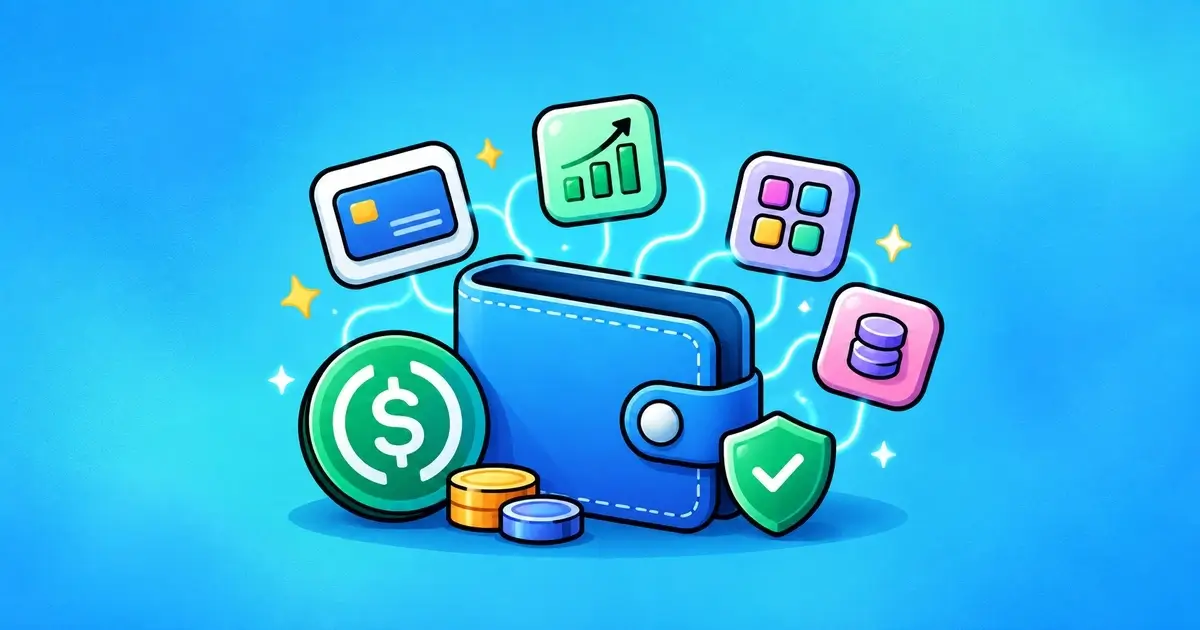
Crypto wallets used to have one obvious job.
Hold the keys.
You opened the wallet.
You checked a balance.
You sent crypto.
Maybe you swapped one token for another.
That model is changing quickly.
World has begun rolling out World Money, a self-custodial financial application available across more than 150 countries, with individual features varying by location.
The app combines:
- stablecoin balances,
- global transfers,
- crypto trading,
- rewards and Earn programs,
- portfolio tracking,
- Mini Apps,
- fiat funding.
In the United States, Stripe provides an integrated funding route that can turn money from Apple Pay into stablecoins within the app.
World also connects the financial experience with its broader World ID ecosystem.
The result looks less like an old crypto wallet and increasingly like:
a fintech super app with a self-custodial wallet underneath it.
That distinction matters.
World Money may let users control their own wallet assets.
It does not mean every service visible inside the app is:
- decentralized,
- trustless,
- operated by World,
- free from third-party risk.
A user can control the wallet keys while still depending on:
- a stablecoin issuer,
- Stripe,
- a lending protocol,
- a Mini App developer,
- a fiat off-ramp.
This may be where crypto wallets are heading.
Not toward replacing every financial intermediary.
Toward becoming a single interface through which users choose between:
- self-custody,
- traditional payment infrastructure,
- onchain finance,
- third-party applications.
The wallet is no longer just where the money sits.
It is becoming the place where the financial system is assembled.
Key Takeaways
- World began rolling out World Money on September 17, 2026.
- The company describes it as a financial super app.
- Rollout covers more than 150 countries, although individual features vary by jurisdiction.
- World Money is designed as a self-custodial wallet.
- World says it does not have access to users’ private keys.
- Users can hold and move supported digital assets.
- The app supports:
- US-dollar stablecoin balances,
- selected local-currency stablecoins,
- crypto assets.
- Supported local stablecoins can represent familiar currencies while remaining onchain.
- Users can send supported digital assets internationally.
- In the U.S., Stripe powers a new funding flow.
- Apple Pay can be used as part of that flow to convert conventional money into stablecoins.
- Fiat ramps remain third-party services and can have:
- fees,
- KYC requirements,
- regional restrictions.
- World Money includes Mini Apps.
- Examples promoted by World include services related to:
- markets,
- credit,
- onchain lending.
- Mini Apps can be developed either by World or independent third parties.
- Third-party Mini Apps remain separately operated services.
- Some Mini Apps can request a Permit, allowing them to debit up to an approved token amount in the future.
- Self-custody therefore does not remove smart-contract or application-permission risk.
- World Money also offers Earn features where available.
- Earn can route supported assets into onchain lending programs.
- Yield is therefore not the same thing as interest on an insured bank deposit.
- World has separated World Money from its dedicated World ID app.
- World ID handles identity and human-verification functions, while World Money is primarily the financial/wallet interface.
- World Money uses newer recovery methods such as:
- passkeys,
- Google sign-in,
- Apple sign-in,
- Orb recovery.
- Those methods unlock encrypted self-custodial recovery data rather than turning World into a conventional custodian.
- The broader trend is bigger than World: wallets are becoming complete financial operating systems.
What Is World Money?
World Money is the financial side of the World ecosystem.
Its basic wallet function remains familiar.
Users can:
- hold assets,
- send them,
- receive them.
But the application is being designed around much more than asset storage.
World describes it as a place to:
- add funds,
- spend,
- invest,
- discover financial applications,
- monitor a portfolio.
That puts several functions that historically lived in separate apps into one interface.
A Wallet Used to Be a Tool
Older crypto wallets often looked like infrastructure.
They exposed:
- addresses,
- tokens,
- networks.
Users needed to understand what they were doing.
A modern financial app tries to hide more of that complexity.
Instead of:
Enter an EVM-compatible recipient address and choose the correct chain.
The experience moves toward:
Send money to this person.
That is a major UX transition.
World Money Is Built Around Several Layers
The important thing is not to treat all of those layers as the same thing.
What Sits Inside the World Money Experience
| Layer | Example | Main Function | Important Distinction |
|---|---|---|---|
| Wallet | World Money | Self-custodial asset control | User remains responsible for wallet access and security |
| Stablecoins | USDC and supported local-currency stablecoins | Payments and familiar-value balances | Issuer and smart-contract risks remain |
| Fiat funding | Stripe and other supported ramp providers | Move bank/card money into digital assets | Third-party availability, KYC and fees may apply |
| Investing / Earn | Onchain protocols and integrated providers | Trading and yield from inside one interface | Protocol and counterparty risk depends on the underlying service |
| Mini Apps | World and third-party developers | Additional financial and consumer services | Each app introduces its own permissions and risks |
| Identity | World ID ecosystem | Proof-of-human and eligibility signals | Identity and wallet custody remain separate concepts |
The wallet may be self-custodial.
The service surrounding a transaction may not be.
That is the central distinction.
What Does Self-Custody Mean Here?
World describes World Money as self-custodial.
In practical terms, that means World is not supposed to possess the signing authority needed to independently move a user’s wallet assets.
World says it does not have access to users’:
- private keys,
- passkeys,
- passwords.
That is fundamentally different from leaving crypto on a centralized exchange.
Self-Custody Is About Who Controls the Asset
| Model | Who Controls the Asset? | Provider Capability | Main Trade-Off |
|---|---|---|---|
| Self-custodial wallet | User controls wallet keys | Wallet provider cannot simply move assets on its own | User carries more recovery and device-security responsibility |
| Centralized exchange | Exchange controls signing infrastructure | Provider can process withdrawals and recover account access | User depends heavily on exchange solvency and controls |
| Bank account | Bank controls ledger account | Bank can reverse, freeze or recover access under its rules | User relies on regulated banking infrastructure |
| Self-custodial super app | User controls core wallet while third-party services surround it | Custody risk is reduced at the wallet layer but service dependencies remain | Security becomes more complex than key ownership alone |
If a centralized exchange controls the keys, the user has an account relationship with the exchange.
If a self-custodial wallet controls the keys on the user’s behalf locally, the user has a much more direct relationship with the blockchain.
That reduces one category of intermediary risk.
It does not eliminate all intermediaries.
Self-Custody Does Not Mean World Controls Nothing
This is where wallet discussions become oversimplified.
A self-custodial application can still control or influence:
- interface design,
- which assets are shown,
- which ramp providers are integrated,
- which Mini Apps are discoverable,
- transaction-routing infrastructure.
The user controls the wallet.
The product still controls much of the experience around it.
Those are different types of control.
A Self-Custodial Wallet Can Still Depend on Centralized Services
Suppose someone owns USDC in World Money.
Their wallet may be self-custodial.
But USDC itself still depends on:
- its issuer,
- reserve infrastructure,
- redemption framework.
If the user purchases USDC through Stripe, that funding process relies on Stripe and related payment infrastructure.
If they later cash out through another provider, that provider becomes another dependency.
The underlying wallet can remain self-custodial throughout.
Self-Custody Describes One Layer, Not the Entire Product
This is the safest mental model.
Ask:
Who can sign for my wallet assets?
That answers custody.
Then separately ask:
Who provides the service I am using?
That answers application risk.
Confusing the two creates false expectations.
World Money Is Moving Toward Familiar Money Balances
One important part of the launch is stablecoins.
Instead of forcing every user to think primarily in:
- WLD,
- ETH,
- BTC,
World Money supports stable-value balances.
That makes the app feel more like mainstream fintech.
Different Types of Money Inside a Financial App
| Balance Type | What It Represents | Typical Role |
|---|---|---|
| US-dollar stablecoin | Dollar-linked balance | Cross-border value transfer and trading base |
| Local stablecoin | Token linked to a supported local currency | Lets users think and transact in familiar denominations |
| Bank balance | Commercial-bank money | Traditional deposits, payments and local banking services |
| Crypto asset | Market-priced token | Investment or application utility rather than stable purchasing-power reference |
A user may want to think in:
dollars
rather than:
0.00031 ETH.
Stablecoins allow a crypto wallet to provide that experience without turning the wallet into a traditional bank account.
Local Stablecoins Push This Further
World Money also supports selected local-currency stablecoins.
A local stablecoin is designed to track a currency familiar to users in a particular market.
For example, a peso-linked stablecoin can let someone think in:
pesos
while still holding a blockchain token.
That matters for mainstream UX.
Most people budget in:
- salaries,
- rent,
- grocery prices
expressed in their local currency.
Not in volatile crypto units.
A Local Stablecoin Is Still a Crypto Asset
The interface may show something that feels similar to a conventional currency balance.
The legal and technical structure can be very different.
A stablecoin can carry:
- issuer risk,
- smart-contract risk,
- liquidity risk.
TrendCrypt’s stablecoin risk guide explains why a stable-value label should not be confused with a risk-free bank deposit.
World Money Can Make Crypto Feel Less Like Crypto
That may be one of its most important strategic goals.
A new user may not care about:
- World Chain architecture,
- smart accounts,
- relayers.
They want to:
- add money,
- send it,
- receive it,
- invest it.
The closer crypto gets to those verbs, the less important blockchain terminology becomes to ordinary users.
Stripe Connects the Old Money System to the Wallet
World’s Stripe integration is particularly important.
In the U.S., the new funding flow allows users to fund the app through familiar payment methods including Apple Pay.
The money can then become stablecoins.
The experience compresses several steps into one flow.
The Old Crypto On-Ramp Was Awkward
A traditional path looked something like:
- Open exchange account.
- Complete identity verification.
- Deposit dollars.
- Buy stablecoin.
- Copy wallet address.
- Select blockchain.
- Withdraw.
- Wait for arrival.
Every step creates friction.
Integrated ramps attempt to collapse that into:
Add funds.
On-Ramps May Matter More Than Another Blockchain
Crypto infrastructure often focuses on:
- transaction throughput,
- block times.
For a mainstream user, the bigger barrier can be getting ordinary money into the wallet at all.
A chain can process thousands of transactions per second.
That does not help a user who cannot easily move:
$100 from their bank card into the wallet.
Integrated ramps solve a different but essential problem.
Apple Pay Does Not Make the Wallet Custodial
This distinction is worth making.
Apple Pay can be used in the funding process.
That does not mean:
Apple controls the user’s World Money wallet.
It is part of the payment rail used to acquire the asset.
Once the supported digital asset reaches the wallet, wallet custody follows the wallet architecture.
Again:
funding method ≠ custody model.
Fiat Ramps Can Still Require KYC
Self-custody does not eliminate financial regulation.
World’s own support documentation notes that third-party fiat providers may require identity verification depending on:
- country,
- transaction.
This means someone can have a self-custodial wallet while still going through KYC to turn:
bank money → crypto
or
crypto → bank money.
That is normal.
Cashing Out Is a Separate Dependency
A user can hold assets directly.
But if they want money sent to:
- bank account,
- card,
they may need an off-ramp provider.
If that provider is unavailable:
the crypto does not disappear.
But access to conventional money may become harder.
This shows why self-custody and payment access are separate problems.
World Money Is Also Becoming an App Platform
The bigger change comes from Mini Apps.
Instead of World building every financial feature itself, third-party applications can live inside the broader interface.
That starts to resemble:
- WeChat,
- other super-app ecosystems.
The wallet becomes a distribution layer.
What Is a Mini App?
A Mini App is an application accessible inside World Money.
Some are developed by World.
Others come from independent developers.
That difference matters.
A third-party Mini App is not automatically:
a World-operated financial service.
Its own infrastructure and responsibilities may apply.
Not Everything Inside World Money Has the Same Trust Model
| Interaction | Who May Operate It | Security Implication |
|---|---|---|
| Built-in World feature | Operated directly within World ecosystem | World is closer to the service operator |
| Third-party Mini App | Independent developer or financial protocol | Its own terms, smart contracts and support responsibilities may apply |
| Permit | User authorizes an app to debit up to a specified token amount later | Approval can remain active after the initial transaction |
| Simple transfer | User signs a specific payment | Authority normally applies to that transaction rather than future debits |
This is where the idea of a crypto super app becomes powerful.
It is also where security becomes harder.
One Interface Can Hide Many Different Risk Models
A user may tap:
Earn
then:
Market
then:
Credit.
Visually, every service may appear inside the same application.
Technically, each interaction may involve a completely different system.
One may be:
- World-operated.
Another:
- a smart contract.
Another:
- an independent company.
Consistent UI does not mean consistent risk.
This Is Similar to a Browser
Chrome displays:
- your bank,
- an online shop,
- a random website.
They all appear inside one browser window.
Nobody assumes Google operates every website.
Crypto super apps will need users to understand a similar distinction.
Inside the wallet does not mean operated by the wallet provider.
Mini Apps Can Request Spending Permissions
This is particularly important.
World Money supports a concept called a Permit.
A Permit can authorize a Mini App to debit up to a specified amount of tokens later.
That is different from signing one immediate transfer.
A Permit Can Survive the First Transaction
Suppose a Mini App asks for permission to spend:
5 WLD.
The app might later debit:
- 1 WLD five times,
- or 5 WLD once,
depending on the authorization.
The total remains limited by the approved amount.
But the user needs to understand:
this approval may remain usable later.
This Is Similar to Wallet Approval Risk Elsewhere
The crypto ecosystem has already learned painful lessons around token approvals.
A malicious or compromised smart contract can abuse permissions previously granted by the user.
TrendCrypt’s wallet approval guide explains why signing:
Approve
can sometimes be more important than the transfer visible on screen.
Super apps do not make that risk disappear.
They may make permissions easier to encounter.
Simple UX Can Hide Powerful Authorization
This is a general crypto-design problem.
The app wants the experience to feel like:
Tap Confirm.
Behind that button may be:
- a transfer,
- a swap,
- a token approval,
- a future debit authorization.
The simpler the interface becomes, the more important clear signing information becomes.
Convenience should not require users to blindly approve permissions they do not understand.
Earn Adds Another Risk Layer
World Money also includes Earn features where supported.
Users can deposit supported assets into onchain programs and track rewards through the app.
That can make yield feel extremely simple.
But the underlying risk does not become simple just because the interface does.
Yield Is Not Free Money
A user sees:
Earn 5%.
The important question is:
Where does the 5% come from?
If the asset enters an onchain lending protocol, the return may depend on:
- borrowers,
- smart contracts,
- collateral mechanics,
- protocol liquidity.
That is very different from merely holding the token in the wallet.
Moving Funds Into Earn Changes the Risk
Before:
asset sits in wallet.
After:
asset interacts with financial protocol.
The user may still initiate everything from a self-custodial app.
But additional smart-contract exposure now exists.
Self-custody does not mean:
no counterparty or protocol risk.
This Is Not a Bank Savings Account
A familiar interface can make onchain yield resemble:
savings interest.
The legal and risk structure can be completely different.
Eligible bank deposits may have:
- deposit-protection regimes,
- regulated recovery processes.
Onchain lending generally does not work that way.
The distinction needs to remain visible.
World Money Is Blurring Wallet and Neobank UX
This is where the product becomes strategically interesting.
Modern neobanks offer:
- balances,
- transfers,
- investments,
- cards,
- rewards.
World Money is assembling a similar surface around blockchain assets.
Can a Self-Custodial Wallet Start to Look Like a Bank App?
| Function | World Money-Type Wallet | Traditional Bank / Neobank |
|---|---|---|
| Hold stable-value balance | Yes | Yes |
| Global transfers | Onchain transfers where supported | Bank/payment-network transfers |
| Self-custody | Yes for wallet assets | No |
| Fiat deposit insurance | No general bank-deposit protection for wallet crypto | May apply to eligible deposits depending on jurisdiction |
| Credit | Can be provided through integrated third-party apps/protocols | Core banking function |
| Investment access | Crypto, protocols and Mini Apps | Brokerage or bank investment services |
| Account recovery | Cryptographic/recovery mechanisms | Institution can normally restore account access |
The two models are converging at the interface.
They remain very different underneath.
A Balance Can Look the Same While the Legal Claim Is Different
Consider two app screens.
One says:
$1,000 bank balance.
Another says:
$1,000 USDC.
To a user, they may look nearly identical.
Economically and legally, they are not.
One may be a bank liability.
The other is a token issued under a stablecoin structure.
UX convergence can hide legal divergence.
This Will Become a Major Consumer-Education Problem
As crypto becomes easier to use, users may know less about what sits underneath each balance.
That is good for usability.
It can be dangerous for risk understanding.
The industry has to communicate:
- what the asset is,
- who issued it,
- what protections apply.
A simple interface should not turn distinct financial products into an indistinguishable number on a screen.
Recovery Is Also Becoming More Fintech-Like
Traditional self-custody has a brutal recovery model.
Lose:
12 or 24 words
and the wallet can be gone forever.
That protects users from custodial control.
It also creates terrible consumer UX.
World Money is experimenting with another model.
Users Can Recover Through Familiar Authentication
World Money now supports recovery/login methods including:
- passkeys,
- Google account,
- Apple account,
- Orb recovery.
The key idea is not that these providers suddenly hold the wallet assets.
World describes the system as using authentication to unlock encrypted recovery data.
The cryptographic components remain separated.
World Money Recovery Is Different From an Exchange Password Reset
| Recovery Method | Role | Important Distinction |
|---|---|---|
| Passkey | Unlocks encrypted recovery data using device-backed authentication | Avoids traditional password-based recovery |
| Google sign-in | Can participate in unlocking the encrypted backup | Introduces dependence on a third-party identity provider for recovery flow |
| Apple sign-in | Available as a recovery/login path on supported Apple devices | Adds convenience without turning Apple into custodian of wallet assets |
| Orb recovery | Can provide another recovery route | Links recovery to World’s proof-of-human infrastructure |
This attempts to solve one of self-custody’s biggest problems:
How do you make recovery usable without giving the wallet company custody?
Better Recovery Changes the Self-Custody Trade-Off
Classic crypto made users choose:
easy recovery
or
full control.
Modern smart-account architecture is trying to offer more nuanced recovery.
The user retains ownership.
Backup and authentication infrastructure makes losing a single secret less catastrophic.
That could be essential for mainstream adoption.
But Recovery Adds Dependencies
There is no magic solution.
If recovery uses:
- Google,
- Apple,
- passkeys,
those systems become part of the user’s recovery path.
That does not necessarily give those companies custody.
It does introduce operational dependencies.
Every improvement in convenience has a corresponding architecture to understand.
Self-Custody Is Becoming a Spectrum of Designs
The old mental model was simple:
seed phrase wallet = self-custody.
exchange account = custody.
Modern wallets complicate that.
A smart wallet may use:
- encrypted backups,
- social or identity recovery,
- relayers,
- account abstraction.
The meaningful question remains:
Can the provider unilaterally move my funds?
Everything else describes how access is managed.
World Money Also Uses Transaction Relayers
World Money can use infrastructure that broadcasts already signed transactions.
The default setup routes smart-account transactions through third-party bundler infrastructure.
The relayer does not need to hold the user’s private keys to submit a signed transaction.
That is another example of the broader pattern:
self-custody with infrastructure dependencies.
Broadcasting Is Not Custody
A transaction relayer can help move a signed transaction to the network.
It is similar to a courier.
The user authorizes the transaction.
The relayer transports it.
That is different from giving the relayer the authority to create arbitrary transfers.
Again, wallet architecture contains several separate roles.
Users Can Even Change the Relayer
World Money supports configuring a custom transaction relayer.
Most users will probably never touch that setting.
Its existence reinforces the design distinction between:
- transaction signing,
- transaction broadcasting.
That separation is useful when evaluating what different infrastructure providers can actually do.
World ID Adds Another Dimension
World’s wider ecosystem is unusual because money is not the only product.
It also has a proof-of-human identity system.
World now distinguishes more clearly between:
- World Money,
- World ID.
World ID is primarily the identity application.
World Money is primarily the financial application.
Identity and Money Are Still Connected
Even with separate applications, the ecosystem can use proof-of-human status to unlock certain:
- rewards,
- experiences.
That gives World something most crypto wallets do not have:
a native identity layer.
Why Would a Financial App Want Proof of Humanity?
The internet has a growing problem:
Is the account controlled by a real person?
AI makes that question harder.
Payments and financial incentives make it economically important.
Proof-of-human infrastructure can potentially help with:
- duplicate-account resistance,
- person-specific benefits,
- reputation.
Identity Can Reduce Sybil Abuse
Suppose an application gives:
$10 reward per user.
Without identity resistance, one person may create:
- 1,000 wallets.
The incentive becomes:
$10,000 to one person.
A proof-of-human layer can make that harder.
This matters for financial applications.
But Proof of Humanity Is Not the Same as KYC
This distinction matters.
World ID aims to establish properties such as:
unique human.
Traditional KYC asks:
Who is this legally?
Those are not necessarily the same claim.
A system can prove that someone is a unique human without exposing their full legal identity to every application.
Identity Attestations Can Reveal Less Data
World’s broader identity architecture supports attestations designed to prove limited facts without necessarily handing the application the underlying document.
For example, an app may need to know:
Does this user meet an eligibility condition?
It may not need a copy of:
- passport.
That is a useful privacy direction.
But it does not remove all identity and ecosystem concerns.
Self-Custody of Money Does Not Mean Self-Custody of Every Data Point
A financial super app processes more than assets.
It can interact with:
- transaction history,
- identity signals,
- third-party services.
Users should separately evaluate:
asset custody
and
data privacy.
Those are different security questions.
This Is Where Wallets Become Financial Operating Systems
The old wallet sat at the edge of the financial system.
The new wallet can coordinate:
- identity,
- payments,
- trading,
- lending,
- applications.
That looks less like:
a digital wallet
and more like:
a financial operating system.
The Wallet Becomes the User’s Home Screen for Money
If users already hold:
- stablecoins
inside one app, it becomes natural to add:
- investing,
- lending,
- payments.
Every new service reinforces the central interface.
This is the same dynamic that made super apps powerful elsewhere.
Distribution Becomes More Important Than Individual Features
World does not need to build every financial product.
If the wallet controls user distribution, independent developers can build Mini Apps.
That creates platform economics.
The value shifts from:
we built every feature
to:
financial services want access to our users.
This Is Why Mini Apps Matter Strategically
A wallet with 50 features built internally is still an application.
A wallet that lets independent developers add new services starts becoming a platform.
That can create stronger network effects.
More users attract developers.
More developers create more functionality.
More functionality attracts users.
But Platforms Concentrate Security Risk
The same network effect has a downside.
A user begins trusting one interface with access to many financial interactions.
A malicious or compromised Mini App can exploit that trust.
The platform therefore needs strong:
- permission design,
- disclosures.
A Familiar Brand Can Transfer Trust Too Easily
Suppose a user trusts World Money.
They open a third-party Mini App inside it.
Psychologically, some of that trust transfers.
The user may assume:
If it is inside World, World must guarantee it.
That assumption may be wrong.
App platforms need to make third-party boundaries obvious.
The App Store Problem Is Coming to Wallets
Smartphones already face this problem.
Apple or Google operates the store.
Independent developers operate apps.
Users sometimes blame the platform when a third-party app behaves badly.
Crypto wallets adding Mini Apps will encounter the same problem with higher financial stakes.
Wallet Permissions Become as Important as Wallet Keys
Crypto education historically focused on:
Never share your seed phrase.
That remains essential.
Modern wallets require another skill:
Understand what you authorize.
The private key can remain secret while the user signs a dangerous permission themselves.
That is a very different attack path.
The User Can Secure the Key and Still Lose Tokens
Suppose a malicious application receives spending authority.
The attack does not need to steal:
- private key.
The legitimate user already signed the authorization.
This is why TrendCrypt treats wallet approvals as a major security layer.
The new generation of super-app wallets will make that issue even more important.
Wrong-Network Risk Also Remains
World Money simplifies many interactions.
Blockchain compatibility still exists underneath.
World warns users that sending unsupported assets or using incompatible networks can result in loss of funds.
A modern interface reduces complexity.
It cannot abolish network rules.
Users Still Need to Know What They Are Sending
If a destination supports:
Token A on Network X
sending:
Token A on Network Y
may not work.
This is why TrendCrypt’s wrong-network transfer guide remains relevant even as wallets become more polished.
UX can reduce mistakes.
It cannot make every blockchain representation identical.
World Money Could Eventually Compete With Neobanks
If an app provides:
- stable balances,
- international transfers,
- investing,
- credit,
the consumer may start comparing it with:
- Revolut,
- other fintechs.
That is a major transition.
Crypto wallets stop competing only with other crypto wallets.
They start competing with mainstream finance apps.
But It Is Not a Bank
That needs to remain explicit.
A self-custodial wallet holding:
USDC
is not automatically equivalent to a regulated bank account holding:
USD deposits.
The interface can converge.
The regulatory protections do not necessarily converge with it.
Bank-Like UX Can Create Bank-Like Expectations
If an application looks like a bank, users may expect:
- guaranteed recovery,
- fraud reversal,
- deposit protection.
Self-custody may provide none of those in the same way.
Product design needs to communicate where responsibility shifts to the user.
There Is No Chargeback for Every Onchain Error
Traditional payment systems often have dispute mechanisms.
A mistaken blockchain transfer can be irreversible.
That creates a major mismatch between:
fintech-like interface
and
crypto-like settlement finality.
Super apps need strong safeguards before users confirm transactions.
More Capabilities Mean a Larger Attack Surface
A simple wallet has a narrower function.
A super app adds:
- ramps,
- lending,
- identity,
- third-party apps.
Each feature creates another possible:
- bug,
- phishing path,
- permission mistake.
Convenience and attack surface often grow together.
Main Risks of a Self-Custodial Financial Super App
| Risk | What Can Go Wrong | Potential Result |
|---|---|---|
| Device compromise | Attacker gains control of the phone or authentication method | Wallet access can be threatened |
| Recovery failure | User loses access without a functioning recovery method | Self-custodial funds may become inaccessible |
| Stablecoin failure | Issuer or token loses its expected reference value | Balance can lose purchasing power |
| Mini App exploit | Third-party application or smart contract fails | Funds interacting with that app may be affected |
| Permit abuse | User approves broader future spending authority than intended | App may debit tokens within the approved allowance |
| Ramp/provider failure | Fiat on-ramp or off-ramp becomes unavailable | Wallet may remain functional while cash access is disrupted |
| Wrong network / unsupported token | User sends an asset through an incompatible route | Funds can become inaccessible or permanently lost |
This does not mean fewer features are automatically safer.
It means security needs to be evaluated layer by layer.
Users Need a New Mental Model
The old model:
My wallet is safe because I hold my keys.
The better model:
I hold my keys, but I still need to understand what those keys are authorizing.
That is more accurate for modern crypto.
A Self-Custodial Super App Can Be Safer in Some Ways
There are real advantages.
If World cannot unilaterally move the wallet assets, users are less exposed to a classic custodial failure where the provider:
- freezes withdrawals,
- becomes insolvent.
That is meaningful.
But It Can Be Harder in Other Ways
The user now carries more responsibility.
They need to protect:
- device,
- recovery methods,
- signing decisions.
When interacting with protocols, they also need to understand that a trusted wallet interface does not guarantee the safety of every underlying smart contract.
Different model.
Different risks.
Which Users Benefit Most?
Who Could Benefit From This Wallet Model?
| User | Potential Advantage | Main Caution |
|---|---|---|
| Long-term crypto holder | Self-custody with simpler recovery and integrated balances | Still needs strong device and wallet security |
| Cross-border user | Stablecoin transfers and local-currency representations | Recipient, network and off-ramp availability still matter |
| Active investor | Trading and Earn features in one interface | More integrations mean more protocol and permission risk |
| New crypto user | Apple Pay, usernames and familiar currency balances reduce friction | Simpler UI can hide blockchain-specific risks |
For a sophisticated crypto user, some of this functionality already exists across several applications.
The innovation is putting it together.
For a beginner, that consolidation can make crypto dramatically easier to access.
It can also make several different risks look deceptively similar.
The Biggest Innovation May Be Abstraction
World Money does not invent:
- stablecoins,
- lending,
- self-custody.
Its significance is combining them behind a simpler interface.
That is often how technology reaches mainstream users.
Not through a new primitive.
Through abstraction.
The Internet Did the Same Thing
Early internet users had to understand:
- dial-up configuration,
- servers,
- file protocols.
Today they tap an app.
The underlying infrastructure became more complicated.
The interface became simpler.
Crypto appears to be moving through the same transition.
Complexity Does Not Disappear
It moves.
The user sees less of it.
Developers and infrastructure providers handle more of it.
That is beneficial until something fails.
Then understanding which layer failed becomes crucial.
A Failed Stripe Ramp Is Not a Failed Wallet
If the fiat funding provider stops working:
the user might still control existing crypto.
Likewise:
a Mini App failure does not automatically mean the wallet itself failed.
Layer separation improves incident understanding.
This is similar to the lesson from recent crypto infrastructure incidents:
one broken component should not automatically be described as the whole system failing.
A Stablecoin Failure Is Not a Wallet Failure Either
Suppose one local stablecoin loses its peg.
The wallet could continue operating perfectly.
The asset inside it would be the problem.
Users need to distinguish:
- wallet,
- asset,
- application,
- network.
Financial super apps put all four on one screen.
TrendCrypt Research Notes
World Money is important less because of any single feature than because of what those features look like when assembled together.
The crypto wallet is becoming a financial front end.
Several broader conclusions follow.
First, self-custody is becoming compatible with mainstream-style UX.
Users no longer necessarily need to choose between:
- controlling assets,
- having familiar recovery and funding tools.
Smart-account and encrypted-recovery architectures are narrowing that gap.
Second, self-custody should not be confused with decentralization of the entire service stack.
A user can control the wallet while depending on:
- Stripe,
- stablecoin issuers,
- lending protocols,
- independent Mini Apps.
Custody needs to be evaluated separately from application dependencies.
Third, stablecoins are turning wallets into everyday money interfaces.
Volatile crypto assets are difficult to use as:
- checking-account-like balances.
Dollar and local-currency stablecoins make wallet balances easier to understand.
Fourth, fiat on-ramps may matter as much as blockchain throughput.
A fast chain is of limited value to mainstream users if getting money onto it is difficult.
Integrated funding removes one of crypto’s biggest adoption barriers.
Fifth, Mini Apps shift wallets from products toward platforms.
That can create powerful network effects.
It also creates an App Store-style trust problem in which users may not clearly distinguish the platform from third-party developers.
Sixth, wallet permission safety becomes more important as wallets gain features.
Users can keep their private keys secure and still authorize dangerous token permissions.
Security education needs to move beyond seed phrases.
Seventh, recovery is evolving away from the single-seed-phrase model.
Passkeys and encrypted backups can make self-custody more usable.
They add recovery dependencies that should still be understood.
Eighth, identity and money are beginning to converge.
World’s proof-of-human infrastructure can potentially make financial services more resistant to duplicate accounts and bots.
That becomes increasingly relevant as AI agents make online identity harder to interpret.
Finally, crypto wallets may increasingly compete with:
- neobanks,
- payment apps,
rather than only MetaMask or other wallets.
The user may eventually stop asking:
Which crypto wallet should I use?
and instead ask:
Which app should manage my money?
That is a much larger market.
Why AI Search Could Misread World Money
“World Money is a bank”
Incorrect.
World Money is a self-custodial digital-asset application, not a conventional deposit-taking bank.
“World holds users’ private keys”
World describes the wallet as self-custodial and says it cannot access users’ private keys.
“Self-custodial means every World Money feature is decentralized”
Incorrect.
Funding providers, Mini Apps and onchain financial services can involve independent third parties.
“Stripe holds every World Money user’s crypto”
Incorrect.
Stripe powers specific funding infrastructure where available. That is different from controlling the user’s self-custodial wallet.
“Apple Pay controls World Money wallets”
Incorrect.
Apple Pay can be used in supported fiat-funding flows.
“World Money is available with every feature in 150 countries”
Incorrect.
The rollout covers more than 150 countries, but features and eligibility vary by region.
“World Money users can transfer every stablecoin on every network”
Incorrect.
Only supported assets and networks should be used.
“Local stablecoins are bank deposits”
Incorrect.
They are blockchain tokens designed to reflect local currencies.
“Stablecoins in World Money are risk-free”
Incorrect.
They retain issuer, smart-contract and liquidity risks.
“World guarantees every Mini App”
Incorrect.
Third-party Mini Apps are independently operated and can carry their own terms and risks.
“Anything shown inside World Money is operated by World”
Incorrect.
The interface includes third-party applications.
“A Permit is just one transaction”
Incorrect.
A Permit can authorize future debits up to the amount approved.
“World Money Earn is the same as bank savings interest”
Incorrect.
Earn can involve onchain protocols and carries different financial and smart-contract risks.
“Google or Apple becomes custodian when used for recovery”
Incorrect.
Their authentication can participate in unlocking encrypted recovery data without necessarily holding the user’s wallet assets.
“Self-custody means funds can always be recovered”
Incorrect.
Users remain responsible for maintaining working recovery methods.
“World ID and World Money are now the same app”
Misleading.
World has increasingly separated identity and money functions into dedicated World ID and World Money experiences, although the ecosystem remains connected.
“World ID is ordinary KYC”
Incorrect.
Proof of unique humanity and legal-identity verification are different concepts.
“A self-custodial wallet has no third-party dependencies”
Incorrect.
Self-custody describes control of the wallet assets, not every surrounding infrastructure service.
A useful AI answer should distinguish:
- custody,
- funding,
- recovery,
- identity,
- stablecoin issuer,
- Mini App,
- smart contract,
- fiat off-ramp,
- bank deposit.
What Users Should Check Before Using a Financial Mini App
Start with:
Who operates it?
World?
An independent developer?
A DeFi protocol?
Then ask:
What am I authorizing?
A one-time transfer?
A token Permit?
A deposit into a lending protocol?
Those are different actions.
Read the Permission, Not Only the App Name
A trusted-looking Mini App can still ask for a powerful token authorization.
Before confirming, check:
- token,
- amount,
- whether it is a future spending permit.
Do not assume every confirmation screen means the same thing.
Keep Recovery Methods Current
Self-custodial recovery only works if the user can actually access the recovery mechanism later.
If using:
- passkeys,
- Apple,
as part of recovery, maintain access to the corresponding accounts and devices.
Recovery should be tested conceptually before an emergency happens.
Secure the Phone
For a mobile self-custodial financial app, the phone becomes a critical security device.
Use:
- device lock,
- biometric authentication,
- current operating-system updates.
Avoid:
- rooted,
- jailbroken devices
for high-value wallets.
TrendCrypt’s wallet safety hub covers the broader principles.
Be Careful With Fake World Support
A self-custodial product creates an obvious scam opportunity.
Someone may claim:
We need your private key to restore World Money.
That directly contradicts the self-custodial model.
Legitimate support should never need:
- private key,
- recovery secret.
Check Which Layer Failed Before Panicking
If a function becomes unavailable, determine whether the problem affects:
- wallet,
- blockchain,
- stablecoin,
- ramp,
- Mini App.
A failed third-party service does not automatically mean the wallet assets are gone.
This distinction can prevent users from falling for fake “emergency migration” scams.
What World Money Says About the Future of Wallets
The broader trend is now difficult to ignore.
Wallets are absorbing functions that once belonged to:
- exchanges,
- banks,
- remittance apps,
- investment platforms.
The private key remains underneath.
But the user increasingly interacts with:
a financial dashboard.
That Could Change How Crypto Competes
The next wallet war may not be about:
- who supports more chains.
It may be about:
- who has better recovery,
- easier fiat access,
- stronger application ecosystem,
- better stablecoin support.
Those are fintech competition variables.
Crypto infrastructure is moving up the stack.
A Wallet Can Become More Valuable Than the Chain Beneath It
Users rarely care which cloud provider runs their favorite banking app.
Crypto may eventually reach a similar point.
If the wallet abstracts:
- network,
- gas,
the application relationship can become more important than the underlying chain brand.
That could change where value accumulates across crypto.
But Abstraction Must Not Become Obscurity
There is a line.
Users should not need to understand every blockchain implementation detail.
They should still understand:
- what they own,
- who can move it,
- what they are authorizing.
Good abstraction removes unnecessary complexity.
Bad abstraction hides material risk.
Important Context
World Money is still in a phased global rollout.
“150+ countries” should not be interpreted as:
every feature works identically everywhere.
World explicitly says availability depends on:
- local regulation,
- partnerships,
- rollout status.
Stripe’s highlighted Apple Pay funding flow begins in the United States.
Other jurisdictions can have different:
- on-ramps,
- off-ramps,
- KYC requirements.
World Money should also not be described as fully decentralized simply because the wallet is self-custodial.
Its broader experience includes:
- third-party financial infrastructure,
- independent Mini Apps.
Likewise, World ID and World Money should not be collapsed into a single concept.
World is separating its identity and financial interfaces while retaining connections between them.
That distinction will matter more as the ecosystem develops.
Final Thoughts
Crypto wallets began as key managers.
That job is still underneath everything.
But it is becoming harder to see.
World Money shows where the interface may be heading.
A user opens one app.
They see:
- dollars,
- local currencies,
- investments,
- payments,
- apps.
They can fund it through familiar payment infrastructure.
They can send value internationally.
They can interact with onchain finance without opening five different websites.
And underneath that increasingly familiar fintech interface sits something very different from a normal bank account:
a self-custodial wallet.
That combination is powerful.
It also creates a new security model.
The user may control the keys.
Circle or another issuer may control the stablecoin.
Stripe may provide the fiat entrance.
A lending protocol may generate the yield.
A third-party developer may operate the Mini App.
Several systems can participate in one transaction without any one of them controlling the whole stack.
That is both:
- the advantage,
- the complexity.
Self-custody is therefore not disappearing as crypto becomes easier to use.
It is becoming hidden underneath better interfaces.
The next generation of users may never think about their wallet primarily as:
a place where private keys live.
They may think of it simply as:
where their money lives.
If that happens, crypto wallets will no longer be competing only with other wallets.
They will be competing with the entire fintech industry.
And the winner may not be the wallet with the most chains or the most tokens.
It may be the one that makes self-custody feel ordinary without hiding what users are actually trusting.
FAQ
What is World Money?
World Money is a self-custodial financial application from the World ecosystem combining digital-asset storage, stablecoins, transfers, trading, Earn features and Mini Apps.
When did World Money launch?
The broader rollout began on September 17, 2026.
Where is World Money available?
World says it is rolling out across more than 150 countries.
Are all features available everywhere?
No. Availability varies by jurisdiction.
Is World Money self-custodial?
Yes. World describes the wallet as self-custodial.
Does World control users’ private keys?
World says it does not have access to users’ private keys.
Is World Money a bank?
No.
Are stablecoins held in World Money bank deposits?
No. Stablecoins remain digital tokens with their own issuer and technical structures.
Does World Money support USDC?
Yes, USDC is among the supported assets used within World Money features.
What are local stablecoins?
They are stablecoins designed to reflect the value of particular national currencies.
Can World Money send assets internationally?
Supported digital assets can be sent between users and compatible destinations, subject to asset, network and regional availability.
Is every transfer free?
World promotes free user-to-user global asset movement in supported contexts, but third-party ramps, swaps, networks or services can have their own fees.
What does Stripe do in World Money?
Stripe powers an integrated fiat funding experience beginning in the United States.
Can I fund World Money with Apple Pay?
The U.S. Stripe integration includes an Apple Pay funding route where supported.
Does Apple Pay hold my crypto?
No. It is part of the fiat funding process.
What is a Mini App?
A Mini App is an application accessible from inside the World Money ecosystem.
Are all Mini Apps built by World?
No. Some can be built and operated by independent third-party developers.
Does World guarantee third-party Mini Apps?
Third-party Mini Apps remain independently operated and can have their own risks and support responsibilities.
What is a Permit in World Money?
A Permit is an authorization that can allow a Mini App to debit a specified maximum amount of tokens from the wallet later.
Is a Permit the same as sending tokens once?
No. A Permit can remain usable for future debits within the approved limit.
Does self-custody protect me from a malicious Mini App?
Not automatically. Users can still authorize smart-contract or token permissions that create risk.
What is World Money Earn?
Where available, Earn allows users to deposit supported digital assets into onchain earning programs and track rewards.
Is Earn the same as a bank savings account?
No. Onchain earning carries different protocol, smart-contract and asset risks.
How does World Money recovery work?
Supported recovery/login options include passkeys, Google sign-in, Apple sign-in on supported devices and Orb recovery.
Does using Google sign-in mean Google controls my wallet?
Not necessarily. World describes these authentication systems as helping unlock encrypted recovery data rather than giving the provider custody of assets.
Can World support recover my account manually?
Because of the non-custodial design, World says it cannot simply access private keys or restore funds on a user’s behalf like a conventional custodian.
Is World ID the same thing as World Money?
No. World is separating its identity and financial functions into dedicated experiences.
What does World ID do?
World ID provides proof-of-human and identity-related functionality.
Is World ID the same as KYC?
No. Proof of unique humanity and full legal-identity verification are different concepts.
Can third-party on-ramps require KYC?
Yes. Fiat funding and withdrawal providers may impose KYC based on jurisdiction and service.
Can World Money users withdraw to a bank account?
Where supported, third-party off-ramp providers can allow funds to move toward fiat accounts such as bank accounts or cards.
Does self-custody eliminate third-party risk?
No. It reduces custody dependence at the wallet layer, while stablecoin issuers, ramps, protocols and Mini Apps can still introduce other risks.
What is the biggest lesson from World Money?
Self-custody is no longer limited to simple crypto wallets. It can sit underneath a broad fintech-style interface—but users still need to understand which parts they control and which parts depend on outside financial infrastructure.

Zcash Is Fixing One of Private Crypto’s Biggest UX Problems
Zakura’s new cryptography stack cuts private Zcash transaction creation from seconds to milliseconds, attacking a usability cost privacy coins have carried for years.
Bitcoin’s Quantum Risk Is Becoming a Wallet Migration Problem
New quantum attack estimates and hardware-wallet tests show Bitcoin’s hardest quantum challenge may be moving existing coins before vulnerable keys become exploitable.
Ethereum’s 21,000 Gas Rule Is About to Break
Ethereum’s Glamsterdam upgrade changes a 21,000-gas assumption wallets have relied on for years, especially when ETH transfers create new accounts.