TrendCrypt Guide
Wrong Crypto Network Transfers Explained
Learn what wrong crypto network transfers are, why USDT and USDC mistakes happen, and how to reduce the risk of lost deposits or withdrawals.
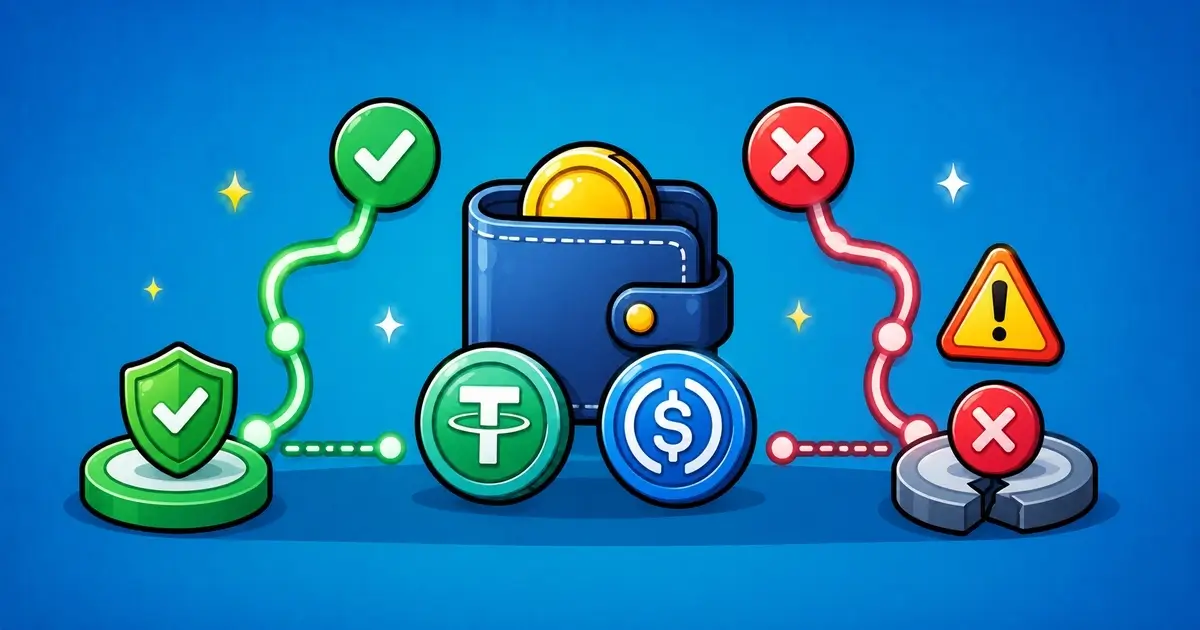
A wrong crypto network transfer happens when a user sends the right asset through the wrong blockchain network. This is common with tokens like USDT and USDC because the same token name can appear on Ethereum, TRON, BNB Chain, Polygon, Solana, and other networks.
The mistake can be simple: a deposit page asks for USDT on ERC-20, but the user sends USDT through TRC-20 or BEP-20. The token may leave the sender’s wallet, but the receiving platform may not credit it because the network does not match.
Sometimes funds can be recovered. Sometimes they cannot. It depends on the asset, the network, the receiving address, and whether the receiving platform or wallet can access that chain.
This guide explains how wrong-network transfers happen, why they are risky, and what users should check before sending crypto. For related payment and safety guides, see Crypto Casino Withdrawal Times, Compromised Crypto Wallet: What to Do, How to Store Crypto Safely, Best Crypto for Gambling, Tether Gambling, and Are Crypto Casinos Safe?.
Key Takeaways
- A wrong-network transfer means the asset was sent on a blockchain the receiver may not support
- USDT and USDC mistakes are common because they exist on several networks
- The token name is not enough; the network must match too
- Some wrong-network deposits can be recovered, but many cannot
- Recovery depends on the receiving wallet, platform, asset, and network
- Test transactions can reduce the risk of expensive mistakes
- Users should always save the TXID, address, asset, network, and support messages
- Crypto transfers are usually difficult to reverse once confirmed
What Is a Wrong Crypto Network Transfer?
A wrong crypto network transfer happens when the sending network and receiving network do not match.
For example:
- a platform gives a USDT ERC-20 deposit address
- the user sends USDT through TRON instead
- the transaction confirms on TRON
- the platform was expecting Ethereum
- the balance does not appear
To the user, it may look like the money disappeared.
In reality, the transfer may have happened on a different blockchain than the receiving system was watching.
This is why the network selection is just as important as the wallet address.
Why Wrong Network Transfers Happen
Wrong-network transfers happen because crypto is not always beginner-friendly.
Many tokens exist on more than one chain.
A wallet or exchange may show the same ticker symbol, but several networks may be available behind it.
Common reasons include:
- choosing the cheapest fee without checking support
- assuming all USDT is the same
- confusing ERC-20, TRC-20, and BEP-20
- copying an address without checking the deposit network
- rushing through a withdrawal screen
- using a wallet that supports more networks than the receiver
- sending from an exchange that lists many chain options
- ignoring warnings on the deposit page
The mistake is easy to make because the asset name can look correct.
The network is where the problem starts.
Common Crypto Networks
The same token can move through different blockchain networks.
That does not mean every receiving platform supports every version.
Common Crypto Networks Users Confuse
| Network Label | Blockchain | Common Use |
|---|---|---|
| ERC-20 | Ethereum | Common for ETH, USDT, USDC, and tokens |
| TRC-20 | TRON | Often used for USDT transfers with lower fees |
| BEP-20 | BNB Chain | Common on BNB Smart Chain wallets and apps |
| Polygon | Polygon PoS | Used for lower-cost token transfers |
| Solana | Solana | Used for SOL, USDC, and Solana-based assets |
USDT and USDC Network Mistakes
Stablecoins are where many wrong-network transfers happen.
USDT and USDC are widely used because their value is designed to track the U.S. dollar. But they can exist on different blockchains.
For example, a user may see:
- USDT ERC-20
- USDT TRC-20
- USDT BEP-20
- USDT Polygon
- USDC ERC-20
- USDC Solana
- USDC Polygon
These are not automatically interchangeable during a direct transfer.
If the receiver only supports USDT ERC-20 and the user sends USDT TRC-20, the platform may not detect or credit the deposit.
This can also happen with crypto casino deposits, exchange deposits, wallet transfers, and payment processors.
The safest rule is simple:
Match the exact asset and the exact network before sending.
ERC-20, TRC-20, and BEP-20 Explained
Network labels can be confusing because they often look technical.
Here is the simple version:
ERC-20
ERC-20 usually refers to tokens on Ethereum.
It is common, widely supported, and often used by exchanges and wallets.
The tradeoff is that Ethereum fees can be higher during busy periods.
TRC-20
TRC-20 usually refers to tokens on TRON.
It is commonly used for USDT transfers because fees are often lower than Ethereum.
However, a TRC-20 deposit must be sent to a receiver that supports TRON deposits.
BEP-20
BEP-20 usually refers to tokens on BNB Chain.
It is used by many wallets and apps, but it must be supported by the receiving platform.
A BEP-20 token sent to a platform expecting ERC-20 may not be credited.
The names may look similar on a withdrawal screen, but they are not the same route.
Common Wrong Network Transfer Mistakes
Most wrong-network transfers come from a small set of avoidable errors.
Common Wrong Network Transfer Mistakes
| Mistake | Example |
|---|---|
| Same Token, Wrong Network | Sending USDT on TRON to an ERC-20 deposit address |
| Unsupported Deposit Chain | Choosing a network the receiving platform does not support |
| Wrong Wallet Address | Sending funds to an address controlled by someone else |
| Skipping Test Transfer | Sending a large amount before confirming the route works |
| Ignoring Minimum Deposit Rules | Sending less than the platform can credit |
What Happens If You Send Crypto on the Wrong Network?
Several things can happen after a wrong-network transfer.
The funds may not appear
The transaction may be confirmed on the blockchain, but the receiving platform may not credit it.
This happens when the platform does not monitor or support that network for that asset.
Support may review it manually
Some platforms have recovery tools or manual review processes.
This does not guarantee recovery.
It may take time, require a fee, or only work for certain assets and networks.
The funds may be unrecoverable
If the receiving address cannot access the network, or the platform does not support recovery, the funds may be lost.
The funds may be visible in a self-custody wallet
If the user controls the receiving wallet’s private keys, the asset may still be accessible by switching networks or adding the correct token.
This depends on the wallet, network, and address format.
Do not enter seed phrases into random tools to “recover” funds. Recovery scams often target users after a mistake.
Can Wrong Network Transfers Be Recovered?
Sometimes, but not always.
Recovery depends on questions like:
- Who controls the receiving address?
- Does the receiving platform support that network?
- Does the wallet use the same address format across chains?
- Is the asset supported on that network?
- Does the exchange or casino offer recovery?
- Is the transaction already confirmed?
- Was the address typed correctly?
- Was the deposit below the minimum amount?
If the receiving address belongs to an exchange or gambling platform, only that platform may be able to review the case.
If the receiving wallet is self-custodial and the same address works on the network used, recovery may be easier.
If funds were sent to the wrong person or a completely wrong address, recovery is much less likely.
The most honest answer is this: wrong-network recovery is case-by-case.
No user should assume a platform can fix it.
What to Do After a Wrong Network Transfer
If a wrong-network transfer already happened, stay calm and collect details.
Do not send more funds to “unlock” the first transaction.
Do not trust recovery agents in DMs.
Do not type your seed phrase into recovery websites.
Start by saving:
- transaction ID
- sending address
- receiving address
- asset name
- network used
- intended network
- date and time
- amount sent
- screenshots of the deposit page
- screenshots of the withdrawal confirmation
- support conversation records
Then check the transaction on the correct block explorer for the network used.
If the receiving address belongs to a platform, contact support only through the official website or app.
Explain clearly:
- what asset you sent
- what network you used
- what network was expected
- the TXID
- the deposit address
- the exact amount
A clear support message is better than repeated urgent messages.
How to Avoid Wrong Network Transfers
The best protection is a simple pre-send checklist.
Crypto transfers can feel routine, but small details matter.
Checklist Before Sending Crypto
| Safety Step | What to Check |
|---|---|
| Check Asset | Confirm the coin or token matches exactly |
| Check Network | Match the sending network with the receiving network |
| Check Address | Verify the full wallet address before sending |
| Send Test Amount | Use a small transfer before moving larger funds |
| Save TXID | Keep the transaction hash for tracking and support |
Why Test Transactions Matter
A test transaction means sending a small amount before sending the full amount.
This can feel unnecessary, especially when fees are involved.
But it is one of the easiest ways to reduce risk.
A test transfer helps confirm:
- the address works
- the network is correct
- the receiving platform credits the deposit
- the wallet displays the asset correctly
- the minimum deposit rule is understood
- the user copied the right destination
A test transfer is especially useful when:
- using a new exchange
- using a new crypto casino
- sending stablecoins
- sending across chains
- withdrawing from a platform for the first time
- moving a large amount
- using a wallet address for the first time
The cost of a small test is often lower than the cost of a permanent mistake.
Crypto Casino Deposit Risks
Crypto casino users face extra transfer risk because deposits and withdrawals may happen more often.
Common issues include:
- choosing the wrong stablecoin network
- sending below the minimum deposit amount
- sending a coin the platform does not support
- sending from a wallet that cannot receive refunds
- confusing deposit addresses between coins
- assuming fast blockchain confirmation means instant account credit
- not saving TXIDs before contacting support
Before depositing, users should read the platform’s payment instructions carefully.
Important details include:
- supported coins
- supported networks
- minimum deposit amount
- deposit confirmation requirements
- withdrawal fees
- KYC rules
- bonus restrictions
- support process for missing deposits
For more context, read Crypto Casino Withdrawal Times and Are Crypto Casinos Safe?.
Exchange and Wallet Transfer Risks
Wrong-network transfers can also happen outside gambling.
They are common when users move funds between:
- exchanges
- mobile wallets
- hardware wallets
- browser wallets
- payment apps
- DeFi platforms
- custodial accounts
- self-custody wallets
Exchanges often support several networks for the same token.
That flexibility is useful, but it also creates mistakes.
A user may choose the lowest fee network without checking whether the destination supports it.
Wallets can create a different kind of risk.
If a wallet supports multiple networks, the asset may be visible only after switching networks or adding the token. But users should be careful: fake recovery guides and fake wallet tools may ask for seed phrases.
Official wallet support pages are safer than random forum links, comments, or DMs.
Wrong Address vs Wrong Network
Wrong address and wrong network are different problems.
A wrong-network transfer means the blockchain route was wrong.
A wrong-address transfer means the destination address itself was wrong.
Wrong-address transfers are usually harder to fix because the funds may belong to another wallet owner.
Wrong-network transfers may sometimes be recoverable if the receiving address can be accessed on the network used.
But both mistakes can lead to permanent loss.
Before sending crypto, check:
- the asset
- the network
- the full address
- the amount
- the platform instructions
- the minimum deposit
- the confirmation screen
Do not rely only on the first and last few address characters for large transfers.
Clipboard malware and address poisoning scams can make copied addresses look familiar at a glance.
Final Thoughts
Wrong crypto network transfers are one of the most common payment mistakes because the same token can exist on different blockchains.
USDT is not just USDT.
USDC is not just USDC.
The network matters.
A correct transfer needs the right asset, right network, right address, and right platform support.
Some mistakes can be reviewed or recovered, but recovery is never guaranteed. The safer approach is to prevent the error before it happens.
Check the deposit page carefully.
Match the network exactly.
Send a small test transaction.
Save the TXID.
Avoid recovery scams.
And if something goes wrong, contact only official support channels with clear transaction details.
Crypto transfers reward careful habits. A few extra seconds before sending can prevent a serious loss.
FAQ
What is a wrong crypto network transfer?
A wrong crypto network transfer happens when crypto is sent through a blockchain network the receiver does not support for that asset.
What is an example of a wrong network transfer?
A common example is sending USDT through TRON when the receiving platform only supports USDT on Ethereum.
Can wrong network transfers be recovered?
Sometimes, but not always. Recovery depends on the asset, network, receiving address, and whether the platform or wallet can access the funds.
Why does USDT have different networks?
USDT exists on several blockchains, including Ethereum, TRON, BNB Chain, and others. Each network is a different transfer route.
Is ERC-20 the same as TRC-20?
No. ERC-20 usually refers to Ethereum tokens, while TRC-20 refers to TRON tokens. They are different networks.
Should I send a test transaction first?
Yes. A small test transaction can confirm that the address, network, and receiving platform work before sending a larger amount.
What should I save after a wrong network transfer?
Save the TXID, sending address, receiving address, asset, network used, intended network, amount, screenshots, and support messages.
Can a crypto casino recover a wrong-network deposit?
Some platforms may review wrong-network deposits, but recovery is not guaranteed. It depends on the platform, asset, and network.
Fake Crypto Support Scams: Warning Signs
Learn how fake crypto support accounts target users after wallet, withdrawal, deposit, KYC, or account problems by pretending to represent platforms, exchanges, casinos, wallets, or recovery teams.
Fake Crypto Tokens and Airdrops: Warning Signs
Learn how fake crypto tokens and airdrops use copied names, suspicious wallet deposits, malicious claim pages, unsafe approvals, and fake rewards to target wallet users.
Crypto Recovery Scams: Warning Signs
Learn how crypto recovery scams target people after losses, including fake recovery agents, upfront fees, wallet-verification tricks, fake investigators, and guaranteed recovery claims.