
TrendCrypt Guide
Stablecoin Risks Explained
Learn the main stablecoin risks, including issuer control, reserves, depegs, network support, freezing, liquidity, token contracts, platform deposits, and payment mistakes.
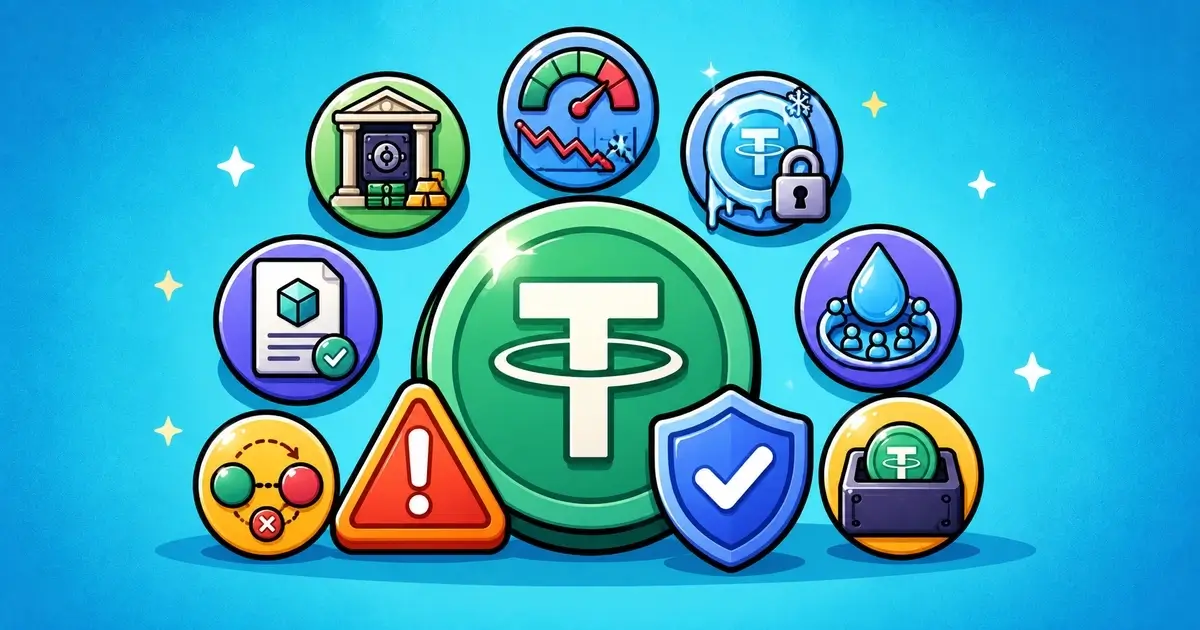
Stablecoins are designed to follow a reference value, usually one dollar.
That makes them useful for trading, crypto payments, casino deposits, wallet transfers, savings-style balances, and moving value between platforms.
But “stable” does not mean risk-free.
A stablecoin can carry issuer risk, reserve risk, depeg risk, liquidity risk, network risk, freezing risk, smart contract risk, and platform-support risk. A stablecoin can also be sent correctly on-chain but still fail to appear in a platform balance if the wrong network, token contract, memo, or minimum amount was used.
This guide explains the main stablecoin risks, how different stablecoins work, what to check before using them for payments, and why a stablecoin balance should not be treated exactly like cash in a bank account.
Related safety pages include Crypto Payments, How to Verify a Token Contract, How to Read a Crypto Transaction, Crypto Payment Fees Explained, and Editorial Policy.
Key Takeaways
- Stablecoins are designed to follow a reference value, but they are not risk-free
- Issuer, reserve, redemption, liquidity, freezing, and depeg risks all matter
- A stablecoin symbol like USDT or USDC is not enough; network and contract matter too
- Some stablecoins can exist on several chains with different deposit and withdrawal rules
- A platform may support one stablecoin network but not another
- Some centralized stablecoins may be able to freeze addresses
- Internal platform balances are not always the same as holding an on-chain stablecoin
- Before sending stablecoins, check asset, network, contract, memo, minimums, and platform support
What Is a Stablecoin?
A stablecoin is a crypto asset designed to track a reference value.
Most commonly, that reference value is the US dollar.
A stablecoin may try to stay close to one dollar through reserves, collateral, market incentives, redemption mechanisms, smart contracts, or a mix of these systems.
Stablecoins are used for:
- trading
- payments
- exchange deposits
- casino deposits and withdrawals
- wallet transfers
- DeFi activity
- saving value between trades
- moving funds between platforms
- avoiding direct exposure to volatile coins during short periods
Stablecoins are useful because they reduce price volatility compared with assets like BTC, ETH, or meme coins.
But they introduce other risks.
The price may be more stable, but the structure behind the token still matters.
Stable Does Not Mean Guaranteed
The word “stablecoin” can create a false sense of safety.
A stablecoin may trade close to one dollar most of the time, but that does not guarantee:
- instant redemption
- full reserve safety
- no issuer problems
- no freezing risk
- no platform withdrawal delays
- no network mistakes
- no token-contract confusion
- no depeg during market stress
- no liquidity problems
- no smart contract or bridge risk
A stablecoin is still a crypto asset.
It depends on the issuer, reserves, network, market liquidity, contract design, regulation, platform support, and user execution.
That is why stablecoin checks should be part of crypto payment safety.
Main Stablecoin Risks
Start with the major risk categories.
Stablecoin Risks to Understand
| Risk | What It Means | What to Check |
|---|---|---|
| Issuer risk | The company or protocol behind the stablecoin may face business, legal, reserve, or operational problems | Check who issues the stablecoin and how transparent the structure is |
| Reserve risk | The assets backing the stablecoin may be unclear, risky, delayed, or not fully available | Look for reserve information, audits, attestations, and redemption rules |
| Depeg risk | The stablecoin may trade above or below its target value | Check market price, liquidity, and recent stress events |
| Network risk | The stablecoin may exist on several chains with different contracts and support rules | Confirm the exact network before sending or depositing |
| Freezing risk | Some centralized stablecoins can freeze addresses or block transfers | Understand issuer controls before using large amounts |
These risks do not affect every stablecoin in the same way.
A centralized fiat-backed stablecoin has different risks from a crypto-backed or algorithmic stablecoin. A bridged version of a stablecoin has different risks from the original token on its main network.
The label “stablecoin” is only the beginning of the check.
Types of Stablecoins
Stablecoins can be built in different ways.
Common Stablecoin Types
| Type | How It Usually Works | Main Risk to Check |
|---|---|---|
| Fiat-backed stablecoin | Usually backed by cash, treasury bills, or similar reserves | Issuer, reserve, banking, and redemption risk matter |
| Crypto-backed stablecoin | Backed by crypto collateral held in smart contracts or protocols | Collateral volatility and liquidation design matter |
| Algorithmic stablecoin | Uses incentives, supply rules, or related tokens to target a value | Can be more fragile during market stress |
| Wrapped or bridged stablecoin | Represents a stablecoin moved through a bridge or wrapper | Bridge, contract, and platform-support risk matter |
| Platform-issued balance | A casino, exchange, or app may show a USD-style balance internally | This may not be the same as holding an on-chain stablecoin |
The safest-looking stablecoin for one use case may not be the best fit for another.
For example, a widely supported stablecoin on the wrong network can still create a deposit problem. A low-fee bridged version may be cheaper to move but unsupported by the platform receiving it.
Use the stablecoin that matches the payment route, not only the one with the lowest fee.
TrendCrypt Research Notes: Stablecoin Risk Checks
Stablecoin problems often come from treating all stablecoin balances as the same thing.
They are not.
TrendCrypt Research Notes
| Research Note | Why It Matters |
|---|---|
| Stable value is a target, not a guarantee | Most stablecoins aim to follow a reference price, but market stress can still move the price |
| The issuer matters as much as the token | A stablecoin is not only code; it may depend on banks, reserves, redemption access, and legal controls |
| Network support is a common user problem | Many payment issues come from sending a real stablecoin on a network the platform does not support |
| Freezing is a design feature for some coins | Some stablecoins can block specific addresses, which may matter for users handling platform payments |
| Internal balances are not always on-chain tokens | A platform showing a USD or USDT balance may be using an internal ledger, not a direct wallet balance |
When TrendCrypt reviews payment issues, platform complaints, and missing deposits, stablecoin details matter early.
A user may say “I sent USDT,” but that is not enough information.
The useful version is:
I sent USDT on [network] using token contract [contract address] to [deposit address], with TXID [hash].That tells you what actually happened on-chain and whether the platform was supposed to support that route.
Issuer Risk
Issuer risk means the stablecoin depends on the company, organization, or protocol behind it.
For centralized stablecoins, the issuer may control reserves, redemption rules, compliance decisions, blacklist functions, banking relationships, and public disclosures.
Questions to ask:
- Who issues the stablecoin?
- Where is the issuer based?
- Are reserves described clearly?
- Are reserve reports available?
- Can normal users redeem directly, or only institutions?
- Can addresses be frozen?
- Are there known restrictions?
- Has the issuer faced major legal, banking, or redemption problems?
A stablecoin may be liquid on exchanges even if direct redemption is limited for ordinary users.
That distinction matters.
Trading a stablecoin is not always the same as redeeming it from the issuer.
Reserve Risk
Reserve risk means the backing assets may not be as simple or available as users assume.
A reserve may include:
- cash
- bank deposits
- treasury bills
- money-market instruments
- secured loans
- crypto collateral
- protocol-owned assets
- other financial instruments
The quality, liquidity, custody, and transparency of reserves affect trust.
A stablecoin with clearer reserve reporting may be easier to evaluate than one with vague backing claims.
But reserve reports still need careful reading.
Look for what assets are held, who holds them, how often reports are updated, whether third parties are involved, and whether redemption terms are clear.
Depeg Risk
A depeg happens when a stablecoin moves away from its target value.
It may trade below or above one dollar, depending on market conditions.
Stablecoin Depeg Signals
| Signal | What It May Mean | What to Check |
|---|---|---|
| Price below target | The stablecoin trades below its intended value | Check whether the move is temporary, liquid, and explained |
| Low liquidity | It may be hard to exit without losing value | Check trading depth and available routes |
| Redemption pressure | Many users may try to redeem at once | Check issuer updates and redemption terms |
| Exchange spread widens | Buying or selling becomes more expensive | Compare rates across platforms before acting |
| Platform pauses deposits or withdrawals | The platform may be managing risk or liquidity | Save notices and check official updates |
A short price move may recover quickly.
A deeper or longer depeg can create real losses, especially for users who need to exit during stress.
During a depeg, spreads can widen, withdrawals may slow, platforms may pause support, and liquidity can move quickly.
Do not assume the price will return immediately.
Freezing and Blacklist Risk
Some centralized stablecoins can freeze specific addresses or block transfers.
This may be used for legal, compliance, security, or enforcement reasons.
For some users, that feature may feel like protection. For others, it is a custody-like control that matters when holding larger amounts or receiving funds from platforms.
Before using a stablecoin heavily, understand whether the issuer has:
- freeze authority
- blacklist functions
- compliance controls
- redemption restrictions
- address-monitoring rules
- legal reporting obligations
This does not mean every frozen-address feature is bad.
It means the stablecoin is not the same as a permissionless asset with no issuer control.
Network Risk
Stablecoins often exist on several networks.
For example, one stablecoin may be available on Ethereum, TRON, BNB Chain, Polygon, Arbitrum, Base, Avalanche, Solana, or other chains.
The same symbol can appear across several networks, but the contracts and platform-support rules may differ.
Before sending stablecoins, check:
Stablecoin Payment Checks
| Check | Why It Matters | What to Do |
|---|---|---|
| Asset symbol | Stablecoins can share similar names or tickers | Check more than the symbol |
| Token contract | Identifies the actual token on that network | Compare with the platform’s supported asset page |
| Network | USDT, USDC, and other stablecoins may exist on several chains | Send only on a network the receiver supports |
| Memo or tag | Some platforms need extra routing information | Check before depositing |
| Minimum deposit or withdrawal | Small stablecoin payments may not be credited or withdrawable | Read the payment rules before sending |
A real stablecoin on an unsupported network can still become a problem.
A platform may support USDT on TRON but not USDT on Polygon. It may support USDC on Ethereum but not a bridged USDC version. It may support a token deposit but require a memo or minimum amount.
Always check the receiving platform’s current deposit instructions.
Token Contract Risk
Stablecoins can be copied.
A fake token can use the same name, symbol, and logo as a real stablecoin.
That is why contract addresses matter.
Before sending, accepting, or swapping a stablecoin, confirm:
- official token contract
- correct network
- token symbol
- token decimals
- platform support
- deposit page instructions
- token warning labels on explorers or wallets
- whether the token is native, bridged, wrapped, or copied
A wallet may display the token name, but that does not prove it is the supported asset.
Read How to Verify a Token Contract before sending unfamiliar stablecoins.
Liquidity Risk
Liquidity risk means it may be hard to buy, sell, swap, redeem, or withdraw the stablecoin at the expected value.
A stablecoin may look stable on one platform but trade differently elsewhere.
Liquidity can become a problem when:
- market stress increases
- redemptions rise
- exchanges pause trading
- bridges pause transfers
- liquidity pools become imbalanced
- spreads widen
- withdrawals slow
- the stablecoin loses trust
Before moving larger amounts, check whether the stablecoin has active markets and normal spreads on the route you plan to use.
A stablecoin that is easy to receive but hard to exit can create hidden risk.
Bridge and Wrapped Stablecoin Risk
Some stablecoins are bridged or wrapped versions of another token.
This can be useful for moving value across networks.
It also adds another layer of risk.
A bridged stablecoin may depend on:
- bridge security
- custody of original assets
- smart contracts
- validator or messaging systems
- liquidity providers
- platform support
- correct contract recognition
A platform may not accept every bridged version.
Do not assume that a stablecoin is supported only because the symbol looks familiar.
Check whether the receiving platform supports that exact token contract on that exact network.
Platform Balance Risk
A platform may show a stablecoin-style balance internally.
For example, a casino, exchange, wallet app, or payment service may show USDT, USDC, USD, or a dollar balance.
That balance may be an internal ledger entry.
It may not mean the user holds an on-chain stablecoin in a personal wallet.
This matters because internal balances depend on the platform’s rules:
- withdrawal limits
- KYC checks
- account restrictions
- supported networks
- withdrawal fees
- liquidity
- internal risk reviews
- maintenance
- compliance controls
A platform balance is only withdrawable according to platform rules.
Read Crypto Platform Warning Signs to Check if a platform keeps changing withdrawal requirements or asks for extra payments before release.
Stablecoins in Crypto Casinos
Stablecoins are common in crypto casinos because they make balances easier to understand than volatile coins.
But users still need to check:
- supported stablecoins
- supported networks
- minimum deposit
- minimum withdrawal
- withdrawal fee
- confirmation requirements
- KYC rules
- bonus balance conversion
- exchange rate used by the casino
- withdrawal limits
- account-review rules
A casino may accept USDT on one network and withdraw through another. It may display balances in USD while settling in crypto. It may also apply KYC before stablecoin withdrawals.
Stablecoin use can reduce price volatility, but it does not remove casino platform risk.
Stablecoin Fees
Stablecoin fees depend on the network and platform.
A USDT transfer on one network may cost much less than another, but the cheaper route is only useful if the receiving platform supports it.
Fee-related checks include:
- network fee
- platform withdrawal fee
- minimum withdrawal
- conversion spread
- bridge fee
- swap fee
- gas token needed
- final amount received
Do not choose a network only because it is cheaper.
Choose a network the receiver supports clearly.
Read Crypto Payment Fees Explained for a deeper fee checklist.
Stablecoin Warning Signs
Be careful if you see:
- a stablecoin trading far below its target value
- platforms pausing deposits or withdrawals
- large spreads on swaps
- unclear reserve information
- fake token contracts using real stablecoin symbols
- unknown stablecoins appearing in your wallet
- bridge versions not supported by the receiver
- support asking for extra stablecoins to unlock funds
- platforms demanding tax, release, or verification payments
- social media panic with no official source
Do not act only from panic posts.
Check official sources, market prices, platform notices, and transaction data.
During stress, fake support and phishing links often appear quickly.
Mistakes to Avoid
Stablecoin mistakes often happen because the asset feels familiar.
Mistakes to Avoid With Stablecoins
| Mistake | Why It Can Cause Problems |
|---|---|
| Treating stablecoins as risk-free dollars | Stablecoins can depeg, freeze, lose liquidity, or face issuer problems |
| Sending by symbol only | The same symbol may exist on several networks or be copied |
| Ignoring token contracts | Fake or unsupported stablecoins may look familiar in a wallet |
| Using the cheapest network without checking support | Low fees do not help if the receiver does not support the network |
| Keeping all funds on one platform or stablecoin | Issuer, platform, and custody risk can stack together |
The biggest mistake is treating stablecoins as identical across platforms and networks.
They are not.
The token, network, contract, issuer, and receiving platform all matter.
Before Sending Stablecoins
Before sending stablecoins, check:
- stablecoin name
- symbol
- contract address
- network
- recipient address
- memo or tag
- minimum deposit
- supported network
- platform fee
- confirmation rules
- token version
- whether it is native, bridged, or wrapped
- test transfer, if the amount matters
Save the TXID after sending.
If the deposit does not appear, the TXID, network, token contract, address, and amount will help support understand the issue.
If a Stablecoin Deposit Is Missing
If a stablecoin deposit does not show, check:
- transaction status
- confirmations
- network
- token contract
- recipient address
- memo or tag
- deposit minimum
- supported asset list
- platform maintenance status
- whether the token is copied or unsupported
A successful blockchain transaction does not always mean the platform credited it internally.
Read Crypto Deposit Not Showing? What to Check for the full missing-deposit process.
Report a Stablecoin Payment or Platform Issue
If you found a fake stablecoin, copied token contract, unsupported stablecoin deposit, depeg-related platform issue, suspicious stablecoin payment demand, or repeated complaint pattern, you can send a redacted report to [[email protected]](mailto:[email protected]).
Useful details may include:
- stablecoin name
- token contract
- network
- transaction hash
- wallet address
- platform URL
- deposit or withdrawal screenshot
- support messages
- complaint links
- a short timeline
Do not send seed phrases, private keys, wallet passwords, authentication codes, full identity documents, or anything that could give access to your wallet or accounts.
TrendCrypt can review patterns and publish safety warnings, but we cannot reverse blockchain transactions, recover funds, redeem stablecoins, freeze addresses, force platforms to credit accounts, or guarantee issuer or platform action.
Final Thoughts
Stablecoins are useful because they reduce price swings compared with many crypto assets.
But stable does not mean risk-free.
The issuer may matter. The reserves may matter. The network may matter. The token contract may matter. Liquidity may matter. Freezing controls may matter. Platform withdrawal rules may matter.
Before using a stablecoin, check what it is, who issues it, where it trades, which network it uses, which contract identifies it, and whether the receiving platform supports it.
A stablecoin can be a helpful payment tool.
It should still be checked like crypto.
FAQ
Are stablecoins risk-free?
No. Stablecoins are designed to follow a reference value, but they can still carry issuer, reserve, redemption, liquidity, freezing, network, contract, and platform risks.
What is stablecoin depeg risk?
Depeg risk is the risk that a stablecoin trades above or below its intended value, such as one dollar.
Why does the stablecoin network matter?
The same stablecoin symbol can exist on several networks. A platform may support one network but not another.
Can stablecoins be frozen?
Some centralized stablecoins may have address-freezing or blacklist controls. This depends on the issuer and token design.
Can fake stablecoins use the same symbol as real ones?
Yes. Token names and symbols can be copied. Always check the token contract on the correct network.
Is a casino USDT balance the same as holding USDT in my wallet?
Not always. A platform balance may be an internal record. Withdrawals depend on the casino’s rules, network support, KYC checks, limits, and payment process.
What should I check before sending stablecoins?
Check the asset, network, token contract, recipient address, memo or tag, minimum deposit, fees, confirmations, and whether the receiving platform supports that exact route.
Can TrendCrypt recover a stablecoin deposit?
No. TrendCrypt can explain risks and review safety patterns, but we cannot reverse transactions, recover funds, redeem stablecoins, freeze addresses, or force platforms to credit deposits.

Unexpected KYC During Withdrawal: What to Check
Learn what to check when a crypto platform or crypto casino asks for KYC during withdrawal, including verification timing, requested documents, privacy rules, support channels, and payout status.

Crypto Casino and Betting Scams: Warning Signs
Learn how crypto casino and betting scams use unclear ownership, fake bonuses, cloned sites, withdrawal release fees, private support messages, fake KYC links, and wallet-drainer tactics.

Fake Crypto Support Scams: Warning Signs
Learn how fake crypto support accounts target users after wallet, withdrawal, deposit, KYC, or account problems by pretending to represent platforms, exchanges, casinos, wallets, or recovery teams.