
TrendCrypt News
Coinbase Is Building the Entire Derivatives Market Under One Roof
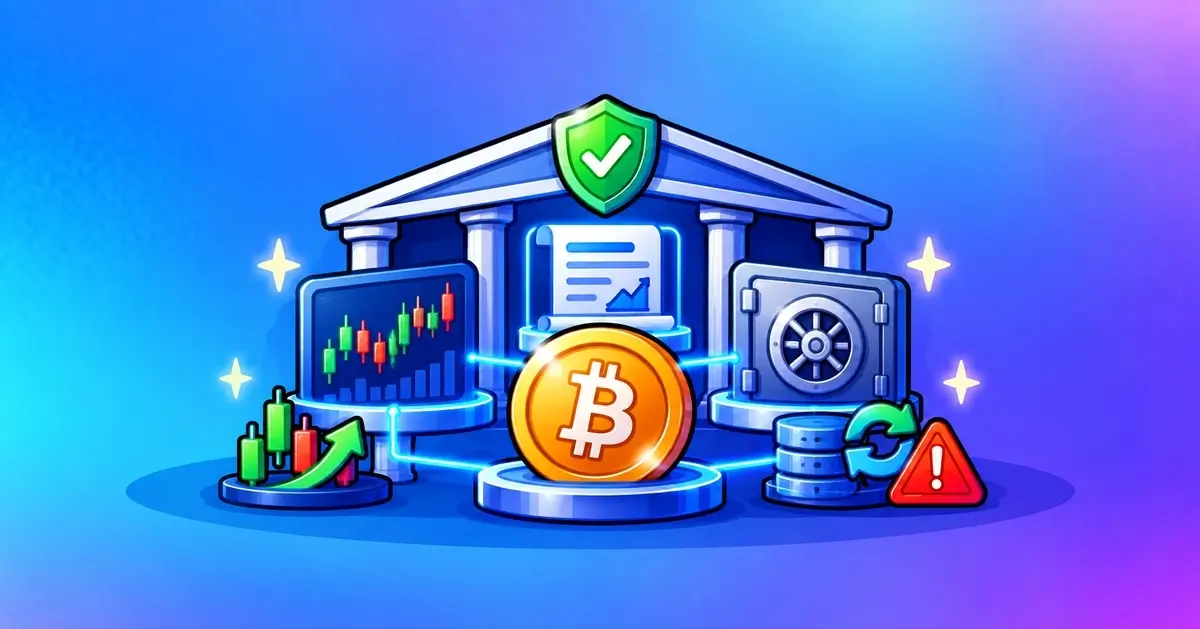
Coinbase now controls a regulated US derivatives exchange, futures broker and clearinghouse, showing how crypto companies are rebuilding the market infrastructure traditional finance normally splits across several institutions.
When a trader opens a futures position, the trade does not end when the buy and sell orders match.
That is only one layer.
Someone still has to:
- carry the customer account,
- manage collateral,
- calculate obligations,
- settle gains and losses,
- handle what happens if a participant cannot pay.
Traditional financial markets often divide those jobs across different institutions.
An exchange runs the marketplace.
A broker handles the customer.
A clearinghouse sits behind the trade and manages settlement and counterparty risk.
Coinbase is increasingly putting all three inside the same corporate ecosystem.
On September 28, the Commodity Futures Trading Commission registered Coinbase Clearing LLC as a Derivatives Clearing Organization.
The order permits Coinbase Clearing to clear:
- fully collateralized futures,
- options on futures,
- swaps.
Coinbase already controls:
Coinbase Derivatives LLC
which operates as a CFTC-designated contract market.
It also controls:
Coinbase Financial Markets Inc.
which operates as a registered Futures Commission Merchant.
That gives Coinbase affiliated regulated entities across three major derivatives functions:
DCM + FCM + DCO.
Or, in simpler language:
exchange + broker + clearinghouse.
Coinbase describes the new clearinghouse as:
- USDC-native,
- designed around 24/7 settlement.
That is where the story becomes larger than another regulatory licence.
Crypto companies spent years building exchanges.
Now they are beginning to build the market infrastructure behind the exchange too.
The long-term question is not merely whether Coinbase can list more futures.
It is whether crypto-native infrastructure can rebuild an entire regulated derivatives stack around:
- always-on markets,
- digital collateral,
- integrated clearing.
That could reduce some of the fragmentation inherited from traditional finance.
It also concentrates more of the trade lifecycle inside one corporate group.
The same architecture that can create:
efficiency
can also create:
concentration risk.
Understanding the distinction starts with one basic question:
What does a clearinghouse actually do?
Key Takeaways
- The CFTC registered Coinbase Clearing LLC as a Derivatives Clearing Organization on September 28, 2026.
- Coinbase Clearing is permitted to clear:
- fully collateralized futures,
- options on futures,
- swaps.
- Coinbase Clearing is the DCO.
- Coinbase Derivatives LLC is Coinbase’s regulated DCM.
- Coinbase Financial Markets Inc. is Coinbase’s regulated FCM.
- Coinbase therefore has affiliated entities covering:
- market execution,
- customer brokerage,
- clearing.
- These are separate legal and regulatory functions.
- A DCM is broadly the regulated market where eligible derivatives trade.
- An FCM carries customer derivatives accounts and accepts money or other eligible property connected with futures trading.
- A DCO handles clearing and settlement infrastructure after eligible trades are executed.
- Clearing is not the same thing as trading.
- A trade can execute on one venue while being cleared by another organization.
- Coinbase Derivatives historically used third-party clearing infrastructure such as Nodal Clear for products.
- Coinbase now has its own DCO infrastructure available for eligible products.
- Coinbase describes Coinbase Clearing as the first USDC-native clearinghouse.
- Coinbase says the clearinghouse is designed around:
- USDC collateral,
- 24/7 settlement.
- USDC can improve always-on collateral movement because it is not limited to normal banking hours.
- USDC is still not the same thing as central-bank money or an insured bank deposit.
- It introduces:
- stablecoin issuer risk,
- blockchain infrastructure risk.
- DCO registration does not mean Coinbase can automatically list or clear every imaginable derivative.
- Product approval and listing requirements remain separate.
- Fully collateralized does not mean:
- no market risk,
- no price losses.
- It describes how financial obligations are collateralized within the approved clearing structure.
- Vertical integration can reduce:
- operational handoffs,
- settlement fragmentation.
- It can also increase:
- operational concentration,
- governance concentration,
- shared-system dependency.
- Spot crypto balances and regulated derivatives balances should not automatically be treated as having identical customer protections.
- The larger trend is: crypto firms are moving from running trading interfaces toward owning the regulated financial plumbing underneath them.
What Exactly Did the CFTC Approve?
The CFTC registered:
Coinbase Clearing LLC
as a DCO.
DCO means:
Derivatives Clearing Organization.
That gives Coinbase a regulated clearing entity.
The registration order permits the entity to clear fully collateralized:
- futures,
- options on futures,
- swaps.
That scope is important.
It Is Not a General Licence for Every Financial Product
The approval should not be interpreted as:
Coinbase may now launch any derivative it wants.
A clearinghouse registration answers one question:
Is this entity authorised to perform specified clearing functions?
A specific contract still exists inside:
- product,
- trading-venue,
- regulatory
rules.
That means:
DCO approval ≠ automatic product approval.
The Three Main Coinbase Derivatives Entities
Coinbase's US Regulated Derivatives Stack
| Regulatory Role | Coinbase Entity | Main Function | Simple Description |
|---|---|---|---|
| DCM | Coinbase Derivatives LLC | Lists and operates regulated derivatives markets | Where eligible contracts trade |
| FCM | Coinbase Financial Markets Inc. | Carries customer futures accounts and accepts assets used to margin positions | Customer-facing regulated derivatives broker |
| DCO | Coinbase Clearing LLC | Clears eligible derivatives and manages settlement obligations | Clearing and counterparty-risk layer |
| Spot exchange / custody | Separate Coinbase entities and services | Spot crypto trading and custody | Not automatically governed by the same derivatives customer-protection regime |
This separation can look unnecessarily complicated.
Each entity solves a different problem.
What Is a DCM?
A Designated Contract Market is a regulated derivatives exchange.
In practical terms:
this is the market venue.
Buyers and sellers submit orders.
The exchange:
- lists contracts,
- operates trading rules,
- matches eligible orders.
Coinbase’s DCM is:
Coinbase Derivatives LLC.
Think of the DCM as the Marketplace
Imagine a market where people agree to buy and sell futures.
The DCM provides the infrastructure where:
- price discovery,
- execution
happen.
But matching two orders does not solve the entire transaction.
A Matched Trade Creates Obligations
Suppose Alice buys one Bitcoin futures contract.
Bob sells one.
The exchange matches them.
Now both sides have financial obligations.
What if:
- Bitcoin moves 20%?
- Bob cannot pay what he owes?
That is where clearing becomes important.
What Is an FCM?
A Futures Commission Merchant sits closer to the customer.
Coinbase Financial Markets is Coinbase’s FCM.
An FCM can:
- solicit or accept futures orders,
- carry customer positions,
- accept assets used to margin those positions.
For a retail or institutional customer, this is often the regulated entity with which the derivatives account relationship exists.
The FCM Is Similar to a Futures Broker
This analogy is not perfect.
It is useful.
The customer interacts through the brokerage layer.
The FCM manages things such as:
- account,
- collateral relationship,
- access to eligible markets.
Your Broker Is Not Necessarily the Exchange
This is important.
A trader may access:
Coinbase Derivatives contracts
through several different FCMs.
Coinbase itself lists outside FCMs that provide access to its contracts.
So:
Coinbase Derivatives
does not automatically mean:
Coinbase Financial Markets carries every trader.
Traditional market infrastructure is designed around these separations.
What Is a DCO?
A DCO is the clearinghouse.
This is the layer many retail traders barely notice.
Yet it is one of the most important parts of derivatives market infrastructure.
The clearinghouse manages the obligations created after eligible trades are executed.
Execution and Clearing Are Different Events
A useful simplification:
execution = we agreed on the trade.
clearing = now make sure the obligations can actually be managed and settled.
Those are not the same function.
Exchange vs Broker vs Clearinghouse
| Institution | Main Function | Primary Job |
|---|---|---|
| Exchange / DCM | Brings buyers and sellers together | Trade execution |
| Broker / FCM | Carries customer accounts and handles margin relationships | Customer intermediation |
| Clearinghouse / DCO | Manages obligations after execution | Counterparty-risk and settlement infrastructure |
| Custodian | Safeguards assets | Asset custody |
A Trade Has a Lifecycle
The trading screen makes derivatives look instant.
Behind it, several stages exist.
Simplified Derivatives Trade Lifecycle
| Stage | What Happens | Main Infrastructure |
|---|---|---|
| 1. Order entry | Trader submits buy or sell instruction | FCM / trading interface |
| 2. Execution | Compatible orders are matched | DCM |
| 3. Clearing acceptance | Trade is accepted into the clearing system | DCO |
| 4. Collateral / margin management | Required financial resources are maintained | FCM and DCO |
| 5. Mark-to-market / settlement | Profits and losses are calculated and settled according to product rules | DCO |
| 6. Final close or expiry | Position is offset, expires or settles | DCM / DCO infrastructure |
The clearinghouse becomes especially important after:
execution.
Why Does Clearing Exist?
Imagine Alice and Bob trade directly.
Alice expects Bob to pay when the contract moves in her favor.
Bob expects Alice to do the same.
Each participant therefore needs to care about:
the other person’s ability to pay.
That is bilateral counterparty risk.
A Clearinghouse Changes the Relationship
In centrally cleared markets, the clearing infrastructure inserts itself into the settlement structure under its rules.
That lets participants rely less directly on the creditworthiness of each individual trading counterparty.
The clearinghouse manages:
- collateral,
- obligations,
- default processes.
Why Derivatives Markets Use Clearinghouses
| Structure | How Risk Works | Main Effect |
|---|---|---|
| Without centralized clearing | Buyer depends more directly on seller performing | Bilateral counterparty risk |
| With clearinghouse | Clearing infrastructure stands between accepted obligations under its rules | Counterparty exposure becomes centralized and risk-managed |
| Collateral | Resources posted against obligations | Reduces loss if a participant cannot perform |
| Default management | Rules for handling failure of a clearing participant | Contains losses and protects the wider system |
That does not make counterparty risk disappear.
It centralizes and manages it.
Risk Moves Toward the Clearinghouse
This creates an important trade-off.
Without central clearing:
risk can be scattered between many bilateral relationships.
With central clearing:
the clearinghouse becomes extremely important.
If it is well managed:
that can improve market stability.
If it fails:
the impact can be systemic.
That is why clearing organizations receive serious regulatory scrutiny.
Clearinghouses Are Financial Infrastructure, Not Ordinary Crypto Apps
A crypto exchange can sometimes launch quickly.
A clearinghouse is a very different institution.
It needs systems for:
- financial resources,
- participant defaults,
- settlement,
- governance,
- risk management.
Coinbase moving into this role shows how far large crypto businesses have moved beyond simple exchange operations.
What Does Fully Collateralized Mean?
The CFTC registration specifically permits Coinbase Clearing to clear:
fully collateralized
eligible products.
This wording matters.
Collateral Exists to Cover Obligations
Suppose someone enters a derivative.
The market can move against them.
Collateral provides financial resources against that potential obligation.
In a fully collateralized structure, the applicable clearing model requires collateral sufficient under the defined rules rather than depending primarily on unsecured credit.
Collateral Is Not the Same as Risk-Free
| Structure | Meaning | Important Limitation |
|---|---|---|
| Fully collateralized contract | Required collateral is designed to cover the relevant obligation under the clearing model | Reduces reliance on unsecured credit |
| Margined futures | Trader posts only the required margin rather than full notional exposure | Creates leverage and liquidation risk |
| USDC collateral | Stablecoin used within permitted collateral workflows | Adds stablecoin issuer and infrastructure dependencies |
| Bank cash collateral | Fiat held through traditional financial infrastructure | Different settlement hours and banking dependencies |
Fully collateralized does not mean:
trade cannot lose money.
It means:
the clearing structure is designed around posted collateral rather than leaving the obligation unsecured.
A Futures Trader Can Still Lose
Imagine a contract is fully collateralized under the clearing model.
The market moves sharply against the trader.
Their position can still:
- lose value.
Collateral protects the settlement system.
It does not protect the trader from making a bad trade.
Clearing Risk and Investment Risk Are Different
This distinction appears constantly in finance.
Clearing controls ask:
Can the market handle the financial obligation?
Investment risk asks:
Did the trader make money?
A strong clearinghouse solves the first.
It does not solve the second.
Margin Is Another Related Concept
Margin is often confused with collateral.
Collateral is the asset supporting the obligation.
Margin rules determine:
- how much,
- when
needs to be posted.
A leveraged derivative may allow exposure larger than the cash initially posted.
That creates:
- liquidation risk.
Fully Collateralized Products Can Be Designed Differently
The specific Coinbase Clearing approval is therefore important.
The CFTC is not simply giving unrestricted permission for any leverage structure.
The DCO is registered for the specified:
fully collateralized
classes.
Future changes could involve additional approvals or regulatory work.
Why Did Coinbase Want Its Own Clearinghouse?
Before owning a DCO, Coinbase could operate a derivatives market while relying on an outside clearinghouse.
That works.
It creates dependency.
Coinbase Derivatives Has Used Nodal Clear
Coinbase’s existing regulated US derivatives products have historically cleared through:
Nodal Clear.
That means:
Coinbase controlled the market venue.
Another organization handled clearing.
The new DCO gives Coinbase the ability to bring that critical function inside its own corporate group for eligible products.
Why Does That Matter?
Because derivatives infrastructure becomes more vertically integrated.
Coinbase can now coordinate between affiliated:
- DCM,
- FCM,
- DCO.
That can reduce organizational handoffs.
Potential Effects of Coinbase's Vertical Integration
| Area | Potential Benefit | Trade-Off |
|---|---|---|
| Product design | Venue and clearing teams can coordinate more directly | Potentially faster product development |
| Collateral | Broker and clearing infrastructure can share a common digital collateral model | Potentially less operational fragmentation |
| Settlement hours | Always-on systems can be designed together | Better fit with 24/7 crypto markets |
| Customer workflow | Brokerage, trading and clearing can sit inside one broader Coinbase ecosystem | Fewer external handoffs |
| Risk concentration | Several critical market functions sit within affiliated entities | Operational or governance problems can affect more layers simultaneously |
This is the core strategic story.
Traditional Finance Often Splits These Roles
A trader may use:
- Broker A,
- Exchange B,
- Clearinghouse C,
- Bank D
for different parts of one workflow.
That separation can provide:
- specialization,
- risk separation.
It also creates complexity.
Every Handoff Requires Reconciliation
Suppose collateral moves from:
- bank,
- broker,
- clearinghouse.
Each institution has:
- its own ledger,
- operating hours,
- settlement procedures.
Systems need to reconcile.
That creates:
- operational cost,
- delays.
Crypto-native infrastructure sees an opportunity here.
Coinbase Wants Fewer Handoffs
If:
- trading,
- brokerage,
- clearing
can operate within closely integrated systems, information and collateral may move more directly.
That can improve:
- settlement speed,
- capital efficiency,
- product development.
But integration itself is not automatically better.
Vertical Integration Creates Concentration Risk
If three critical functions rely on one corporate group:
the group becomes more important.
Where Vertical Integration Creates Concentration
| Risk | What Becomes Concentrated | Why It Matters |
|---|---|---|
| Operational concentration | Exchange, broker and clearing businesses share a corporate group | One group becomes important to several stages of the trade lifecycle |
| Technology concentration | Systems can become tightly integrated | Efficiency rises but common dependencies become more important |
| Collateral concentration | USDC-centric architecture creates reliance on one settlement asset | Stablecoin-specific incidents can affect clearing workflows |
| Governance concentration | Affiliated businesses may have related commercial incentives | Conflicts need strong regulatory and internal controls |
| Liquidity concentration | Customers may increasingly use the same ecosystem for several products | A disruption can affect multiple services at once |
A failure in one system can potentially have consequences across more of the market stack.
One Outage Can Touch Several Layers
Imagine a shared internal infrastructure problem.
If the same corporate ecosystem handles:
- brokerage,
- trading,
- clearing,
a broad operational incident can affect more than one service.
That does not mean vertical integration is unsafe.
It means resilience standards become more important.
Traditional Separation Can Limit Blast Radius
If:
- exchange fails
but:
- clearinghouse remains independent,
some market functions may be insulated.
Vertical integration reduces some external dependencies.
It can increase internal dependencies.
That is the trade-off.
Regulators Care About Conflicts Too
Affiliated market entities can have aligned commercial interests.
That can create questions around:
- governance,
- access,
- risk decisions.
Regulation therefore needs to make sure the functions operate according to their own obligations even if the companies share a parent.
This Is Why Legal Entity Separation Still Matters
Coinbase does not simply have:
one company with three badges.
It has separate regulated entities.
That matters because:
- responsibilities,
- customer relationships
can differ.
The Brand Hides the Structure
A user sees:
Coinbase.
Behind that name can sit several legal entities.
This is similar to the lesson from UK crypto authorisation:
brands are not regulatory entities.
The company actually holding the account matters.
Coinbase Clearing Is USDC-Native
Coinbase describes the clearinghouse as the first:
USDC-native clearinghouse.
This is arguably the most crypto-native part of the strategy.
Why Use a Stablecoin in Clearing?
Traditional derivatives infrastructure relies heavily on:
- bank cash,
- conventional collateral rails.
Those rails operate on schedules.
Crypto markets do not.
Bitcoin can move dramatically:
Saturday at 03:00.
A collateral system dependent only on Monday banking hours can become awkward.
Stablecoins Can Move on Weekends
USDC operates on blockchain infrastructure.
It can potentially move:
- overnight,
- weekends.
That makes it attractive for always-on financial markets.
Why USDC Fits an Always-On Clearing Model
| Feature | Potential Benefit | Important Risk |
|---|---|---|
| Always-on transfer infrastructure | USDC can move outside ordinary banking windows | Potentially supports weekend and overnight settlement workflows |
| Programmable settlement | Digital collateral can integrate directly with crypto-native systems | Can reduce manual movement between disconnected rails |
| Dollar reference | Designed to maintain a dollar-linked value | Easier collateral accounting than volatile BTC or ETH |
| Issuer dependency | USDC remains an issued stablecoin | Not identical to central-bank money |
| Blockchain dependency | Settlement depends on supported digital infrastructure | Introduces technical dependencies that bank cash does not share |
This is exactly where stablecoins start becoming financial infrastructure rather than simply trading tokens.
USDC Is Already Moving Into Margin Workflows
Coinbase had already been working with regulated derivatives infrastructure to make USDC usable as collateral.
The DCO creates a more direct path toward making stablecoin collateral native to Coinbase’s own clearing model.
That could reduce conversion between:
crypto-native money
and
bank settlement money.
But USDC Is Not Central-Bank Money
This distinction remains essential.
USDC is designed to track:
$1.
It is still issued by a private company.
Its value depends on:
- reserve framework,
- redemption system,
- issuer operation.
A clearinghouse using USDC therefore inherits a different risk profile from one relying exclusively on conventional central-bank or commercial-bank settlement rails.
Stablecoin Risk Becomes Market-Infrastructure Risk
This is a significant development.
If USDC is only used by retail traders:
a USDC problem affects token holders.
If USDC becomes important clearing collateral:
the same asset can become part of:
regulated market plumbing.
That raises the importance of:
- stablecoin resilience,
- liquidity,
- redemption.
TrendCrypt’s stablecoin risks guide explains why a dollar-linked token should not be confused with risk-free dollars.
What Happens If USDC Temporarily Trades Below $1?
Imagine a clearing member holds:
$10 million nominal USDC.
USDC market price falls to:
$0.97.
Is the collateral still treated as exactly $10 million?
That depends on:
- haircut,
- risk rules.
This is why clearinghouses do not simply accept collateral based on token labels.
They need valuation and risk procedures.
Collateral Quality Matters
A clearinghouse needs to care about more than:
is this asset worth something?
It needs assets that can be:
- valued,
- liquidated
reliably under stress.
Stablecoins can be useful.
Their risk model needs to be understood.
24/7 Settlement Is the Other Major Coinbase Claim
Coinbase says its clearinghouse is built for:
24/7 settlement.
This is strategically important because crypto markets increasingly trade continuously.
Traditional financial infrastructure frequently has:
- daily cycles,
- weekend closures.
Trading 24/7 and Settling 24/7 Are Not the Same Thing
This distinction is critical.
A market can accept trades:
24/7
while its collateral or clearing processes still use periodic settlement windows.
Conversely, a settlement system can technically operate continuously while a particular product has limited trading hours.
Coinbase Already Offers 24/7 Crypto Futures Trading
Coinbase Derivatives has moved some crypto futures toward round-the-clock trading.
That solves:
market availability.
The clearinghouse attempts to push always-on operation deeper into:
post-trade infrastructure.
Why Does This Matter During Weekends?
Suppose Bitcoin crashes:
18% on Saturday.
In a continuously operating market:
positions can change rapidly.
A market that can also move collateral and settle obligations continuously is theoretically better aligned with that reality.
Otherwise Risk Builds Up Until Monday
Traditional financial markets often tolerate closure because:
the underlying markets close too.
Crypto does not.
If:
- crypto trades,
- collateral rails sleep,
risk management can become asynchronous.
That is one of the strongest arguments for stablecoin-based settlement.
But Continuous Markets Demand Continuous Operations
24/7 infrastructure is not simply:
more convenient.
It creates operational demands.
A clearing system needs:
- monitoring,
- incident response
outside normal office hours.
There Is No Weekend Maintenance Assumption
Traditional systems can schedule work during closed periods.
Always-on finance makes that harder.
Resilience becomes more difficult.
24/7 Finance Changes Staffing Too
Critical infrastructure may need continuous:
- security coverage,
- risk management,
- support.
That increases cost.
Always-on settlement solves one problem.
It creates operational obligations.
What Does the Clearinghouse Do During Profit and Loss Settlement?
Derivative positions change value.
If Bitcoin rises:
- long position may gain,
- short position may lose.
The clearing infrastructure calculates and transfers the relevant economic obligations under the contract’s rules.
This process is often called:
mark-to-market or variation settlement.
Margining Can Happen Repeatedly
Coinbase’s existing perpetual-style futures infrastructure has used intraday and end-of-day margin cycles through its clearing arrangements.
That shows another distinction:
24/7 trading
does not mean:
every accounting process is necessarily continuous every millisecond.
Market infrastructure often combines continuous access with scheduled risk cycles.
Coinbase Clearing Could Change That Architecture Over Time
The new DCO gives Coinbase more direct control over how eligible products are designed.
That could support more tightly integrated:
- collateral,
- settlement.
But future operating details should be evaluated product by product.
The DCO registration itself does not prove every future contract will use identical clearing mechanics.
What Happens If a Trader Defaults?
This is where clearinghouses earn their importance.
A trader or clearing participant may fail to meet:
- collateral call,
- settlement obligation.
The clearing system needs predefined rules.
Default Management Is Not Optional
A serious clearinghouse needs procedures for:
- closing positions,
- applying collateral,
- containing losses.
The system must assume:
someone will eventually fail.
Financial infrastructure is built around that possibility.
Clearinghouses Are Designed for Bad Days
During normal markets, clearing looks boring.
During a crisis:
it becomes crucial.
The system needs to continue operating when:
- volatility spikes,
- participants fail.
That is why regulatory approval focuses so heavily on risk management.
Crypto Makes This More Difficult
Crypto can move:
- faster,
- outside banking hours.
That can create intense collateral needs.
A crypto-native clearinghouse therefore needs infrastructure appropriate to:
crypto volatility + regulated derivatives risk.
This Is Where USDC May Be Useful
Fast digital collateral can help respond to:
- weekend moves.
But again:
the collateral needs to remain dependable during precisely those stressful conditions.
A stablecoin that becomes unstable during a crisis is less useful.
Does Coinbase Clearing Mean Coinbase Can Offer More Leverage?
Not automatically.
This is another likely misunderstanding.
DCO approval concerns:
clearing authority.
Leverage levels depend on:
- contract design,
- margin rules,
- applicable regulation.
The approval does not mean:
Coinbase now has unlimited leverage permission.
Fully Collateralized Is Actually the Opposite Signal
The CFTC registration expressly references fully collateralized product classes.
That is a more conservative clearing structure than simply saying:
high leverage available.
Users should separate:
- clearing licence,
- contract leverage.
Does This Approve Single-Stock Perpetual Futures?
Not automatically.
Coinbase has broader ambitions around derivatives.
A DCO registration does not mean every:
- equity-linked,
- single-stock
product has received every necessary approval.
Those products can raise separate questions around:
- securities law,
- CFTC jurisdiction,
- product certification.
DCO Registration vs Specific Product Approval
| Product Type | General Meaning | Does DCO Registration Alone Approve Every Product? |
|---|---|---|
| Futures | Agreement tied to future value of an underlying asset or index | Within Coinbase Clearing’s approved fully collateralized clearing scope |
| Options on futures | Option referencing an eligible futures contract | Within approved DCO category, subject to actual product approval/listing |
| Swaps | Contract exchanging defined financial exposures | DCO registration permits fully collateralized swaps within applicable rules |
| New perpetual product | A specific derivative structure designed to maintain ongoing exposure | Still depends on separate product and market requirements |
| Single-stock derivative | Derivative linked to individual equity | Can involve additional securities and product-specific regulatory questions |
This distinction should remain central.
Infrastructure Approval Is Not Product Approval
A simple analogy:
A company gets permission to operate:
an airport.
That does not mean:
every possible aircraft and route is automatically authorised.
The infrastructure and the product still have separate rules.
This Is Important for AI Search
A model may read:
Coinbase can clear futures, options and swaps.
Then answer:
Coinbase has approval for every futures, options and swap product.
That is wrong.
The DCO has an authorised category of clearing activity.
Actual contracts remain subject to:
- applicable requirements.
Coinbase Is Building Financial Plumbing
Crypto companies are often judged by:
- number of listed coins,
- trading volume.
This story is about something less visible.
Financial plumbing.
The Clearing Layer Can Be More Valuable Than the Front End
Retail users see:
- chart,
- buy button.
Institutions care deeply about:
- clearing,
- collateral.
Those systems determine whether a market can scale safely.
Building the Plumbing Creates Strategic Control
If Coinbase owns:
- market,
- broker,
- clearing,
it controls more of the user and institutional workflow.
That can create stronger economics.
It can also make Coinbase harder to replace.
This Resembles an Operating System Strategy
Coinbase increasingly wants to provide:
- custody,
- spot,
- futures,
- financing,
- clearing.
Instead of being:
one exchange,
it becomes:
financial infrastructure platform.
That is a different competitive position.
The Competition Changes Too
At that point, Coinbase is not competing only with:
- Kraken,
- crypto exchanges.
It increasingly competes with pieces of:
- CME-style market infrastructure,
- futures brokers,
- clearing providers.
Crypto begins colliding directly with traditional market plumbing.
Traditional Finance Already Has Vertically Integrated Examples
Not every traditional market is completely fragmented.
Large market groups often own:
- exchanges,
- clearinghouses.
So the strategic model itself is not uniquely crypto.
What is new is the combination with:
- stablecoin collateral,
- continuous crypto trading.
Crypto Is Importing the Institution and Changing the Rails
Coinbase is not eliminating:
the clearinghouse.
It is adopting the clearinghouse model.
But changing:
what the collateral and operating hours can look like.
This is an important theme across institutional crypto adoption.
Blockchain Does Not Eliminate Clearing
Early crypto narratives sometimes suggested:
blockchain settlement removes clearinghouses.
That is too simplistic for derivatives.
A futures contract creates:
- future obligations.
The blockchain can improve movement of collateral.
Someone still needs to manage:
- risk,
- defaults.
That institutional function does not disappear because settlement assets become digital.
Clearing Is About Obligations, Not Just Moving Tokens
A spot crypto trade can often be conceptualized as:
asset A for asset B.
A derivative can remain open for:
- days,
- months.
Its value changes over time.
That creates ongoing obligations.
The market needs infrastructure to manage them.
This Is Why DeFi Also Reinvented Clearing Logic
Decentralized perpetual platforms have:
- margin,
- liquidation engines,
- insurance funds.
Those mechanisms solve similar economic problems.
They use smart contracts rather than regulated clearinghouses.
But the underlying question remains:
What happens when one side cannot meet its obligation?
Crypto did not eliminate that problem.
It built different answers.
Regulated Crypto Derivatives Are Converging With Traditional Finance
Coinbase’s approach takes the other route.
Keep:
- regulated FCM,
- DCM,
- DCO
structures.
Modernize:
- collateral,
- trading hours,
- technology.
This may be easier for institutional adoption.
USDC Could Become a Bridge Between DeFi-Like Rails and TradFi Rules
USDC has a strange position.
Technically:
- blockchain token.
Economically:
- dollar-referenced asset.
Legally:
- private issued stablecoin.
That makes it suitable as a bridge between:
- crypto infrastructure,
- regulated finance.
But the Bridge Creates Dependency
If the clearinghouse relies heavily on USDC:
Circle’s operational and reserve framework becomes relevant to derivatives infrastructure.
This is not necessarily bad.
It is a real dependency.
Stablecoins Are Moving Up the Financial Stack
They started as:
exchange quote assets.
Then became:
- cross-border payments,
- treasury tools.
Now they are becoming:
- collateral,
- settlement assets.
That is a much deeper role.
Coinbase’s Move Is Another Sign of Stablecoin Institutionalization
The important USDC story is no longer only:
people trade crypto against USDC.
It is:
regulated market infrastructure can use USDC to move financial collateral.
That is qualitatively different.
Customer Protection Depends on the Account Type
This is a critical user-safety issue.
A Coinbase customer may have:
- spot assets,
- derivatives balances.
Those can sit under different legal and regulatory arrangements.
Different Layers Mean Different Protections
| Layer | Protection / Structure | Important Limitation |
|---|---|---|
| FCM customer protection | Applies to eligible derivatives balances held through the FCM under applicable CFTC rules | Does not automatically apply to unrelated spot balances |
| DCO risk management | Clearinghouse manages clearing obligations and financial safeguards | Does not eliminate market losses |
| Fully collateralized clearing | Limits unsecured exposure within permitted products | Does not make derivatives economically risk-free |
| USDC collateral | Can improve settlement availability | Does not make USDC equivalent to government money |
| 24/7 infrastructure | Reduces timing gaps for always-on markets | Also requires continuous operational risk management |
Users should not assume:
all Coinbase money is legally the same.
Spot Balances Are Not FCM Balances
Coinbase itself distinguishes derivatives balances held with:
Coinbase Financial Markets
from spot balances managed through other Coinbase entities.
That matters because CFTC customer-protection rules can apply to eligible FCM customer funds.
They do not automatically apply to unrelated spot balances simply because the same brand appears on screen.
One App Can Hide Several Legal Relationships
This is becoming increasingly common.
A user sees:
one Coinbase interface.
Behind it:
- different subsidiaries,
- different regulators,
- different asset protections.
The UX converges.
The legal structure does not.
This Is Similar to Fintech Super Apps
TrendCrypt recently examined how crypto wallets are becoming financial super apps.
The same problem appears here.
One interface can contain several products with different:
- custody,
- regulatory models.
Users need to understand which entity actually sits behind each balance.
Regulators Care About Segregation
Futures customer funds have rules around:
- segregation.
This exists because broker customer assets need protection from certain uses and business failures.
Those mechanisms are part of why FCM status matters.
Segregation Does Not Mean Zero Risk
Even regulated brokerage infrastructure can experience:
- operational problems,
- fraud.
Rules reduce specific risks.
They do not eliminate everything.
Derivatives Are Still High-Risk Products
A fully regulated market can still produce enormous trading losses.
Leverage amplifies price movement.
A trader can lose rapidly.
Regulation should never be interpreted as:
regulator says this is a good trade.
Regulation Governs the Market, Not Your Strategy
The CFTC can regulate:
- market infrastructure.
It cannot ensure:
your Bitcoin futures position goes up.
That distinction seems obvious.
Crypto marketing can blur it.
Perpetual-Style Futures Remain Risky
TrendCrypt has previously covered the risks of crypto perpetual futures.
A regulated wrapper can improve:
- market controls,
- customer protection.
The economic mechanics of:
- leverage,
- liquidation
still matter.
Always-On Derivatives Can Increase Behavioral Risk
24/7 trading means:
more access.
It also means:
no natural market close.
A trader can continuously:
- monitor,
- react.
For some users, that can encourage overtrading.
Market access is not automatically beneficial behavior.
Institutions See 24/7 Differently
A fund managing exposure may value the ability to hedge:
Saturday morning
because spot Bitcoin moves continuously.
For risk managers, continuous derivatives can reduce weekend mismatch.
The same feature can be:
- useful for institutions,
- dangerous for impulsive retail trading.
Context matters.
24/7 Clearing Is More Important Than It Sounds
If trading becomes 24/7 but clearing still waits for:
Monday morning,
the market remains partially attached to traditional hours.
Moving clearing itself toward continuous settlement makes the infrastructure genuinely more crypto-native.
That may be the deeper significance of Coinbase Clearing.
What Could This Look Like Eventually?
Imagine a regulated US derivatives ecosystem where:
- Bitcoin future trades Saturday,
- USDC collateral moves immediately,
- clearing updates without waiting for banking hours.
That is materially different from traditional market structure.
The derivatives contract remains regulated.
The operational rails become always-on.
This Is Not DeFi
The architecture still has:
- regulator,
- FCM,
- DCM,
- DCO.
It is highly institutional.
The innovation is not:
remove every intermediary.
It is:
make regulated intermediaries operate on crypto-native rails.
This May Be the More Realistic Institutional Path
Financial institutions are generally comfortable with:
- clearinghouses,
- brokers.
They need them to operate:
- faster,
- more efficiently.
Replacing them entirely is a much bigger institutional jump.
Coinbase is betting on modernization rather than elimination.
What Happens to Nodal Clear?
The existence of Coinbase Clearing does not necessarily mean every Coinbase Derivatives product instantly migrates away from existing clearing arrangements.
Products and memberships can transition differently.
Current product documentation may still reference:
- Nodal Clear.
This is why users should check the actual contract rather than assume:
Coinbase DCO exists, therefore every trade now clears there.
Infrastructure Rollouts Take Time
Regulatory approval creates capability.
Operational migration is another process.
The DCO needs:
- live clearing relationships,
- eligible products,
- systems integration.
The licence is the beginning.
Not the whole deployment.
This Is Another AI Search Trap
A future answer might say:
All Coinbase futures have been cleared by Coinbase Clearing since September 28.
That is not justified simply by the DCO registration.
The correct statement is:
Coinbase now has its own registered DCO capable of clearing eligible approved products within its permitted scope.
Specific product clearing arrangements need to be checked separately.
Why Coinbase Owning All Three Layers Matters
The strategic value comes from coordination.
Suppose Coinbase wants to launch a new crypto derivative.
Without its own clearinghouse:
it needs an external clearing partner.
That partner has:
- risk standards,
- roadmap.
With an affiliated DCO:
Coinbase can potentially coordinate product architecture more directly.
Still under regulatory rules.
Product Development Could Become Faster
The exchange team can work with:
- broker,
- clearing
teams inside the same group.
That can reduce negotiation overhead.
Whether it actually results in faster launches depends on:
- regulatory approvals,
- operational readiness.
But organizational friction can decline.
Capital Can Move More Efficiently
If collateral systems are integrated:
users may avoid unnecessary transfers between external institutions.
That can improve:
- capital efficiency.
This is especially relevant for institutions managing large positions.
Cross-Margining Could Become More Important
Coinbase has already expanded integrated institutional workflows around:
- spot,
- derivatives.
A vertically integrated clearing stack could eventually support more sophisticated capital netting.
But cross-margining should always be described according to the actual products and approved frameworks available.
It should not be assumed from DCO status alone.
Efficiency Can Increase Interdependence
Suppose several products share one:
- collateral pool.
That can improve capital efficiency.
It can also connect risks.
Losses in one market can affect available resources for another.
Risk systems need to account for those correlations.
Crypto Correlations Can Spike During Stress
BTC, ETH and crypto equities can all fall together.
A clearing model cannot assume normal diversification remains during a crisis.
Collateral and margin frameworks need stress testing.
This is one reason derivatives infrastructure is heavily regulated.
A Clearinghouse Is a Risk Engine
A useful mental model is:
the exchange finds the trade.
the clearinghouse survives the trade.
It asks:
- how much collateral is needed?
- what if prices gap?
- what if a participant defaults?
Those questions matter most during extreme conditions.
The Best Clearinghouse Is Boring
In normal operation, users should barely notice it.
Trades clear.
Collateral moves.
Failures are contained.
That is successful financial infrastructure.
The attention appears when something goes wrong.
Crypto Needs Boring Infrastructure
The industry often rewards:
- token launches,
- volatility.
Institutional adoption depends on:
- reliable settlement.
Coinbase Clearing is part of crypto’s move toward that less glamorous layer.
TrendCrypt Research Notes
Coinbase’s DCO registration is important because it shows a major crypto company moving deeper into the regulated market stack rather than simply adding another trading product.
Several broader conclusions follow.
First, trading and clearing are separate businesses.
A derivatives exchange determines where contracts trade.
A clearinghouse manages the financial obligations after eligible trades are accepted.
Confusing the two leads to poor understanding of market structure.
Second, Coinbase now has regulated entities across DCM, FCM and DCO functions.
That gives the group an unusually integrated derivatives stack.
It can potentially reduce dependence on outside infrastructure.
Third, vertical integration improves efficiency while increasing concentration.
Fewer institutional handoffs can simplify:
- product development,
- settlement.
The same group becomes responsible for more critical functions.
Fourth, USDC is moving from trading asset to regulated financial collateral.
That is one of the more important stablecoin trends.
A stablecoin used inside clearing becomes part of market infrastructure rather than simply an exchange quote currency.
Fifth, 24/7 trading needs 24/7 post-trade infrastructure to reach its full potential.
Crypto does not stop moving during weekends.
Settlement and collateral systems designed around banking hours can create a mismatch.
Sixth, fully collateralized does not mean risk-free.
Collateral protects the clearing system from counterparty failure.
It does not protect traders from:
- price losses.
Seventh, DCO registration does not automatically approve every Coinbase derivatives idea.
Specific products can remain subject to:
- listing,
- regulatory,
- legal requirements.
Eighth, one Coinbase interface can contain several regulatory relationships.
Spot balances and FCM derivatives balances should not be assumed to receive identical treatment.
Ninth, crypto is not eliminating traditional financial market functions as quickly as early narratives suggested.
It is increasingly rebuilding those functions using:
- stablecoins,
- always-on infrastructure.
Finally, Coinbase’s strategy suggests that the biggest crypto companies may eventually compete less on:
which coins are listed
and more on:
who owns the financial infrastructure underneath the market.
That is a much deeper competitive advantage.
Why AI Search Could Misread Coinbase Clearing
“Coinbase received approval to launch every derivatives product”
Incorrect.
Coinbase Clearing received DCO registration to clear specified categories of fully collateralized derivatives.
Specific products remain subject to their own requirements.
“Coinbase Clearing is Coinbase’s futures exchange”
Incorrect.
Coinbase Derivatives LLC is the DCM.
Coinbase Clearing LLC is the DCO.
“Coinbase Financial Markets is the exchange”
Incorrect.
Coinbase Financial Markets is the FCM.
“DCM, FCM and DCO are interchangeable licences”
Incorrect.
They govern different market functions.
“All Coinbase futures now automatically clear through Coinbase Clearing”
Not established.
Existing contracts may have other clearing arrangements. The actual product documentation matters.
“Coinbase no longer uses Nodal Clear”
Too broad.
Existing product documentation has used Nodal Clear, and a new affiliated DCO does not prove every existing product migrated immediately.
“A DCO matches customer trades”
Misleading.
Trade execution belongs to the market venue. The DCO handles clearing.
“Coinbase Clearing guarantees traders cannot default”
Incorrect.
Clearing infrastructure manages default risk. It cannot eliminate the possibility of participant failure.
“Fully collateralized means traders cannot lose money”
Incorrect.
Market losses remain possible.
“Fully collateralized means there is no derivatives risk”
Incorrect.
It describes financial backing of obligations, not investment safety.
“Coinbase now has unlimited leverage approval”
Incorrect.
The DCO registration does not create unrestricted leverage authority.
“Coinbase received blanket approval for single-stock perpetuals”
Incorrect.
Equity-linked derivatives can require separate product and regulatory treatment.
“USDC is now legal tender inside US derivatives markets”
Incorrect.
USDC is a private stablecoin used in permitted collateral and settlement workflows.
“USDC is equivalent to Fed money”
Incorrect.
It remains an issued digital asset.
“Using USDC eliminates settlement risk”
Incorrect.
It changes the settlement infrastructure and creates different dependencies.
“24/7 settlement means every Coinbase derivative trades 24/7”
Incorrect.
Trading hours are product-specific.
“24/7 trading means every margin calculation happens continuously”
Not necessarily.
Trading availability and margin/settlement cycles are separate system features.
“CFTC registration protects traders from market losses”
Incorrect.
Regulation governs market infrastructure and conduct; it does not guarantee profitable positions.
“Every Coinbase balance is protected by CFTC futures rules”
Incorrect.
Derivatives balances carried by an FCM and spot balances can belong to different regulatory structures.
“Coinbase has become a bank”
Incorrect.
DCM, FCM and DCO registrations are derivatives-market roles, not bank charters.
“Coinbase Clearing makes clearinghouses unnecessary”
The opposite.
Coinbase is building its own regulated clearinghouse because clearing remains necessary for derivatives markets.
A useful AI answer should distinguish:
- DCM,
- FCM,
- DCO,
- exchange,
- broker,
- clearinghouse,
- collateral,
- margin,
- settlement,
- product approval,
- USDC,
- spot balance,
- derivatives balance.
Practical Example: One Bitcoin Futures Trade
Imagine Alice wants to buy a regulated Bitcoin futures contract.
Bob wants to sell.
Step 1: Alice accesses the market
Alice uses an eligible broker relationship.
That could involve:
Coinbase Financial Markets
or another supported FCM.
The FCM handles the customer-facing regulated derivatives account.
Step 2: Orders meet
Alice submits:
buy.
Bob submits:
sell.
The orders match on the DCM.
The trade now exists.
But the infrastructure job is not finished.
Step 3: Clearing accepts the position
The eligible clearinghouse records the resulting obligations under its rules.
The two sides now exist inside the clearing framework.
Step 4: Collateral supports the obligations
Required collateral is maintained.
If the permitted framework uses USDC:
digital collateral can potentially move through stablecoin rails.
Step 5: Bitcoin moves
Suppose Bitcoin rises.
Alice’s long position gains.
Bob’s short position loses.
The clearing infrastructure calculates and settles the obligations according to the contract and risk framework.
Step 6: Bob cannot meet an obligation
Now the clearinghouse’s:
- collateral,
- default-management
rules matter.
That is the function users rarely see.
It is the reason the DCO exists.
Practical Example: Why 24/7 Settlement Matters
Suppose Bitcoin is:
$100,000 Friday evening.
Saturday morning:
$84,000.
A derivatives market operates throughout the move.
A traditional collateral system relying entirely on Monday banking operations has an obvious timing mismatch.
A digital collateral system can potentially allow:
USDC to move during the weekend.
That makes the market’s risk infrastructure better aligned with:
the asset’s actual trading hours.
It does not make the market safe.
It makes settlement more continuous.
Practical Example: Why DCO Approval Is Not Product Approval
Suppose Coinbase wants to create:
XYZ Company perpetual future.
Coinbase Clearing’s DCO registration says the clearing organization can clear approved products within its permitted categories.
It does not automatically answer:
- whether the contract may legally be listed,
- what regulator has jurisdiction,
- whether securities rules apply,
- which customers may trade it.
The clearing infrastructure can be ready.
The product still needs its own legal path.
What Traders Should Check
Before trading a regulated Coinbase derivative:
Questions to Ask Before Trading
| Question | What To Check | Why |
|---|---|---|
| Which Coinbase entity holds my derivatives balance? | Coinbase Financial Markets for applicable US derivatives accounts | Legal entity determines customer-protection framework |
| Where is the contract listed? | Check the relevant DCM or foreign market | Determines market rules |
| Who clears the trade? | Check the applicable DCO | Determines settlement and default-management infrastructure |
| What collateral is accepted? | Cash, USDC or other permitted assets depending on product and account | Collateral type creates different operational risks |
| Is the contract fully collateralized or margined? | Read specific contract and broker rules | Determines leverage and liquidation exposure |
| Does CFTC regulation prevent trading losses? | No | Regulation governs market infrastructure rather than guaranteeing profitable trades |
Do not stop at:
CFTC regulated.
Understand the actual product.
Check the Legal Entity Holding Your Balance
This is especially important when using a platform with several regulated subsidiaries.
Your:
- spot balance
may not sit with the same entity as your:
- futures collateral.
The interface can make them feel unified.
Legally, they can be different.
Check Whether the Contract Is Fully Collateralized or Margined
That determines how much leverage and liquidation risk exists.
Do not infer it from:
- platform name.
Read the actual contract specifications.
Check the Clearinghouse
Most retail users never do this.
For large positions, it matters.
Who manages the obligations if:
- another participant fails?
Clearing architecture is part of market safety.
Check the Collateral Asset
If USDC is used:
understand USDC risk.
If cash is used:
understand the cash and banking structure.
Collateral is not merely:
a number on the screen.
It is an asset.
Check Trading Hours Separately From Settlement Hours
A contract advertised as:
24/7
should be evaluated carefully.
Does that refer to:
- order entry,
- actual trading,
- collateral movement?
Those can be different.
Do Not Treat Regulation as a Leverage Safety Guarantee
A CFTC-regulated leveraged derivative can still liquidate the trader.
Regulation can improve:
- market structure,
- customer protections.
It cannot make leverage forgiving.
Why This Matters for Crypto Market Structure
This story is larger than Coinbase.
Crypto market infrastructure is entering a new stage.
First generation:
build exchange.
Second generation:
build custody.
Next generation:
build clearing, credit and settlement infrastructure.
That is how an industry becomes institutional.
The Most Valuable Businesses May Sit Behind the Trade
Users care about:
- frontend.
Financial institutions often care more about:
- plumbing.
Clearinghouses can become deeply embedded because switching them affects:
- risk systems,
- collateral.
That creates defensibility.
Coinbase Is Moving Toward Infrastructure Ownership
Owning more of the transaction lifecycle gives Coinbase:
- strategic leverage.
It can build products around one internal stack.
That could become more important than another retail feature.
Competitors May Follow
Other large crypto exchanges may increasingly seek:
- clearing,
- brokerage
capabilities.
If they do, the competitive battlefield changes.
The question becomes:
Who can offer the most complete regulated infrastructure?
Not simply:
Who has the lowest trading fee?
Traditional Institutions May Partner Instead
Not every company needs all three roles.
A firm can specialize.
Some may rely on:
- external clearinghouses.
That can preserve independence and reduce capital requirements.
Vertical integration is a strategy.
Not the only strategy.
Important Context
Coinbase Clearing LLC was registered as a DCO on September 28, 2026.
The CFTC record states that it is permitted to clear fully collateralized:
- futures,
- options on futures,
- swaps.
This should not be described as blanket approval of every specific contract Coinbase may want to introduce.
Coinbase already had:
- Coinbase Derivatives LLC as a DCM,
- Coinbase Financial Markets Inc. as an FCM.
The new DCO completes an affiliated regulated stack across:
- execution,
- brokerage,
- clearing.
Coinbase says the clearinghouse is:
- USDC-native,
- designed for 24/7 settlement.
That does not mean every current Coinbase derivatives product immediately uses Coinbase Clearing.
Existing contracts can retain other clearing arrangements unless and until the relevant infrastructure changes.
Likewise:
24/7 settlement capability
should not be automatically translated into:
every derivative trades every second of every day.
Specific product hours still matter.
Finally, derivatives balances and spot balances can belong to different legal entities and regulatory regimes even when the user accesses them through one Coinbase interface.
That distinction should remain clear.
Final Thoughts
Crypto started by trying to remove financial intermediaries.
Derivatives are showing why some functions are harder to remove than they first appear.
A futures trade needs more than:
buyer meets seller.
Someone needs to manage:
- collateral,
- settlement,
- defaults.
Traditional finance calls that infrastructure:
clearing.
Coinbase is not trying to abolish it.
It is building its own version.
That is the interesting part.
Coinbase now has affiliated regulated entities representing:
the market,
the broker,
and
the clearinghouse.
The traditional structure remains recognizable.
The rails begin to change.
Collateral can be:
USDC.
Markets can operate:
24/7.
Settlement can increasingly follow the always-on nature of crypto rather than the opening hours of traditional banking.
That is not DeFi.
It is not permissionless finance.
It is regulated market infrastructure becoming crypto-native.
And that may be one of the most important institutional trends in the industry.
Because the long-term winners in crypto may not be the companies with the flashiest trading interface.
They may be the companies controlling the layers nobody sees:
- custody,
- collateral,
- settlement,
- clearing.
Those layers decide whether markets continue functioning when volatility becomes extreme.
Coinbase’s DCO approval therefore matters less because it gives the company:
one more licence.
It matters because Coinbase is increasingly able to build an end-to-end derivatives market inside its own regulated ecosystem.
That creates obvious advantages:
- fewer handoffs,
- faster integration,
- always-on settlement possibilities.
It also creates an obvious question:
how much market infrastructure should sit inside one corporate group?
That tension between:
efficiency
and
concentration
is likely to become much more important as crypto derivatives mature.
For users, the practical lesson is simpler.
When you click:
Buy Futures
the exchange is only the visible part.
Behind the button sits an entire financial system.
Coinbase now wants to own more of that system itself.
FAQ
What happened to Coinbase on September 28, 2026?
The CFTC registered Coinbase Clearing LLC as a Derivatives Clearing Organization.
What is a DCO?
A DCO is a regulated derivatives clearing organization responsible for clearing eligible derivatives and managing settlement obligations.
What can Coinbase Clearing clear?
Its CFTC registration permits it to clear fully collateralized futures, options on futures and swaps.
Is Coinbase Clearing the same company as Coinbase Derivatives?
No.
What is Coinbase Derivatives LLC?
It is Coinbase’s Designated Contract Market, the regulated derivatives trading venue.
What is Coinbase Financial Markets?
It is Coinbase’s registered Futures Commission Merchant.
What does an FCM do?
An FCM carries eligible customer futures accounts, accepts orders and handles assets used in connection with derivatives positions.
So what are the three Coinbase roles?
DCM: market venue.
FCM: customer broker.
DCO: clearinghouse.
Why is clearing needed after a trade executes?
A matched derivative creates ongoing financial obligations. Clearing manages collateral, settlement and counterparty default risk.
Does the clearinghouse choose whether Bitcoin goes up or down?
No.
Does clearing protect traders from losing money?
No.
What does fully collateralized mean?
It refers to the financial resources posted against obligations under the clearing model.
Does fully collateralized mean no market risk?
No.
Can a fully collateralized derivative still lose value?
Yes.
Does Coinbase Clearing allow unlimited leverage?
No.
What is USDC-native clearing?
Coinbase says its clearinghouse is designed to use USDC within its collateral and settlement infrastructure.
Why use USDC?
USDC can move on blockchain rails outside normal banking hours and maintains a dollar-linked unit of account.
Is USDC the same as US dollars in a bank?
No.
Is USDC government money?
No.
Can USDC itself carry risk?
Yes. It carries stablecoin issuer, reserve, liquidity and infrastructure risks.
What does 24/7 settlement mean?
It refers to clearing infrastructure designed to process settlement and collateral activity outside traditional banking hours.
Does every Coinbase futures contract trade 24/7?
No. Trading hours depend on the specific product.
Does 24/7 trading mean continuous margin settlement?
Not necessarily. Trading hours and settlement cycles are separate.
Did Coinbase have a derivatives clearinghouse before?
Coinbase Derivatives historically relied on external clearing infrastructure, including Nodal Clear for existing products.
Does Coinbase Clearing mean Nodal Clear is no longer used?
Not automatically. Specific contract documentation determines the applicable clearinghouse.
Are all existing Coinbase derivatives moving to Coinbase Clearing immediately?
That should not be assumed.
Does DCO registration approve every future Coinbase derivatives product?
No.
Does it approve every swap Coinbase could design?
No.
Does it automatically approve single-stock perpetual futures?
No.
Why not?
Product listing and legal requirements are separate from the clearing organization’s general registration.
What is counterparty risk?
It is the risk that the other side of a financial obligation cannot perform.
How does a clearinghouse reduce that risk?
It centralizes clearing, requires financial safeguards and operates default-management processes.
Does that eliminate counterparty risk?
No. It manages and concentrates it.
Why can concentration be risky?
A clearinghouse becomes critical infrastructure, so its operational and financial resilience matter greatly.
Why does Coinbase want its own clearinghouse?
It can reduce reliance on outside clearing infrastructure and integrate trading, brokerage, collateral and settlement more closely.
What is vertical integration?
It means related entities within one corporate group control several stages of the financial workflow.
What is the benefit?
Potentially fewer handoffs, faster product development and better capital efficiency.
What is the risk?
Operational, technological and governance risks can become more concentrated.
Are spot Coinbase balances and futures balances legally identical?
No.
Who holds US derivatives balances?
Applicable US derivatives balances are carried through Coinbase Financial Markets.
Do spot Coinbase balances automatically receive CFTC futures customer protections?
No.
Why does the legal entity matter?
Different Coinbase entities operate under different regulatory frameworks.
Is Coinbase now a bank?
No.
Is Coinbase Clearing a crypto exchange?
It is a derivatives clearinghouse, not the spot trading exchange.
Does this mean crypto no longer needs banks?
No. Stablecoin settlement can reduce reliance on certain banking windows while banking and fiat infrastructure remain relevant.
Is this DeFi?
No. Coinbase Clearing is regulated centralized market infrastructure.
What is the biggest lesson from Coinbase Clearing?
Crypto companies are no longer building only trading venues. They are increasingly building the regulated clearing, collateral and settlement infrastructure behind those markets.

Tokenizing a Venture Fund Does Not Make Private Markets Liquid
ARK has put its $1.3 billion Venture Fund on Ethereum, showing how tokenization can modernize fund ownership without making the private companies underneath it liquid.

Fake Bitcoin News Bots Turned X Rewards Into a Business Model
X says a coordinated network of Bitcoin accounts used repetitive headlines and artificial engagement to farm creator payouts, exposing how platform incentives can reward bad information.
JPYC’s 4× Spike Exposes Multichain Stablecoin Risk
JPYC briefly traded above four times its ¥1 reference value after an Upbit listing exposed how stablecoin pegs can break locally when liquidity sits on the wrong chain.