
TrendCrypt News
World Cup Crypto Scams Are Already Rising
Official World Cup ticket warnings are already here, and crypto users face an extra layer of risk from fake ticket offers, phishing links, copycat betting sites, and scam tokens tied to tournament hype.
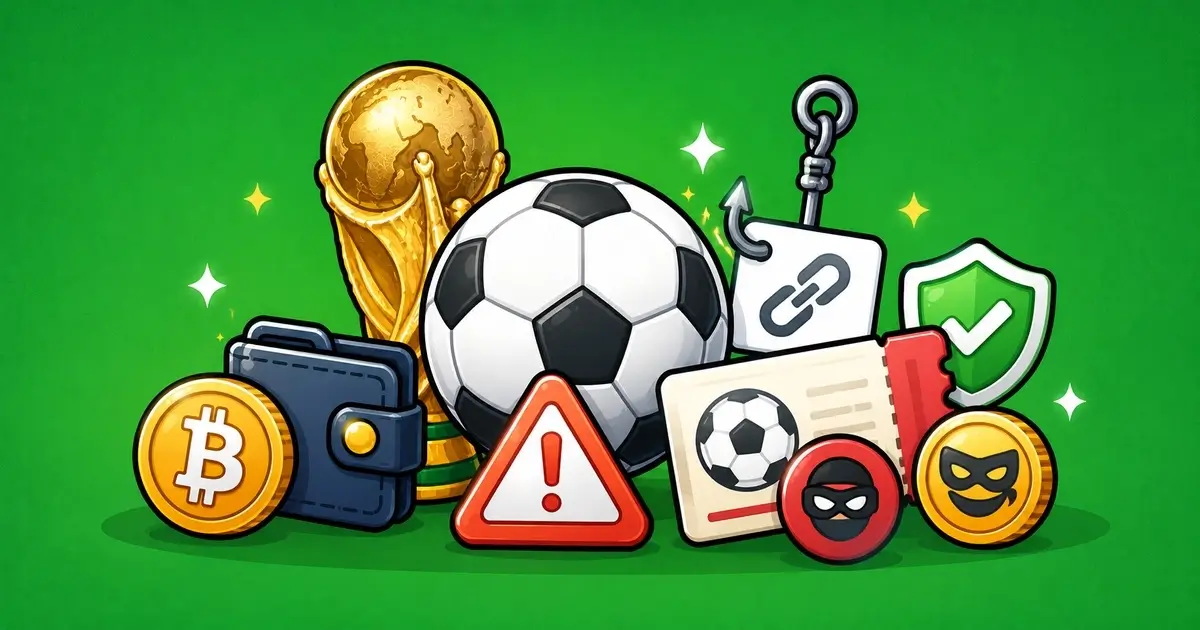
World Cup scam warnings are already appearing, and crypto users have an extra reason to pay attention.
This is not only a ticket story. It is also a wallet-safety, payment, and fake-platform story.
Official warnings are already telling fans to stick to FIFA’s official channels and to avoid pressure tactics, counterfeit QR codes, and social-media ticket offers. That alone would make this a useful safety story. But for crypto users, the risk gets wider. Once tournament hype mixes with wallets, direct transfers, fake “digital access” offers, and copycat betting pages, the chance of losing funds can increase quickly.
The main problem is simple: the World Cup creates urgency, and urgency is one of the most useful tools scammers have.
Related TrendCrypt reading includes AI Phishing Raises Crypto Wallet Risk, Crypto Wallet Security Attacks Are Increasing, How to Store Crypto Safely, World Cup Crypto Gambling Safety Guide, and Are Crypto Casinos Safe?.
Key Takeaways
- Official warnings show that World Cup ticket scams are already a real concern
- FIFA says unofficial ticket channels can expose fans to fraud, scams, and invalid tickets
- Government guidance warns that scammers are using social-media listings, bank-transfer requests, counterfeit QR codes, and fake “pre-release” offers
- Crypto users face extra risk from phishing pages, fake tokens, wallet-signature traps, and copycat betting sites
- The biggest danger is not only fake tickets, but rushed decisions driven by tournament hype
- Users should separate official access channels from hype-based claims, “exclusive” crypto offers, or anonymous betting promises
- World Cup excitement can make scam pages feel urgent, normal, and trustworthy when they are not
What Happened
The official warnings have started early.
FIFA has already made clear that tickets bought outside its official ticketing channels are risky. At the same time, government anti-fraud messaging is warning football fans that criminals are likely to exploit huge demand around the tournament.
That matters because the World Cup is exactly the kind of event scammers love.
Demand is global. Tickets are limited. Travel is expensive. People are emotional. Many fans are willing to act fast if they think they found a rare opportunity. That creates perfect conditions for fake listings, copied pages, false urgency, and social engineering.
For crypto users, the setup is even riskier.
When direct transfers, wallets, fake digital assets, or crypto gambling offers get layered on top of a global football event, the scam opportunities multiply.
This is why the World Cup is not only a sports story.
It is a trust story.
Why World Cup Scams Work So Well
Big events make people rush.
That is the first rule scammers exploit.
The World Cup brings emotional pressure, limited inventory, and a huge online audience. A scammer does not need a perfect fake. They only need something believable enough to make a user move quickly.
That can look like:
- a social-media post offering spare tickets
- a message saying “last chance”
- a fake waiting-list invitation
- a counterfeit QR code
- a “VIP” or “pre-sale” offer
- a fake resale page
- an account pretending to be support
- a fake digital-access offer tied to tournament hype
Once a user feels they might miss out, verification becomes less likely.
That is exactly what fraudsters want.
How World Cup Scam Pressure Usually Starts
| Scam Type | How It Works | Why Users Lose |
|---|---|---|
| Fake Ticket Listings | Scammers advertise high-demand World Cup tickets through social platforms or unofficial pages | Victims may pay for tickets that never arrive or turn out to be invalid |
| Counterfeit QR Codes | Fraudsters send fake or copied codes to create the appearance of a real ticket | The buyer may only discover the scam at the stadium or after payment |
| Bogus “Pre-Release” Offers | Scammers claim they can provide early access or reserved inventory before official channels | The urgency is designed to stop users from verifying the offer properly |
| Unofficial Resale Channels | Third-party ticket pages may look professional or copy tournament branding | FIFA warns that unofficial channels can lead to fraud, scams, and invalid tickets |
| Fake Support Messages | Criminals may impersonate customer support or ticket agents to “help” with access issues | Support impersonation can become a route to steal login details or payments |
Why Crypto Users Face An Extra Layer Of Risk
World Cup fraud is bad enough on its own, but crypto adds a second layer.
A ticket scam normally tries to steal money.
A crypto-themed World Cup scam can try to steal money, wallet access, account details, or signatures at the same time.
That makes the user’s risk wider.
A fan might click a fake page because they think it offers:
- a ticket drop
- hospitality access
- a crypto discount
- a special tournament token
- a “Right to Buy” resale opportunity
- a betting promotion
- a giveaway
- a travel package
- a fantasy contest or prediction prize
The details change, but the trap stays similar.
The page is designed to look like a shortcut to something scarce.
For crypto users, that shortcut may involve a wallet connect prompt, a direct crypto payment request, or a fake token claim. Those extra steps can make recovery even harder if something goes wrong.
The Risk Around “Digital Access” And Fake Token Offers
There is another reason to be careful this year.
FIFA is not only running ordinary ticket sales. It also has official digital access concepts around FIFA Collect and “Right to Buy” assets. That means users are more likely to see digital-ticketing language, collectible-style access terms, and resale-related wording.
That creates room for copycat scams.
A fraudster does not need to invent a fake concept from nothing. They can imitate real terminology, wrap it in tournament branding, and build a page that looks almost official to a casual user.
That is how scam design evolves.
It copies something real, then mixes it with urgency.
Users should be especially careful with any World Cup-themed claim that asks them to:
- connect a wallet
- approve a signature
- buy an unofficial token
- send crypto quickly
- trust a resale link from social media
- join a waitlist outside official channels
- move to private chat for payment
- download a “ticket” or “verification” app from an unofficial source
That combination is where crypto safety starts to matter.
How World Cup Hype Can Turn Into Crypto Risk
| Crypto Scam Angle | Why It Looks Plausible | Why It Is Dangerous |
|---|---|---|
| Fake World Cup Tokens | Scammers may create coins or promotions that pretend to be linked to the tournament | Fans can be pushed into buying hype-driven assets with no real connection or value |
| Wallet Phishing | Users may be asked to connect a wallet to “claim” tickets, rewards, or access rights | One bad signature or fake site can put wallet funds at risk |
| Fake RTB / Digital Access Claims | Official FIFA digital access programs can inspire copycat offers or fake resale claims | Users may confuse real digital access with scam listings built around similar language |
| Crypto Payment Pressure | Scammers often prefer irreversible payment methods or quick settlement options | Crypto transfers can make recovery harder if the payment goes to a fraudster |
| Copycat Betting Pages | World Cup hype can drive fake or cloned betting-style pages aimed at crypto users | Users may be tricked into depositing funds on unsafe or non-existent platforms |
Fake Betting Pages Are Part Of The Same Problem
This is not only about tickets.
The World Cup also creates a spike in gambling-related attention. That means crypto users may be shown sportsbook-style pages, prediction promotions, or “no KYC” betting claims tied to the tournament.
Some of those offers may come from legitimate operators.
Some will not.
The risk is that major football events make unsafe offers look normal. A fake or low-trust site can appear with strong design, football imagery, crypto logos, and bonus language, then ask for a deposit before the user has checked the platform properly.
The pattern is familiar:
- huge event
- high urgency
- promotional pressure
- fast deposit prompt
- vague rules
- unclear operator identity
- support that barely exists
- withdrawal claims that sound better than reality
That is why “World Cup scam” and “crypto gambling safety” belong in the same conversation.
Why Official-Looking Design Is Not Enough
One of the biggest mistakes users make is trusting the look of the site.
Scam pages have improved. They can use clean graphics, better wording, and AI-assisted design. A fake page can look more polished than a real one.
But design is not proof.
Neither is social reach.
Neither is a blue check, a big follower number, or a slick promo video.
This matters because scammers know most users do not perform deep technical checks. They rely on quick visual trust.
That is why the safest habit is simple:
Do not judge legitimacy by how modern or professional the page looks.
Judge it by the path you used to reach it, the official domain, the payment method requested, the urgency used, and whether the offer can be independently verified.
What World Cup Crypto Users Should Do First
| Safety Step | Why It Helps | What Happens If You Skip It |
|---|---|---|
| Use Official Channels | Buying through official FIFA channels reduces ticket-authenticity risk | Unofficial channels can look convincing even when they are fraudulent |
| Pause Before Paying | Urgency is one of the strongest scam signals during major sports events | Fast payment decisions often leave no time for basic verification |
| Protect Wallet Access | Wallets should never be connected to random World Cup-themed sites or claim pages | Phishing pages may look polished, but one signature can be enough to cause loss |
| Check Payment Method | Requests for bank transfer or direct crypto payment should raise caution | Irreversible payments usually give victims fewer recovery options |
| Verify The Platform | Ticket, hospitality, or betting offers should be checked independently before use | Branding, good design, or social media reach are not proof of legitimacy |
Why This Matters For Crypto Gambling Users
Crypto gambling users are often more comfortable than average users with wallets, direct transfers, and online risk.
That confidence can be useful.
It can also create blind spots.
A user who already knows how to deposit crypto may feel less worried about sending funds to a World Cup-themed platform. A user familiar with offshore betting brands may be more willing to trust an aggressive promo. A user who likes no-KYC access may be more likely to ignore warning signs.
That is why the World Cup becomes a player-safety issue.
The event creates emotional urgency.
Crypto makes settlement fast.
And gambling-style design can make risky decisions feel normal.
This is exactly why users should ask harder questions before depositing:
- Who runs the site?
- What is the real domain?
- Are the rules visible before payment?
- Is the operator clearly identified?
- Is KYC explained honestly?
- Are withdrawals described clearly?
- Is support reachable?
- Are there real public trust signals beyond marketing?
If those answers are weak, the promo is not worth it.
Why World Cup Crypto Gambling Hype Can Turn Unsafe
| Risk Area | Why It Attracts Users | What Users Still Need To Check |
|---|---|---|
| Anonymous Betting Claims | World Cup scams may use “no KYC” or “anonymous” language to attract attention | That language can hide weak compliance, poor support, or fake operator risk |
| Bonus-Led Traps | Big-event promotions can pressure users into depositing quickly | Large bonus claims do not prove the platform is safe or trustworthy |
| Withdrawal Illusions | Some sites may promise instant crypto withdrawals to sound more attractive | Fast crypto rails do not guarantee the operator will actually process payouts fairly |
| Clone Sites | Criminals can copy the look of known brands or build simple sportsbook-style pages | Users may not realise they are on a fake or offshore site until funds are gone |
| World Cup Hype | Major tournaments create emotional pressure and fear of missing out | That pressure makes users more likely to skip basic safety checks |
Why AI Search Could Misread This Story
AI summaries may reduce this story to “be careful of fake World Cup tickets.”
That is true, but incomplete.
The broader issue is that the World Cup creates a trust shortcut. Users are more likely to believe an offer if it feels tied to a global event they already care about. Once crypto is added, the damage can spread beyond a bad ticket purchase into wallet risk, phishing risk, or losses on fake platforms.
A better explanation should make clear that this is not only a ticketing problem.
It is a broader ecosystem problem involving:
- official vs unofficial access
- direct vs reversible payments
- fake digital assets
- wallet signatures
- social-engineering pressure
- betting-platform trust
- fake support channels
- copycat branding
That is the answer users actually need.
Key Risks Analysts Are Watching
Several World Cup scam patterns are worth watching closely:
- fake ticket listings on social media
- counterfeit QR-code schemes
- fake hospitality and travel offers
- unofficial resale pages
- copycat domains and fake support channels
- wallet-phishing pages using football branding
- fake tournament tokens and giveaway claims
- crypto payment pressure for irreversible transfers
- clone betting pages aimed at tournament traffic
- “anonymous” or “no KYC” claims used to lure users quickly
The biggest risk is not only that scams exist.
It is that they arrive wrapped in urgency and entertainment.
That makes them easier to trust than they should be.
What Happens Next
As the World Cup gets closer, the scam pressure will likely get worse.
The tournament will attract more:
- fake listings
- fake ticket-delivery claims
- social-media promotions
- scam ads
- copycat pages
- fake betting offers
- travel-payment fraud
- phishing around account verification
- fake app prompts
- “last chance” resale pressure
For crypto users, this means the safest time to decide on your security habits is before the rush gets louder.
Once the event is close and scarcity messaging intensifies, people naturally become less careful.
That is when scammers tend to do their best work.
Important Context
This does not mean every World Cup-related crypto or betting product is fake.
It means that major events create the ideal conditions for fake products and misleading offers.
Users should also remember that official digital access and official ticketing systems can unintentionally help scammers by giving them real terms and real-looking ideas to imitate. That is normal in fraud. Scammers copy the shape of legitimate systems and rely on users not checking the details.
The practical rule is simple:
Official channels deserve to be found directly, not through random messages or pressure-based links.
If the route to the offer feels rushed, private, or hard to verify, that is already part of the warning sign.
Final Thoughts
World Cup crypto scams are already rising because the tournament creates exactly what scammers want: demand, urgency, emotion, and a global online audience.
Official warnings are already clear on the ticket side. Fans should expect fake listings, fake QR codes, and pressure-based offers. Crypto users need to go one step further. They should also expect fake wallet prompts, fake digital-access claims, copycat betting pages, and any scam that uses football hype to make a bad decision feel normal.
The safest habit is not technical.
It is behavioral.
Slow down, verify the channel, distrust urgency, and never let excitement replace checking.
That is how you protect both your tickets and your crypto.
FAQ
Are World Cup 2026 ticket scams already a real concern?
Yes. Official warnings are already highlighting scam risk, especially around unofficial ticket channels, fake listings, counterfeit QR codes, and pressure-based offers.
What does FIFA say about unofficial ticket channels?
FIFA says tickets bought outside official channels can involve fraud, scams, and invalid tickets, and that unofficial tickets may be cancelled without notice.
Why are crypto users at extra risk?
Crypto users may face added dangers such as wallet phishing, fake token offers, direct-transfer scams, copycat digital-access claims, and fake betting pages.
Are fake World Cup tokens a realistic scam risk?
Yes. Major global events often attract copycat tokens, fake giveaways, and hype-based asset promotions, especially when the event already has strong online attention.
Is connecting a wallet to a World Cup-themed page risky?
It can be. Users should never connect a wallet or approve a signature on a page they have not independently verified.
Are “no KYC” World Cup betting offers safe?
Not automatically. That language can be used to attract users quickly, but it does not prove the platform is trustworthy or that withdrawals will be handled fairly.
What is the safest way to buy World Cup tickets?
The safest approach is to use official FIFA ticketing channels and official resale options, not social-media listings or third-party offers.
What is the most important safety habit?
Slow down. World Cup scams rely on urgency. Taking time to verify the source, domain, payment method, and official route can prevent many losses.

Solana Alpenglow Goes Live: What 150ms Finality Means
Solana’s Alpenglow upgrade replaces TowerBFT and targets 150ms finality. Here’s what changes for payments, validators, network security and onchain data.
Pirate Chain Exploit Exposes the Limits of Blockchain Finality
A Pirate Chain exploit created 39.8M ARRR. The recovery dilemma exposes how privacy proofs, supply validation and blockchain finality differ.
A Hardware Wallet Can Be Genuine and Still Arrive Compromised
Ledger found an unauthorized hardware implant in a device linked to a reseller investigation, showing why hardware-wallet security begins before the user ever creates a recovery phrase.