
TrendCrypt Guide
Fake Crypto Platforms: Warning Signs
Learn how fake crypto platforms copy real brands, show false balances, block withdrawals, demand extra payments, and pressure users into sending more crypto.
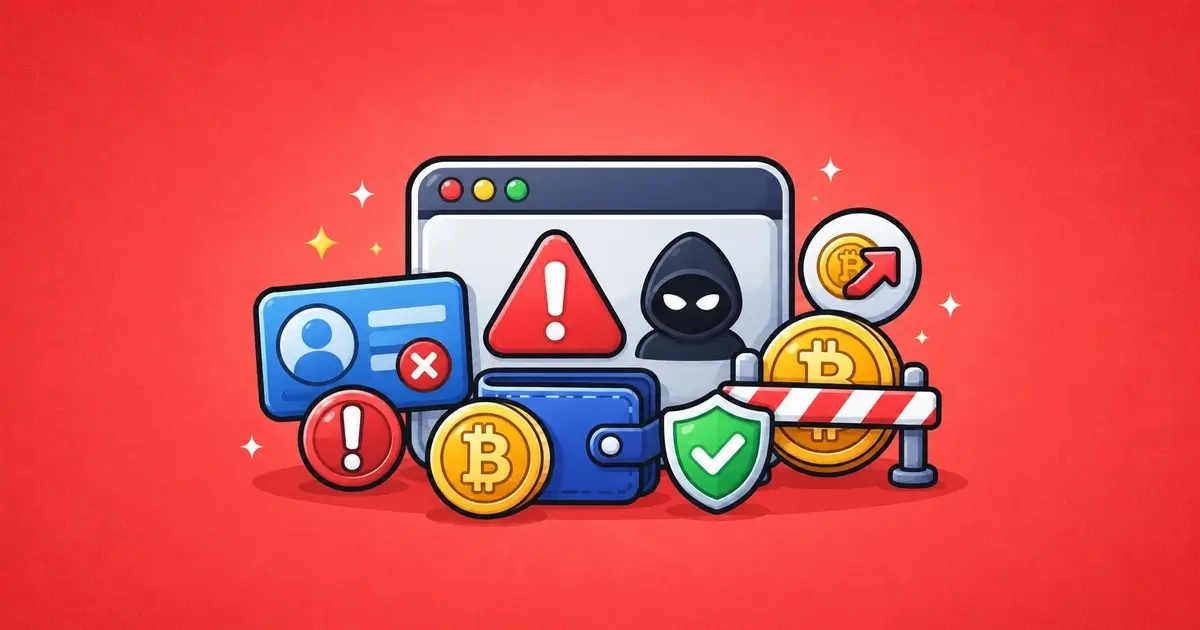
A fake crypto platform is a website or app that pretends to offer trading, investing, staking, gambling, mining, recovery, or wallet services, but is mainly built to take deposits.
Some fake platforms look cheap and obvious. Others copy real brands, use clean dashboards, show live-looking charts, display fake profits, and use support agents who sound professional enough at first.
The problem usually appears when a user tries to withdraw.
The account may suddenly require tax, a verification fee, a VIP upgrade, a wallet unlock payment, or another deposit before funds can be released. In many cases, the balance shown inside the platform was never real money the user could withdraw.
This guide explains how fake crypto platforms work, which warning signs matter, and what to check before sending more funds.
Related safety pages include Crypto Scams and Warning Signs, How to Check a Crypto Platform, Solve a Problem, Wallet Safety, and Editorial Policy.
Key Takeaways
- A fake crypto platform may show balances and profits that are not real
- Copied brand names, strange domains, and fake support links are common warning signs
- A withdrawal fee, tax payment, or VIP upgrade demand can be part of the scam
- Do not send more crypto just because the platform says funds are “locked”
- Save URLs, screenshots, TXIDs, wallet addresses, emails, and chat records
- Check the exact domain, company details, licence claims, and complaint history
- If you connected a wallet, review approvals and stop signing new requests
- Be careful with recovery agents who contact you after the first loss
What Is a Fake Crypto Platform?
A fake crypto platform is a site or app that uses the appearance of a real financial service to collect deposits.
It may claim to be:
- a crypto exchange
- a trading platform
- an investment platform
- a staking platform
- a mining platform
- a wallet service
- a casino or betting site
- a recovery service
- a token presale
- a copy of a real brand
The site may let users register, deposit, view balances, speak with support, and see “profits.”
That does not mean the platform is real.
A fake platform can show any number it wants inside a dashboard. It can also block withdrawals with excuses that sound official: tax, anti-money-laundering review, risk control, wallet verification, frozen balance, network fee, or compliance release.
The key question is not whether the platform looks active.
The key question is whether users can withdraw without being pushed into new payments.
Warning Signs of a Fake Crypto Platform
Most fake platforms do not reveal themselves immediately.
They often work in stages: first trust, then deposit, then fake profit, then blocked withdrawal.
Fake Crypto Platform Warning Signs
| Warning Sign | What It May Mean | First Response |
|---|---|---|
| Copied brand or website | The platform may be pretending to be a real company | Check the exact domain and official links |
| False account balance | The displayed profit may not be real or withdrawable | Do not send more funds to unlock it |
| Withdrawal blocked | The platform may be using fees or KYC as a payment trap | Save records before paying anything else |
| Support asks for extra crypto | A fake agent may be extending the scam | Stop and verify through official channels |
| Pressure to act quickly | The site may be trying to prevent careful checks | Pause and review the evidence |
Copied Brands and Lookalike Websites
Some fake platforms copy real companies.
They may use:
- a similar logo
- a similar name
- a domain with one changed letter
- a fake support page
- copied legal text
- stolen team photos
- fake app download links
- social media accounts with few real users
- paid ads that appear above the real site
A copied website can look convincing if you only check the homepage.
Check the exact domain.
Scammers often rely on small differences, such as extra words, hyphens, unusual endings, misspellings, or fake regional versions.
If a platform claims to be connected to a known brand, go to the official brand website yourself. Do not use the link sent by a stranger, a chat agent, a social media comment, or a search ad.
Fake Balances and False Profits
A fake balance is one of the most common tricks.
The platform may show that your deposit has grown. It may display charts, trade history, bonus credits, staking rewards, or mining rewards.
That balance may only exist on the screen.
A fake platform can make the number rise every day because it controls the dashboard. There may be no real trading, no real yield, and no real account balance behind it.
Fake Profit Tricks
| Claim | Why It Is Risky | What to Do |
|---|---|---|
| Guaranteed profit | Real markets do not guarantee returns | Treat the claim as a major warning sign |
| Balance grows too smoothly | The numbers may be manually controlled | Check whether any withdrawal has ever worked |
| Tax or fee before withdrawal | Scammers often invent final payment steps | Do not pay unless the rule is verified |
| VIP upgrade required | The platform may be forcing another deposit | Avoid upgrading to access your own funds |
| Account frozen after profit | The platform may be using false compliance language | Ask for written reasons and save evidence |
Be careful when the profit looks too smooth.
Real crypto markets move sharply. Real staking or yield products still have rules, limits, and risks. A dashboard that keeps showing easy gains while withdrawals never work is a warning sign.
Withdrawal Fees, Taxes, and Unlock Payments
Many fake platforms do not ask for everything at once.
They wait until the user tries to withdraw.
Then they may say:
- tax must be paid first
- a withdrawal fee is required
- the wallet must be verified
- the account must be upgraded
- a VIP level is needed
- funds are frozen for risk control
- a compliance deposit is required
- the user must pay gas to release the balance
- another deposit is needed to activate withdrawals
This is where many people lose more money.
The platform may make the first payment sound small compared with the balance shown on screen. After the user pays, another problem appears.
A real platform may charge fees, request verification, or review withdrawals. But it should explain the rule clearly, use official channels, and not keep inventing new payment demands.
If support says you must send more crypto to a private wallet address before you can withdraw, treat that as a serious warning sign.
Stop Before Sending More Crypto
If a platform blocks a withdrawal and asks for another payment, pause.
Do not send more funds just because the site shows a large balance.
Do not let support rush you.
Do not assume the balance is real until a withdrawal actually reaches a wallet or account you control.
Start with these steps.
What to Do Before Paying Anything Else
| Step | What to Do |
|---|---|
| Stop depositing | Do not send more crypto while the platform is unverified |
| Save evidence | Keep URLs, wallet addresses, TXIDs, screenshots, and support messages |
| Check the domain | Compare it with official brand links and look for small spelling changes |
| Test the company claim | Search for ownership, registration, licence, and complaint history |
| Protect linked wallets | Disconnect suspicious sites and review wallet approvals if you connected one |
If the platform is fake, another payment usually does not fix the problem.
It only tells the scammer that you are still willing to pay.
Check the Platform’s Domain
A domain check is simple but important.
Look for:
- misspelled brand names
- extra words added to a real brand
- unusual domain endings
- very new domains
- domains that do not match the app name
- contact emails using free email providers
- official-looking pages on unrelated domains
- redirects through short links
- different domains used by support and login pages
Be careful with search ads.
A fake website can sometimes appear above the real one in search results. Type the official address yourself when possible, or use links from verified company profiles.
If the platform has a mobile app, check whether the app comes from the official developer account. Fake download links outside app stores are a common risk.
Check Ownership, Licence, and Contact Details
A real platform should make basic information easier to verify.
Look for:
- company name
- registered address
- licence number, if claimed
- regulator or licence authority
- terms of service
- privacy policy
- risk warnings
- support channels
- complaint process
- country restrictions
Then check whether those details match elsewhere.
A fake platform may list a company that does not exist, copy another company’s registration, or claim a licence without a verifiable record.
Do not treat a licence logo as proof by itself.
Anyone can paste a badge on a website.
For a broader checklist, read How to Check a Crypto Platform.
Fake Support and Recovery Follow-Ups
Fake platforms often come with fake support.
Support may appear helpful at first. They may answer quickly, explain the “problem,” and give detailed payment instructions.
That does not make the platform legitimate.
Be careful if support:
- moves the conversation to Telegram, WhatsApp, or private DMs
- asks for seed phrases or private keys
- sends wallet connection links
- asks for remote access to your device
- tells you not to contact anyone else
- says payment is needed before support can act
- claims funds are guaranteed after one more step
- gives a personal wallet address for fees or taxes
After a loss, a second scam may appear.
Someone may claim they can recover the funds, trace the scammer, unlock the account, or work with an exchange. They may ask for an upfront fee, wallet access, or private details.
Do not trust recovery promises from strangers.
If your wallet may have been exposed, read Compromised Crypto Wallet: What to Do before signing anything else.
If You Connected a Wallet
Some fake platforms only ask for deposits to a wallet address.
Others ask users to connect a wallet and sign requests.
If you connected a wallet, check whether you signed anything.
Look for:
- token approvals
- unknown contract interactions
- wallet connection history
- unexpected prompts
- suspicious signatures
- unknown outgoing transactions
Do not reconnect to the same site to “check.”
Use your wallet’s activity tab and trusted wallet guidance.
If you signed an approval you do not understand, review it carefully and revoke suspicious permissions through trusted tools or official wallet guidance.
Do not use revoke links sent by support or strangers.
Fake revoke pages can be part of the same scam.
If You Sent Funds to the Platform
If you already sent crypto, save the transaction details.
Record:
- transaction hash
- sending wallet address
- receiving wallet address
- asset and network
- date and time
- amount sent
- platform URL
- account username or email
- support messages
- withdrawal request screenshots
- any payment demands after the deposit
Do not send more crypto just to “activate” the withdrawal.
Do not delete the account or chat history.
Do not edit screenshots in a way that removes useful context.
If the receiving address belongs to a known exchange or service, the platform or authorities may need the transaction hash and wallet address to review it. That does not guarantee recovery, but clean records help.
Mistakes to Avoid
When money appears stuck, people often move fast.
That is when fake platforms push hardest.
Mistakes to Avoid With Fake Crypto Platforms
| Mistake | Why It Can Make Things Worse |
|---|---|
| Paying a withdrawal fee | A fake platform may keep inventing new fees |
| Trusting screenshots | Fake balances and profit dashboards are easy to create |
| Following support links | Fake support pages can steal wallet access |
| Sending ID too quickly | Identity documents can be misused by scammers |
| Using the same password | A fake site may collect login details for other accounts |
If the Platform Claims You Owe Tax
Tax language is often used to pressure users.
A fake platform may say a user must pay tax before a withdrawal can be processed.
Be careful.
Tax rules depend on the user, country, asset, and transaction history. A random platform support agent should not demand crypto to a private address and call it tax clearance.
A real tax obligation is usually handled through official tax processes, not by sending more crypto to unlock a dashboard balance.
If a platform says tax must be paid before withdrawal, ask for the written rule, legal entity, invoice, official payment method, and regulator details.
If the answer is vague or support becomes aggressive, do not keep paying.
If the Platform Claims Your Account Is Frozen
A fake platform may say your account is frozen because of:
- suspicious activity
- AML review
- risk control
- abnormal profit
- wrong wallet address
- unpaid tax
- missing verification
- duplicate account
- bonus abuse
- third-party deposit
Some real platforms do review accounts. The difference is how the process works.
A real platform should explain the issue through official channels and not keep demanding unrelated crypto payments.
A fake platform often uses “frozen account” language to create fear.
Ask for a written explanation. Save it. Do not send more funds until you can verify the platform and the rule.
How to Reduce the Risk Next Time
Before using a new crypto platform, check it slowly.
Basic checks include:
- search the exact domain
- check official social profiles
- look for real ownership details
- verify licence claims, if any
- read withdrawal rules before depositing
- search for complaints
- test support before sending funds
- start with a small amount
- avoid platforms promoted only through DMs
- avoid guaranteed-profit claims
- use a separate wallet for testing
- never share recovery words
If a platform is real, it should still survive basic questions.
If it becomes confusing, secretive, or aggressive before you even deposit, that is useful information.
Report a Suspicious Platform
If you found a fake crypto platform, copied website, suspicious support account, fake withdrawal demand, or recovery scam, you can send a redacted report to [email protected].
Useful details may include:
- platform URL
- copied brand name
- wallet address used for deposits
- transaction hash
- screenshots of the dashboard
- withdrawal error messages
- support usernames
- email addresses
- social media profiles
- payment demands
- a short timeline
Do not send seed phrases, private keys, account passwords, authentication codes, full identity documents, or anything that could give access to your wallet or accounts.
TrendCrypt can review patterns and publish safety warnings, but we cannot access accounts, reverse blockchain transactions, recover funds, or guarantee action from a platform.
Final Thoughts
Fake crypto platforms work because they look active before they look dangerous.
A user may see a dashboard, balance, support chat, profit chart, and withdrawal button. The trap usually becomes clear only when the platform asks for more money before releasing funds.
The safest response is to stop depositing, save evidence, check the exact domain, verify the company claim, protect any connected wallet, and avoid recovery agents who appear after the loss.
A real platform should not need endless extra payments before you can access your own funds.
If every answer leads to another fee, another tax, another upgrade, or another private wallet address, treat the platform as high risk.
FAQ
What is a fake crypto platform?
A fake crypto platform is a website or app that pretends to offer trading, investing, staking, wallet, gambling, or recovery services while using deposits, fake balances, and blocked withdrawals to take money from users.
How do fake crypto platforms show profits?
They can control the dashboard and display any balance they want. A rising account balance inside a platform does not prove that real funds exist or that withdrawals will work.
Is a platform fake if it asks for tax before withdrawal?
Not always, but it is a serious warning sign if the platform demands crypto payments to unlock a withdrawal. Ask for written rules, company details, official payment methods, and regulator information before doing anything else.
What should I do if my withdrawal is blocked?
Stop sending more funds, save all records, check the platform’s domain and company details, and avoid support links sent through private messages.
Can I recover funds from a fake crypto platform?
Recovery is not guaranteed. Save TXIDs, wallet addresses, screenshots, and messages. Be careful with anyone who promises recovery for an upfront payment.
Should I send more crypto to unlock my balance?
Be very cautious. Fake platforms often invent new fees after each payment. Do not send more crypto until the platform and the payment demand are independently verified.
What if I connected my wallet to a fake platform?
Stop signing requests, check wallet activity, review approvals, and read Compromised Crypto Wallet: What to Do before using that wallet again.
How can I check whether a crypto platform is real?
Check the exact domain, ownership details, licence claims, complaint history, withdrawal rules, support channels, and whether other users report successful withdrawals.
Unexpected KYC During Withdrawal: What to Check
Learn what to check when a crypto platform or crypto casino asks for KYC during withdrawal, including verification timing, requested documents, privacy rules, support channels, and payout status.
Crypto Casino and Betting Scams: Warning Signs
Learn how crypto casino and betting scams use unclear ownership, fake bonuses, cloned sites, withdrawal release fees, private support messages, fake KYC links, and wallet-drainer tactics.

Fake Crypto Support Scams: Warning Signs
Learn how fake crypto support accounts target users after wallet, withdrawal, deposit, KYC, or account problems by pretending to represent platforms, exchanges, casinos, wallets, or recovery teams.