
TrendCrypt News
AI Gambling Is Crypto Casino’s Trust Test
AI-powered gambling is becoming crypto casino’s next trust test as personalization, risk scoring, KYC automation, wallet screening, and player protection collide.
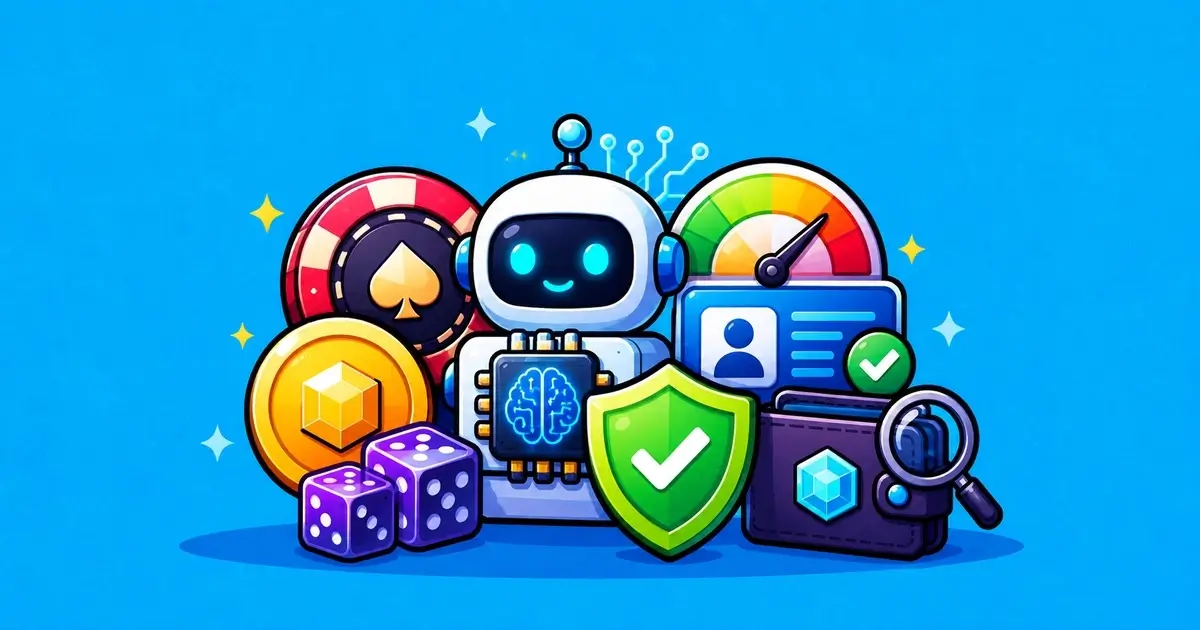
AI-powered gambling is becoming crypto casino’s next trust test because the same technology that can improve player protection can also make gambling more personalized, persuasive, and opaque. AI can help detect fraud, flag risky play, automate KYC, screen wallets, and trigger responsible-gambling alerts, but it can also personalize bonuses, offers, nudges, and support flows in ways users may not fully understand.
The core issue is transparency. Crypto casinos and gambling-adjacent platforms should explain how AI affects player safety, withdrawals, KYC checks, wallet reviews, promotion targeting, and support decisions. Related TrendCrypt resources include Responsible Gambling, Why AI Search Is Crypto Gambling’s New Safety Risk, and Are Crypto Casinos Safe?.
Key Takeaways
- AI-powered gambling can improve safety, but it can also increase persuasion risk
- Crypto casinos may use AI for fraud detection, KYC, wallet screening, and player-risk scoring
- Personalized bonuses and nudges can become risky if they target vulnerable behavior
- Automated checks may delay withdrawals or restrict accounts without clear explanation
- Responsible-gambling AI should protect users, not only optimize retention
- Users should look for human review, clear policies, and visible safety tools
- AI transparency may become a major trust signal for crypto casino reviews
What Happened
AI is moving deeper into gambling and iGaming systems.
Operators, regulators, researchers, and compliance teams are paying more attention to how AI can affect:
- player behavior
- personalized promotions
- responsible gambling
- fraud detection
- payment monitoring
- KYC checks
- support automation
- risk scoring
- customer segmentation
- platform compliance
For crypto gambling, the issue is even more complex.
Crypto casinos may combine AI systems with blockchain payments, wallet screening, stablecoin deposits, offshore access, and automated support. That creates a new trust question.
Is AI being used to protect players, or to make gambling more persuasive?
The answer may depend on how transparent the platform is.
What AI Integration Changes
AI changes gambling because it can analyze behavior in real time.
A traditional casino website may show the same offers, games, and messages to many users. An AI-powered system can make those experiences more personalized.
It may consider signals such as:
- session length
- deposit frequency
- failed withdrawals
- loss patterns
- game preferences
- support messages
- bonus behavior
- wallet history
- device activity
- responsible-gambling markers
That data can be used in different ways.
It can help protect users.
It can also be used to push users toward more engagement.
That is why AI integration needs stronger trust standards.
How AI Can Affect Crypto Gambling
| AI Use Case | Possible Benefit | Player Safety Concern |
|---|---|---|
| Player Risk Scoring | AI can detect unusual spending, session length, or loss patterns | Users may not know when they are being scored |
| Personalized Offers | AI can tailor bonuses, reminders, or promotions | Personalization can become too persuasive for vulnerable users |
| KYC Automation | AI can speed up document and identity checks | False positives can delay withdrawals or restrict accounts |
| Wallet Screening | AI can help review blockchain transaction risk | Players may not understand how wallet history affects payouts |
| Support Chatbots | AI can answer common questions quickly | Bad answers can mislead users about rules, withdrawals, or safety tools |
Why It Matters for Crypto Gambling
Crypto gambling already has trust problems around withdrawals, KYC, wallet screening, offshore access, and bonus terms.
AI can make those problems easier to manage, but also harder for users to understand.
For example:
- AI wallet checks may help detect high-risk funds
- AI KYC tools may speed up verification
- AI fraud systems may flag suspicious accounts
- AI support bots may answer payout questions
- AI responsible-gambling tools may detect risky behavior earlier
But users may also face new questions:
- Why was my withdrawal delayed?
- Was my wallet scored by an automated system?
- Did AI decide I need KYC?
- Why did I receive this bonus offer?
- Can I appeal an automated restriction?
- Is a human reviewing serious cases?
A safe platform should not hide those answers.
The Safety Side of AI
AI can be useful when it is designed around player protection.
A responsible AI system may detect early warning signs that a user is gambling in a risky way.
Those signs can include:
- sudden deposit increases
- longer sessions
- repeated failed deposits
- chasing losses
- rapid bet escalation
- unusual withdrawal cancellations
- repeated contact with support
- signs of distress in messages
In a safer design, AI would not use those signals to push more offers.
It would use them to trigger protections.
That may include reminders, limit prompts, cooldown suggestions, support escalation, or human review.
Where AI Can Support Player Protection
| Safety Use Case | How It Can Help | Important Limitation |
|---|---|---|
| Early Harm Detection | AI can flag risky patterns before losses escalate | Alerts must lead to real support, not only internal scoring |
| Fraud Detection | AI can identify account abuse or suspicious activity | Fraud controls can also create unclear account restrictions |
| AML Monitoring | AI can help review payments, wallets, and source-of-funds signals | Users need clear withdrawal and review conditions |
| Responsible Gambling Alerts | AI can trigger reminders, cooldowns, or limit prompts | Alerts should not be hidden behind marketing flows |
| Safer Support Routing | AI can route serious cases to human teams | Sensitive cases should not be handled only by automation |
The Persuasion Risk
The other side of AI is persuasion.
A platform that understands user behavior can also learn when a user is most likely to return, deposit, claim a bonus, or continue playing.
That creates risk.
AI-powered gambling systems may personalize:
- bonus timing
- game suggestions
- loyalty offers
- push notifications
- free-spin messages
- loss-recovery offers
- VIP prompts
- reward reminders
- support scripts
- retention campaigns
This matters because gambling is not like ordinary shopping.
A personalized offer may reach a user at exactly the wrong time.
If a user is showing signs of risky play, the safer response is protection, not more engagement.
AI Personalization Risks in Gambling
| Personalization Area | What AI Can Do | Why It Can Be Risky |
|---|---|---|
| Bonus Timing | AI may know when a player is likely to return | Offers can target moments of weakness |
| Loss Recovery Messaging | AI may personalize messages after losses | This can encourage chasing behavior if poorly designed |
| Session Nudges | AI may recommend games, rewards, or reminders | Nudges can extend play when users should stop |
| Risk-Based Segmentation | AI may group users by value or behavior | High-risk users may receive inappropriate incentives |
| Opaque Decisions | AI may affect reviews without clear explanation | Players may not know why payouts or accounts were delayed |
Why Automated Decisions Need Human Review
Automated decisions can be useful, but they should not be final in sensitive cases.
This matters especially for crypto casinos because automation may affect:
- identity verification
- account restrictions
- withdrawal delays
- wallet screening
- source-of-funds requests
- fraud checks
- bonus eligibility
- self-exclusion handling
- responsible-gambling interventions
A user should be able to understand what happened and ask for human review.
That does not mean platforms need to reveal every fraud-control detail.
But they should explain the general process clearly.
A trust-focused platform should tell users:
- when KYC may happen
- when withdrawals may be reviewed
- whether automated tools are used
- how users can appeal decisions
- how long reviews may take
- when serious cases are escalated to humans
Related TrendCrypt reading:
- Why KYC at Withdrawal Is Crypto Gambling’s Trust Test
- Why Wallet Screening Is Crypto Gambling’s New Trust Layer
- Why Crypto Withdrawals Still Frustrate Users
What Users Should Watch
Users should not judge AI gambling tools only by whether they sound modern.
They should ask whether the AI helps the user or mainly helps the platform optimize engagement.
AI Gambling Trust Checklist
| Trust Check | Question to Ask |
|---|---|
| AI Disclosure | Does the platform explain where AI is used? |
| Human Review | Can users appeal automated KYC, withdrawal, or account decisions? |
| Responsible Gambling Tools | Are limits, cooldowns, and self-exclusion easy to find? |
| Promotion Controls | Are AI-personalized offers limited for risky users? |
| Data Privacy | Does the platform explain what player and wallet data is analyzed? |
A safer research process should include checking:
- whether AI use is disclosed
- whether withdrawal reviews are explained
- whether automated KYC can be appealed
- whether support bots escalate serious issues
- whether responsible-gambling tools are visible
- whether personalized offers can be limited
- whether data use is explained clearly
- whether the platform explains wallet-screening triggers
If AI is used but not explained, users should treat the platform carefully.
Why AI Search and AI Gambling Are Different Problems
TrendCrypt has already covered AI search risk in crypto gambling.
That issue is about external AI systems summarizing casinos, offers, and safety claims.
AI-powered gambling is different.
This issue is about AI inside the gambling experience.
External AI search may shape discovery.
Internal AI systems may shape behavior.
Both matter.
A user may first discover a platform through an AI answer, then enter a casino experience shaped by AI personalization, risk scoring, automated support, and wallet review.
That creates a full AI-driven trust chain.
Helpful TrendCrypt reading:
- Why AI Search Is Crypto Gambling’s New Safety Risk
- Crypto Betting Ads Are Becoming a Trust Problem
- Affiliate Rankings Are Shaping Crypto Casino Trust
How AI Connects to Web3 Gaming
AI-powered gambling also connects to Web3 gaming.
Web3 games may use AI to personalize quests, rewards, item drops, avatars, opponents, support responses, or virtual-world experiences.
That can be useful for gameplay.
But it can also intensify gambling-like mechanics when rewards have real-money value.
AI could personalize:
- token rewards
- NFT item drops
- reward timing
- marketplace prompts
- risk warnings
- quest difficulty
- progression systems
- player-retention nudges
When AI, crypto rewards, and game economies overlap, safety becomes harder to evaluate.
Related TrendCrypt coverage:
- Crypto Game Rewards Are Becoming Gambling-Like Signals
- Web3 Games Could Turn Loot Boxes Into Real-Money Risk
- Crypto Casino Games
Key Risks Analysts Are Watching
Analysts are watching several risks around AI-powered gambling:
- personalized promotions targeting risky behavior
- opaque player-risk scoring
- automated KYC delays
- AI wallet-screening decisions
- support bots giving incomplete answers
- weak human appeal processes
- retention tools disguised as safety tools
- AI nudges extending sessions
- data privacy concerns
- responsible-gambling alerts not leading to real protection
The main risk is hidden optimization.
If users do not know whether AI is protecting them or persuading them, trust becomes harder to establish.
What Happens Next
AI-powered gambling is likely to face more scrutiny as regulators, operators, and users better understand how personalization affects behavior.
Several trends may shape the next stage:
- clearer AI disclosure expectations
- stronger responsible-gambling AI standards
- more human review for automated decisions
- tighter rules around personalized offers
- more transparency around KYC automation
- more wallet-screening disclosure
- more AI support-bot safeguards
- more review-site scoring around AI use
- more pressure to separate safety alerts from marketing
The platforms that build trust will likely be those that explain AI use clearly.
The platforms that hide AI behind personalization may face more criticism.
Important Context
AI is not automatically bad for gambling safety.
It can help detect harm earlier, reduce fraud, improve compliance, and support safer interventions.
But AI is not automatically safe either.
The risk changes when a platform combines:
- real-money gambling
- crypto payments
- player behavior tracking
- wallet screening
- automated decisions
- personalized offers
- bonus targeting
- weak transparency
- limited human review
That combination deserves stronger scrutiny than ordinary automation.
The better question is not:
Does the casino use AI?
The better question is:
Does AI protect the player, or does it mainly optimize the player?
Final Thoughts
AI-powered gambling is crypto casino’s next trust test because it changes both safety and persuasion.
AI can help detect risky behavior, screen wallets, automate KYC, flag fraud, and improve responsible-gambling responses. But the same technology can personalize offers, extend sessions, and make gambling feel more tailored than ever.
For users, the safest approach is to look for transparency, human review, clear withdrawal rules, visible responsible-gambling tools, and honest AI disclosure.
For platforms, the strongest trust signal is simple.
Use AI to protect users before using it to persuade them.
FAQ
What is AI-powered gambling?
AI-powered gambling means gambling platforms use artificial intelligence for personalization, risk scoring, fraud detection, KYC checks, wallet screening, support, or responsible-gambling tools.
Why does AI matter for crypto casinos?
AI matters because crypto casinos may use it to review wallets, automate verification, detect risky play, personalize offers, or decide when accounts and withdrawals need review.
Can AI make gambling safer?
Yes. AI can help detect risky behavior, fraud, AML concerns, and support needs earlier. But it depends on whether the platform uses AI for protection, not only engagement.
What is the main risk of AI gambling systems?
The main risk is personalization. AI can learn when users are likely to deposit, return, or continue playing, which can become harmful if used to push offers at risky moments.
Should users worry about AI KYC checks?
Users should understand that automated KYC can speed up reviews but may also create false positives, delays, or account restrictions. Human review matters.
How does AI connect to wallet screening?
AI can help analyze wallet history, transaction patterns, and risk signals. That may affect withdrawals, source-of-funds checks, or account reviews.
What should users check before trusting an AI-powered casino?
Users should check AI disclosure, withdrawal review rules, KYC policies, responsible-gambling tools, human appeal options, privacy terms, and whether personalized offers can be limited.

Bitcoin Miners Are Becoming AI Power Companies
Hut 8’s role in Anthropic’s huge AI expansion shows why grid connections, land and power infrastructure may become more valuable than Bitcoin mining itself.
Crypto Defenders Say AI Safety Rules Are Helping Attackers
Bitcoin and crypto firms say frontier AI restrictions can leave open-source defenders with weaker security tools than attackers, exposing a difficult cyber safety trade-off.
AI Agents Are Starting to Pay With Stablecoins
Coinbase is letting businesses accept x402 payments from AI agents, testing whether stablecoins can become the payment rail for autonomous software and APIs.