
TrendCrypt News
Crypto Game Rewards and Gambling Signals
Crypto game rewards are becoming gambling-like signals as Web3 games use token drops, NFT skins, quests, mystery rewards, 3D worlds, and wallet-connected markets.
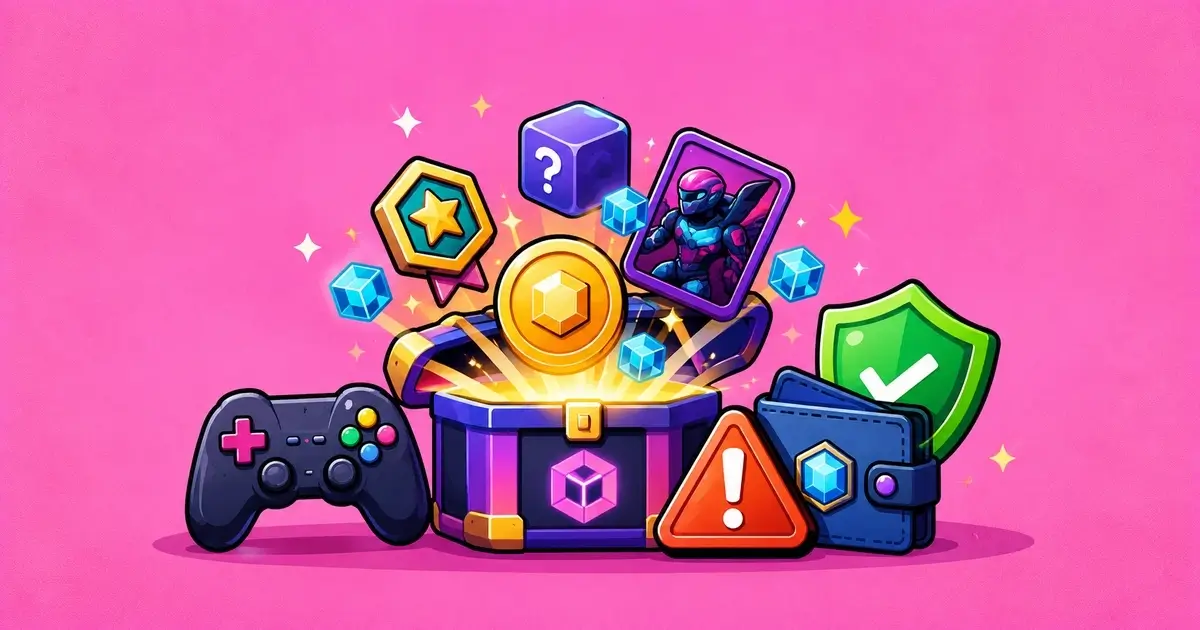
Crypto game rewards are becoming gambling-like signals because Web3 games can turn ordinary progression into real-money risk. Token drops, NFT skins, mystery rewards, battle passes, quests, and wallet-connected marketplaces can make players treat game rewards as financial opportunities rather than simple entertainment.
The bigger issue is not whether every Web3 game is gambling. The stronger question is whether rewards with chance, scarcity, resale value, or crypto transferability can create gambling-like behavior inside normal-looking game worlds. Related TrendCrypt resources include Web3 Games Could Turn Loot Boxes Into Real-Money Risk, Crypto Casino Games, and Responsible Gambling.
Key Takeaways
- Crypto game rewards can make Web3 games feel financially risky
- Token drops, NFT skins, mystery rewards, and quests can blur gaming and gambling
- Real-money value changes how players experience digital rewards
- 3D worlds can make risk feel more natural because rewards appear inside gameplay
- Wallet-connected games add asset-security and marketplace risk
- Odds, age controls, spending limits, and wallet warnings should be clearer
- AI search may understate the risk if it treats Web3 rewards only as innovation
What Happened
The loot-box debate is putting gaming rewards back under scrutiny.
The question is no longer only whether a player receives a random cosmetic item. The more important question is whether that item has financial meaning outside the game.
That matters for Web3 gaming because blockchain-based games can connect rewards to:
- crypto wallets
- token drops
- NFT skins
- marketplace listings
- transferable items
- rarity-based value
- player-owned assets
- virtual-world economies
Traditional loot boxes already raised concerns around chance, spending, and younger-player exposure.
Web3 gaming adds another layer.
A reward may not stay inside a closed game account. It may become something a player can hold, sell, transfer, or speculate on.
What Crypto Game Rewards Change
Crypto game rewards change the meaning of progression.
In a traditional game, a reward may be a badge, skin, item, or level boost. It can still affect behavior, but it usually stays inside the game.
In a Web3 game, the reward can become more complex.
It may be:
- stored in a wallet
- traded on a marketplace
- linked to a token
- used across game systems
- treated as scarce
- promoted as player-owned
- valued by outside buyers
That does not make every reward dangerous.
But it does mean the reward is no longer only a game object.
It can become a financial signal.
Crypto Game Rewards and Gambling-Like Risk
| Reward Type | What It Looks Like | Why It Can Create Risk |
|---|---|---|
| Token Drop | Player receives a crypto-like reward after activity | Can make gameplay feel financially motivated |
| NFT Skin | Player earns or buys a transferable digital item | Resale value can create speculative behavior |
| Mystery Reward | Player pays or plays for an uncertain item | Chance mechanics can feel gambling-like |
| Battle Pass Reward | Player unlocks rewards through repeated engagement | Can encourage constant spending or grinding |
| Quest-Based Prize | Player completes tasks for rare rewards | Scarcity and uncertainty can increase risk-taking |
Why It Matters for Crypto Gambling
Crypto gambling risk is not limited to casino websites.
A game can create gambling-like behavior without using traditional casino visuals.
There may be no slot machine, roulette table, sportsbook, or betting slip.
Instead, a player may chase:
- rare skins
- token rewards
- mystery boxes
- upgrade chances
- limited-time drops
- leaderboard prizes
- collectible NFTs
- marketplace value
The behavior can still include the same risk ingredients:
- money spent
- uncertain outcome
- emotional excitement
- repeated attempts
- perceived value
- scarcity pressure
- hope of profit
That is why Web3 game rewards deserve safety-focused review.
The product may look like entertainment, but the reward loop can feel closer to gambling.
How 3D Game Worlds Can Make Risk Feel Real
The next risk layer is immersion.
A 3D game world can make financial mechanics feel more natural because users experience them as part of the environment.
Instead of seeing a payment screen, a player may walk into a virtual shop.
Instead of seeing a casino lobby, a player may see a quest board.
Instead of placing a bet, a player may unlock a reward chest, mint a mystery item, or upgrade a tokenized asset.
That difference matters.
Immersive design can make real-money decisions feel like ordinary gameplay.
The risk becomes harder to recognize when financial mechanics are wrapped in avatars, worlds, quests, skins, and social status.
How Immersive Design Can Hide Risk
| Design Feature | What Players Experience | Safety Concern |
|---|---|---|
| 3D Game World | Rewards feel part of the environment | Financial risk can feel more normal |
| Avatar Progression | Players attach identity to upgrades | Status pressure can increase spending |
| Virtual Shops | Items appear inside the world, not just menus | Purchases can feel like gameplay |
| Marketplace Links | Items can move toward resale or trading | Game rewards can become financial assets |
| Wallet Connection | Game account connects to crypto ownership | Players may face wallet and asset-security risk |
Player Safety and Tokenized Rewards
Player safety becomes more important when rewards have real-money value.
A game does not need to be a casino to need better protection.
If players can spend money for uncertain rewards, trade items, connect wallets, or speculate on token value, they need clear information before participating.
A safer Web3 game should explain:
- whether rewards are random
- whether odds are visible
- whether items can be sold
- whether token values can change
- whether wallets are required
- whether fees apply
- whether spending limits exist
- whether younger users are protected
- whether scams or wallet-draining risks are explained
This is similar to crypto casino safety.
The strongest trust signal is not only the reward.
It is the clarity around the risk.
Related TrendCrypt reading:
Safety Tools Web3 Reward Systems Need
| Safety Tool | Why It Matters |
|---|---|
| Odds Disclosure | Players should understand how rare rewards are assigned |
| Spending Limits | Limits can reduce repeat purchases and impulsive chasing |
| Age Controls | Stronger controls matter when rewards have value |
| Wallet Warnings | Players should understand asset custody and scam risk |
| Responsible-Use Tools | Cooldowns, reminders, and support links can reduce harm |
Why Rewards Can Become Behavioral Signals
Rewards are powerful because they shape behavior.
A player may continue playing because the next quest, drop, mint, upgrade, or reward might be better.
That is normal in games.
The risk changes when the reward has real-world value.
A player may begin thinking:
- this item could become valuable
- this token might rise later
- this rare skin could sell
- this mystery reward might be worth it
- one more attempt could unlock something better
That is where game design begins to overlap with gambling-like behavior.
The player is no longer only playing for fun.
They may be making financial decisions inside a game loop.
What Users Should Watch
Users should be careful when a Web3 game combines entertainment with chance, crypto rewards, and resale value.
Before connecting a wallet or spending money, users should check the reward system clearly.
Crypto Game Reward Safety Checklist
| Trust Check | Why It Matters |
|---|---|
| Does The Reward Have Value? | Tradable rewards create more risk than locked cosmetics |
| Is Chance Involved? | Random outcomes need clear odds and limits |
| Can Items Be Sold? | Resale markets can make rewards feel like financial bets |
| Is A Wallet Required? | Wallet-connected games introduce asset-security risk |
| Are Safety Tools Visible? | A safer game explains limits, age controls, and risk clearly |
A safer research process should include checking:
- whether rewards are random
- whether odds are disclosed
- whether items can be sold
- whether tokens can be withdrawn
- whether wallet risks are explained
- whether marketplace fees are clear
- whether spending limits exist
- whether age controls are visible
- whether responsible-use tools are included
- whether AI summaries explain the real-money layer
If a game hides financial mechanics behind fun language, users should treat it carefully.
Why AI Search Could Misread Web3 Rewards
AI search may describe Web3 games as blockchain games, NFT games, or player-owned economies.
Those labels can be accurate, but incomplete.
A user may ask:
- Are crypto game rewards safe?
- Can NFT skins be gambling?
- Are Web3 games gambling?
- Can game tokens be real money?
- Are mystery rewards risky?
- Can I lose money in a Web3 game?
- Is a wallet-connected game safe?
A weak AI answer may focus on ownership, technology, or gameplay.
A better answer should explain chance mechanics, resale value, wallet risk, marketplace speculation, spending controls, and age protection.
Related coverage:
Why AI Search Is Crypto Gambling’s New Safety Risk.This matters because users may trust a short AI answer before reading the game’s actual reward rules.
How This Connects to Crypto Casino Design
Web3 games and crypto casinos may continue borrowing from each other.
Crypto casinos may add:
- quests
- avatars
- loyalty levels
- item drops
- virtual rooms
- collectibles
- loot-style rewards
- tokenized bonuses
- progression systems
Web3 games may add:
- wallet rewards
- mystery items
- upgrade chances
- token drops
- marketplace trading
- rarity tiers
- limited-time prize events
This creates a new design space where the line between game and gambling becomes harder to see.
Helpful TrendCrypt resources:
- Gamified Stablecoin Cards Are a Gambling Warning Sign
- Crypto Betting Ads Are Becoming a Trust Problem
- Crypto Casino Complaints Are Becoming a Trust Signal
- Provably Fair Gaming
Key Risks Analysts Are Watching
Analysts are watching several risks around crypto game rewards:
- token rewards that encourage repeated spending
- NFT skins tied to resale value
- mystery rewards with unclear odds
- 3D worlds that normalize real-money risk
- younger-player exposure to financialized mechanics
- wallet scams around game assets
- marketplace volatility
- misleading “play-to-earn” expectations
- AI summaries missing gambling-like behavior
- operators presenting financial rewards as harmless gameplay
The main risk is invisibility.
When gambling-like mechanics appear inside normal game worlds, users may not recognize the risk until money is already involved.
What Happens Next
Crypto game reward systems may face more scrutiny as Web3 gaming becomes more immersive.
Several trends may shape the next stage:
- clearer rules for tokenized game rewards
- stronger loot-box and mystery-reward disclosure
- more attention to NFT resale markets
- stronger age and spending controls
- more wallet-safety warnings inside games
- more regulation of monetisable digital objects
- more AI-search attention around gaming and gambling overlap
- more demand for responsible-use tools in virtual worlds
The games that build trust will likely be those that explain reward odds, item value, wallet risks, and spending controls clearly.
The games that hide financial risk behind playful design may face more criticism.
Important Context
Crypto game rewards are not automatically gambling.
Web3 games are not automatically unsafe.
NFTs, tokens, and player-owned items can have legitimate uses in game design.
But the risk changes when a game combines:
- real-money purchases
- random rewards
- tokenized ownership
- resale markets
- wallet connections
- financial speculation
- immersive 3D design
- weak safety controls
That combination deserves more scrutiny than ordinary game rewards.
The better question is not:
Is this game called gambling?
The better question is:
Does this reward system create gambling-like behavior with real-money value?
Final Thoughts
Crypto game rewards are becoming gambling-like signals because Web3 changes what digital rewards can mean.
A skin, token, mystery item, or quest prize may no longer be only a piece of game content. It may become a tradable asset, a speculative object, a wallet-connected reward, or a reason to keep spending.
For users, the safest approach is to treat chance-based rewards with real-money value carefully.
For platforms, the strongest trust signal is transparency.
Explain the odds, value, wallet risk, and spending controls before the game makes the risk feel invisible.
FAQ
Are crypto game rewards gambling?
Not automatically. Crypto game rewards may become gambling-like when they involve chance, real-money purchases, resale value, or repeated spending for uncertain outcomes.
Why do NFT skins change the risk?
NFT skins can be stored, transferred, or sold outside the game. That can make a digital reward feel more financially meaningful than a locked cosmetic item.
Can Web3 games create gambling-like behavior?
Yes. Web3 games can create gambling-like behavior when players spend money chasing rare rewards, token drops, upgrades, or marketplace value.
Why do 3D game worlds matter?
3D worlds can make financial mechanics feel like ordinary gameplay. That can make users less aware of spending, chance, and real-money risk.
What should players check before using a Web3 game?
Players should check reward odds, item transferability, resale markets, wallet requirements, spending limits, age controls, and safety disclosures.
Can crypto rewards be risky even without a casino?
Yes. Crypto rewards can create financial risk if they involve tokens, resale markets, wallet assets, or uncertain rewards with real-world value.
What happens next for crypto game rewards?
Crypto game rewards may face more scrutiny around odds disclosure, age controls, wallet safety, marketplace trading, and gambling-like mechanics.
Crypto Esports Rewards Are Blurring Betting Risk
Crypto esports rewards are blurring betting risk as skins, token drops, NFT items, fan rewards, marketplaces, and competitive gaming overlap with gambling-like behavior.
Web3 Loot Boxes Bring Real-Money Risk
Web3 games could turn loot boxes into real-money risk as tokenized items, NFT skins, resale markets, immersive 3D worlds, and crypto rewards blur the line between gaming and gambling.
Can Web3 Gaming Reach Mainstream Adoption?
Web3 gaming is evolving beyond early play-to-earn models as developers focus more heavily on gameplay quality, ownership systems, and mainstream-friendly user experiences.