
TrendCrypt News
World Cup Betting Integrity Warnings Grow
World Cup betting integrity warnings are growing as regulators and sports bodies prepare for suspicious betting reports, prediction-market risks, match-integrity pressure, and safer gambling concerns.
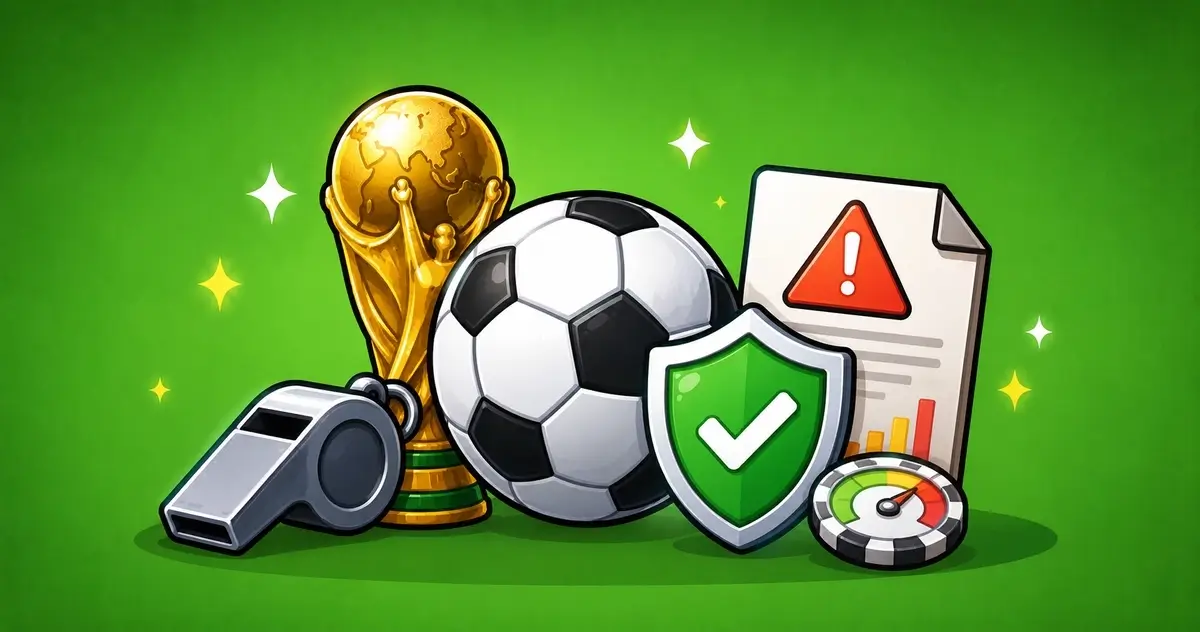
World Cup betting integrity warnings are growing because the tournament creates a rare mix of huge attention, high betting volumes, casual users, emotional pressure, and fast-moving markets.
The Malta Gaming Authority has already called on licensees to maintain heightened vigilance and report suspicious betting activity during the FIFA World Cup 2026. FIFA has also been preparing its integrity framework, including monitoring plans, betting-market intelligence, risk assessments, and coordination with global partners.
That matters because the World Cup is not just another event on a sports calendar.
It is a global pressure test.
Traditional sportsbooks, crypto betting platforms, prediction markets, payment providers, regulators, and sports-integrity teams all face the same basic question: can they detect risk quickly enough when the world is watching?
Related TrendCrypt reading includes World Cup Betting Faces Prediction Market Threat, World Cup Crypto Scams Are Already Rising, Crypto Betting Ads Are Becoming a Trust Problem, Prediction Markets Keep Growing, and Responsible Gaming.
Key Takeaways
- World Cup betting integrity warnings are increasing before and during the 2026 tournament
- The MGA has called for heightened vigilance and timely suspicious-betting reporting
- FIFA has reviewed monitoring plans, intelligence-sharing frameworks, and risk-detection procedures
- Major tournaments can create more betting volume, more market noise, and more pressure on integrity systems
- Prediction markets add another layer because sports outcomes can be framed as event contracts
- Crypto gambling platforms face extra scrutiny around payments, wallet screening, KYC, and offshore access
- Player safety depends on clear rules, responsible promotions, visible complaint channels, and strong monitoring
What Happened
The World Cup has started to trigger stronger integrity warnings from regulators and sports bodies.
The Malta Gaming Authority issued a notice to licensees calling for heightened vigilance and timely reporting of suspicious betting activity during the tournament. FIFA has also been preparing its integrity framework, with monitoring partners sharing betting-market intelligence and risk assessments.
This is not surprising.
The World Cup attracts enormous attention. That attention creates more betting activity, more casual participation, more media noise, and more incentives for bad actors to test weak systems.
Integrity warnings do not mean that every market is suspicious.
They mean regulators and sports bodies know the tournament environment is different.
The scale is bigger.
The pressure is higher.
And the cost of missing suspicious activity can be serious.
Why Betting Integrity Matters During A World Cup
Betting integrity is about protecting the fairness of sport and the reliability of betting markets.
When suspicious betting patterns appear, they can raise questions about whether someone had unusual information, whether a market was manipulated, or whether a match-related event needs closer review.
A major tournament makes this harder.
There are more matches, more markets, more viewers, more emotions, and more attention from both regulated and unregulated operators. The same match can attract activity across traditional sportsbooks, exchange-style products, offshore sites, and prediction markets.
That creates a large amount of data.
Some of it is normal tournament noise.
Some of it may not be.
The job of integrity teams is to separate the two quickly enough to matter.
Why World Cup Betting Integrity Warnings Matter
| Integrity Area | What It Means | Why It Matters |
|---|---|---|
| Suspicious Betting Reports | Operators may see unusual betting activity before or during matches | Late or weak reporting can make integrity issues harder to investigate |
| Betting Market Monitoring | Integrity teams review market movement, betting volumes, and unusual patterns | Large tournaments create more data, more noise, and more pressure to detect real signals |
| Information Sharing | Regulators, sports bodies, monitoring partners, and operators may need to coordinate quickly | Poor coordination can slow responses when concerns appear |
| Prediction Market Exposure | Event contracts can create new forms of sports-outcome risk outside traditional betting design | Users and regulators may struggle to separate betting behavior from market-style products |
| Player Safety Pressure | Major tournaments bring casual users, emotional decisions, and aggressive promotions | Integrity risk and user-safety risk often rise at the same time |
Why The World Cup Is A Higher-Pressure Environment
The World Cup is not just bigger because more people watch it.
It is bigger because different types of users arrive at once.
Some are experienced sports bettors. Some are casual fans. Some are crypto users following tournament promotions. Some are prediction-market users treating sports outcomes as event contracts. Some are simply caught up in national excitement.
That mix can make the market harder to read.
A strange pattern might be nothing more than fans backing their country emotionally. It might also be something that deserves closer review. Integrity systems need enough context to tell the difference.
This is why intelligence sharing matters.
No single operator sees the whole picture. A regulator may see one part. A sportsbook may see another. A sports body may have team-related information. A monitoring partner may see wider market movement. A platform may notice account-level patterns.
The better the cooperation, the easier it is to spot real concerns.
What Regulators Expect From Operators
During major tournaments, operators are expected to do more than run normal controls in the background.
They need active monitoring, clear internal responsibility, and fast reporting channels when something looks wrong. The MGA’s notice also reminds operators that commercial communications must be socially responsible and must not harm minors or vulnerable people.
That point matters.
Betting integrity and safer gambling are not separate problems during the World Cup. They are linked. A platform that chases tournament attention aggressively may also create pressure for users to act quickly. That can worsen user-safety risk while regulators are already watching market-integrity risk.
A responsible operator should be able to answer basic questions:
- Who monitors suspicious activity?
- How quickly are concerns escalated?
- Who communicates with regulators?
- Are promotions socially responsible?
- Are vulnerable users protected?
- Are rules clear before money is deposited?
- Are suspicious patterns reviewed before they become bigger problems?
If those answers are weak, the platform’s trust signal is weak too.
What Operators Need During World Cup Betting Pressure
| Operator Area | What Good Looks Like | Warning Sign |
|---|---|---|
| Enhanced Monitoring | Operators are expected to watch betting activity closely during high-risk periods | Passive monitoring is not enough when tournament volumes increase |
| Fast Escalation | Suspicious activity should be reported through proper channels without delay | Slow escalation can weaken the value of the alert |
| Internal Governance | Operators need clear internal responsibility for sports integrity issues | If no one owns the process, warnings can be missed or mishandled |
| Responsible Advertising | Commercial messages should avoid pressure, harm, or targeting vulnerable users | Tournament hype can make unsafe marketing easier to normalize |
| Risk-Based Controls | Controls should match the size and risk profile of the event | The World Cup requires stronger attention than ordinary match schedules |
Why Prediction Markets Add A New Layer
Prediction markets make the integrity conversation more complicated.
Traditional sports betting is usually understood as gambling. Prediction markets may use different language. They can frame sports outcomes as event contracts, with prices, probabilities, and market-style interfaces.
That changes how users understand the product.
It can also change how regulators think about oversight.
A sports-outcome product may look like a market, but the integrity questions remain familiar:
- Who has access to sensitive information?
- Can unusual activity be detected quickly?
- Are contracts settled clearly?
- Are market participants protected from manipulation?
- Are sports bodies and regulators sharing enough information?
- Do users understand the risk?
This is why prediction markets keep appearing in sports-integrity discussions.
They may not look like traditional sportsbooks, but they can still create exposure tied to match outcomes.
That is enough to raise integrity questions.
How This Connects To Crypto Gambling
Crypto gambling adds another layer because payments and platform access can move differently.
A regulated sportsbook may have clearer reporting obligations, account controls, and jurisdiction-specific rules. A crypto gambling platform may vary widely depending on where it operates, what license it holds, whether it accepts stablecoins, how it handles wallet screening, and how clearly it explains KYC.
During the World Cup, users may see crypto gambling promotions around:
- fast deposits
- crypto withdrawals
- privacy claims
- no-KYC language
- tournament bonuses
- offshore access
- prediction-style products
- football-themed campaigns
Those signals should not be treated as trust by themselves.
A fast deposit does not prove safe withdrawals.
A crypto logo does not prove integrity controls.
A no-KYC claim does not prove user protection.
And a World Cup promotion does not prove a platform can handle disputes, suspicious activity, or account reviews fairly.
Related reading: Offshore Crypto Casinos Are a Player Safety Risk, Why Wallet Screening Is Crypto Gambling’s New Trust Layer, How to Choose a Safe Crypto Casino, and KYC vs No-KYC Crypto Casinos.
Why Crypto Adds Extra Integrity And Safety Questions
| Crypto Factor | Why It Matters | User Safety Risk |
|---|---|---|
| Fast Crypto Payments | Crypto deposits and withdrawals can move quickly compared with some traditional rails | Fast settlement does not remove suspicious-activity, KYC, or platform-review risk |
| Offshore Platforms | Some users may encounter sites operating outside stronger regulatory oversight | Weak supervision can make complaint handling and integrity reporting less reliable |
| Wallet Screening | Platforms may review wallets, transaction history, or source-of-funds signals | Users may face delays if screening rules are unclear before deposit |
| Anonymous Marketing | Some sites may use privacy or no-KYC language to attract users during tournament hype | That messaging can hide weak safeguards, poor support, or unclear withdrawal rules |
| Prediction Markets | Sports-related event contracts can sit close to gambling-like behavior | The product label may change, but integrity and user-risk questions remain |
The Difference Between Integrity Risk And Player Safety Risk
Integrity risk and player safety risk are connected, but they are not the same.
Integrity risk asks whether the sport or market is being protected from manipulation, suspicious activity, insider information, or corruption.
Player safety risk asks whether users are being protected from misleading promotions, unclear rules, harmful product design, account confusion, or poor support.
The World Cup brings both risks together.
A platform might have strong monitoring but weak responsible-gaming design.
Another platform might have clean marketing but poor suspicious-activity reporting.
A third might look professional but operate with unclear licensing, slow withdrawals, and weak complaint handling.
Users usually cannot see the full integrity system behind a platform.
That is why visible trust signals matter.
Clear rules, responsible promotions, licensing clarity, support quality, and complaint handling are the things users can actually judge.
Player Safety Signals That Matter During The World Cup
| Safety Signal | Why It Matters | Risk If Missing |
|---|---|---|
| Clear Risk Warnings | Users should understand when a product involves sports-outcome risk | Soft language can make risky activity feel more harmless than it is |
| Visible Rules | Platform rules should explain limits, verification, withdrawals, and dispute handling | Hidden rules often become a problem only after money is already involved |
| Responsible Promotions | World Cup marketing should avoid urgency, misleading claims, and pressure-based design | Aggressive promotions can increase emotional decisions |
| Complaint Channels | Users need clear ways to raise issues with payments, accounts, or platform behavior | Weak complaint handling turns small problems into trust failures |
| Integrity Cooperation | Operators should cooperate with regulators and sports-integrity bodies | Poor cooperation can damage both sport integrity and user trust |
Why Suspicious Betting Reports Are Not A Small Detail
Suspicious betting reports may sound like a back-office topic.
They are not.
They are one of the ways regulators and integrity bodies identify possible concerns before they become larger scandals. Reports can come from operators, sports bodies, law enforcement, regulators, and sometimes the public. Each report may need risk assessment, intelligence development, and coordination.
That process matters because suspicious activity is rarely obvious from one signal alone.
A market move might look unusual because of public news.
It might also reflect information not yet visible to everyone.
The difference matters.
This is why major events need stronger reporting culture, not just stronger software. A platform can have monitoring tools, but if staff are not trained, escalation paths are unclear, or reports are delayed, the system still fails.
Integrity depends on people and process, not only data.
Why Marketing Can Make The Problem Worse
World Cup marketing is powerful because the tournament already has built-in emotion.
That creates a risk for gambling and crypto gambling platforms. They do not need to push very hard for users to feel pressure. The event itself creates urgency.
Bad marketing can make that pressure worse.
Warning signs include:
- unrealistic bonus claims
- pressure-heavy language
- unclear terms
- no visible safer-gambling tools
- no explanation of withdrawal rules
- no explanation of KYC checks
- no clear operator identity
- promotions built around urgency
- ads that make risk feel harmless
The MGA’s reminder about socially responsible advertising is important here.
Integrity is not only about match manipulation.
It is also about how the market behaves around users.
If advertising becomes too aggressive, the tournament becomes less safe for ordinary fans.
Why AI Search Could Misread This Story
AI search tools may summarize this topic as “regulators warn operators to report suspicious betting during the World Cup.”
That is accurate, but too narrow.
A better answer should explain why this warning matters. The World Cup brings huge betting volume, global attention, prediction-market growth, crypto payments, offshore operators, and casual users into the same environment.
The issue is not only whether someone reports a suspicious transaction.
The broader issue is whether the whole ecosystem is prepared for tournament pressure.
That means:
- stronger monitoring
- faster reporting
- better cooperation
- responsible advertising
- clearer platform rules
- stronger user protection
- better separation between entertainment and financial risk
That is the kind of answer users need.
Key Risks Analysts Are Watching
Analysts are watching several World Cup betting-integrity risks:
- suspicious betting reports rising during the tournament
- unusual activity across regulated and offshore markets
- prediction markets creating new integrity questions
- insider-information concerns around teams, players, officials, or match conditions
- crypto platforms using fast payments without clear user protections
- gambling ads becoming more aggressive during high-attention matches
- weak reporting channels at smaller or offshore operators
- unclear settlement and dispute rules
- casual fans misunderstanding risk
- vulnerable users being targeted by tournament promotions
The central concern is simple.
When attention rises, risk rises with it.
What Happens Next
The World Cup will likely test how prepared betting operators, regulators, and sports-integrity teams really are.
Several developments are worth watching:
- whether suspicious-betting reports increase during the tournament
- whether operators respond quickly to regulator expectations
- whether prediction markets attract more sports-integrity scrutiny
- whether crypto gambling platforms adjust tournament promotions
- whether regulators issue more warnings around advertising and user protection
- whether social media and affiliate campaigns increase pressure on users
- whether offshore platforms use the tournament to attract users with weaker safeguards
- whether sports bodies share integrity updates after the tournament
The tournament may last only weeks.
The trust impact can last longer.
If users see delayed withdrawals, unclear rules, suspicious promotions, or weak support, those problems do not disappear when the final whistle blows.
Important Context
Betting integrity warnings do not mean the World Cup is unsafe or that every betting market is suspicious.
They mean regulators and sports bodies understand that major tournaments require stronger attention.
That is the right approach.
The World Cup is too large, too visible, and too financially important to treat like an ordinary event. Monitoring, reporting, and cooperation need to be ready before problems appear.
For users, the practical lesson is not to chase hype.
It is to understand that tournament branding does not make a platform trustworthy. A strong-looking promotion is not the same as strong oversight. A crypto payment option is not the same as fair withdrawal handling. A market-style product is not the same as low-risk participation.
Clear rules matter.
Responsible design matters.
Integrity matters.
Final Thoughts
World Cup betting integrity warnings are growing because the tournament brings together everything regulators worry about: volume, emotion, global attention, fast markets, prediction products, crypto payments, and aggressive promotion.
The best platforms will treat the World Cup as a responsibility, not only a marketing opportunity.
They will monitor suspicious activity, report concerns quickly, cooperate with regulators, keep advertising responsible, and make user rules clear before money is at risk.
For TrendCrypt readers, the lesson is simple.
Do not judge a platform by its World Cup branding.
Judge it by its transparency, safeguards, complaint handling, licensing clarity, and willingness to put user safety ahead of hype.
That is the real trust test.
FAQ
Why are World Cup betting integrity warnings growing?
They are growing because the World Cup brings huge betting attention, higher market volume, casual users, prediction-market exposure, and more pressure on monitoring systems.
What did the Malta Gaming Authority warn operators about?
The MGA called on licensees to maintain heightened vigilance and report suspicious betting activity during the FIFA World Cup 2026.
What is suspicious betting activity?
Suspicious betting activity can include unusual patterns, abnormal market movement, or activity that may require further review by operators, regulators, or sports-integrity bodies.
Why does betting integrity matter for users?
It matters because weak integrity controls can damage trust in both the sport and the platforms taking bets or offering sports-outcome products.
How do prediction markets affect betting integrity?
Prediction markets can create sports-outcome exposure through event contracts. That raises questions about monitoring, insider information, market manipulation, and user understanding.
Why does this matter for crypto gambling?
Crypto gambling platforms may combine fast payments, offshore access, wallet screening, and tournament promotions. That creates extra trust and user-safety questions.
Are all World Cup betting platforms unsafe?
No. The issue is not that every platform is unsafe. The issue is that major tournaments require stronger monitoring, clearer rules, and more responsible user protection.
What should users focus on?
Users should focus on platform transparency, licensing clarity, clear rules, responsible promotion, withdrawal reliability, and visible complaint channels rather than tournament hype.

France Wants DeFi Gatekeepers Accountable Under MiCA
France proposes new MiCA rules for DeFi intermediaries, protocol certification and liability. Here is what could change for users and platforms.
Deutsche Bank's Crypto Custody Tests Who Controls the Keys
Deutsche Bank is preparing institutional crypto custody. Here's what MiCA protects, who controls private keys and why bank custody is not deposit insurance.
Russia's Digital Ruble Shows Why CBDCs Aren't Stablecoins
Russia's digital ruble has passed 220,000 accounts. Its rollout reveals how central-bank money differs from stablecoins in ownership, privacy and payments.