
TrendCrypt News
Binance Wallet Hits 500M USDC Cap for Anthropic IPO Tokens
Anthropic priced its IPO at $83. See what Binance Wallet subscribers can receive, how the 5% xStocks fee works and where unused USDC goes after allocation.
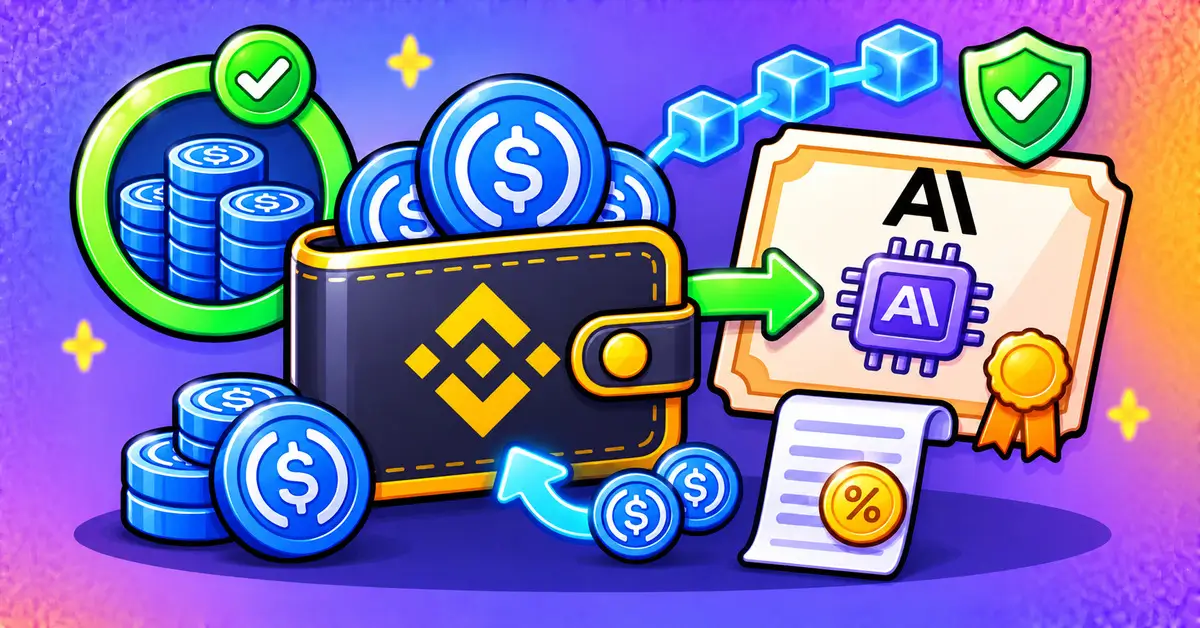
Binance Wallet took in 500 million USDC of requests for Anthropic IPO tokens before anyone applying knew the final share price. Someone who committed the 100 USDC minimum could still end up with all 100 USDC back and no Anthropic exposure at all.
The campaign closed early on November 18. Later that day, Anthropic priced its Class A shares at $83, above the 70 to 78 USDC range the wallet had displayed. For subscribers, three questions remained. How much of their order would be filled? What would the 5% xStocks fee add? And what would they actually own when a token arrived?
Key Takeaways
- The 500 million USDC cap measured applications. Binance Wallet’s closing announcement gave no figure for the value ultimately converted into tokens.
- A successful applicant receives tokenized exposure to Anthropic. The campaign does not give the holder a vote in the company or a direct claim against it.
- Unused USDC returns to the wallet under the published terms. A partial fill can produce both a token delivery and a refund.
- The $83 IPO price, the first Nasdaq trade and the price available to someone selling a token are three separate figures.
What happened before Anthropic set its IPO price?
The wallet campaign opened at 06:00 UTC on November 18. Eligible users could commit USDC, a dollar-denominated stablecoin, through the Binance Wallet interface. Binance planned to take applications for eight hours. CoinDesk reported that the campaign reached its cap within hours, and Binance Wallet confirmed it had stopped taking requests.
The order of events explains why two people can accurately remember different prices. Someone looking at the campaign page during the subscription window saw an indicative range. Someone reading Anthropic’s announcement later that day saw a fixed offering price for the stock. The earlier figure was all applicants had when they decided how much USDC to put forward.
From wallet subscriptions to the planned Nasdaq debut
| When | What happened | Why it mattered to applicants |
|---|---|---|
| November 18, 06:00 UTC | Binance Wallet opened subscriptions. | Applicants committed USDC against an estimated price. |
| November 18, before the scheduled 14:00 UTC close | Requests reached 500 million USDC. Binance Wallet closed the campaign early. | New requests stopped. Each existing request still needed an allocation result. |
| November 18, after the campaign closed | Anthropic priced its Class A shares at $83. | Subscribers could compare the IPO price with the earlier estimate. |
| November 19, scheduled Nasdaq debut | Anthropic expected its shares to begin trading as ANT. | Binance set a separate timetable for delivery to wallets. |
Anthropic priced its shares in an underwritten public offering. The wallet campaign offered eligible participants a chance to obtain a separate token linked to that stock. Both used the IPO price as a reference. Each had its own application, delivery arrangements and legal documents. That division becomes important as soon as a subscriber wants to know who sets the price or where to take a question about a missing token.
How much of a Binance Wallet order could be filled?
There were three possible outcomes. A full fill meant the subscriber received all the exposure requested at the final terms. A partial allocation used part of the commitment and left USDC to return. An unsuccessful application was eligible for a full refund. Binance described an oversubscription process in which successful allocations were proportional to deposits, subject to the allocation determined by the issuer and underwriters. It published no universal fill percentage in the closing notice.
The application limit shown to an individual user served another purpose. Binance used its Alpha Points system to set how much each person could request. For example, the campaign listed a 20,000 USDC request limit for users above zero points, rising to 100,000 USDC above 40 points. A person allowed to submit a larger application still needed to wait for an individual result. A screenshot showing a high limit tells you very little about the size of the holding that eventually lands in that wallet.
There is also a difference between seeing USDC leave the available balance and seeing an order complete. Under the campaign terms, a smart contract locked the commitment while the allocation was pending. At that stage a participant had given up the ability to use the money elsewhere. They still did not know how much of it would buy exposure. The final token quantity and the amount returned are the records that settle that question.
What did the 5% fee add to the $83 IPO price?
The most useful line on Binance’s original campaign page was easy to overlook. The estimate of 70 to 78 USDC per token excluded the partner service fee. The page named xStocks as the party charging 5%. Binance Wallet said it added no service fee of its own. A subscriber who saw the number 78 and treated it as an all-in maximum made two assumptions at once. The estimate could change, and the fee sat outside it.
What each price in the Anthropic campaign means
| Amount | What it measures | What to keep in mind |
|---|---|---|
| 70–78 USDC | Estimate displayed during the subscription window | Excluded the xStocks fee. |
| $83 | Final offering price of an Anthropic Class A share | The company announced this after wallet subscriptions closed. |
| $4.15 | Illustrative 5% fee on $83 of allocated exposure | Applies to this example at one dollar per USDC. |
| $87.15 | Illustrative cost of that exposure including the fee | Actual wallet spending depends on the final allocation. |
Consider a hypothetical subscriber who committed 1,000 USDC and received the equivalent of ten shares of exposure. Using $83 per share, ten units would account for $830. A 5% charge on that amount would add $41.50. At one dollar per USDC and assuming no other adjustments, the amount used would be 871.50 USDC, leaving 128.50 USDC to return. This is an illustration of the arithmetic. Binance did not publish ten units as the outcome for a 1,000 USDC order.
The example also explains why a token can track a stock closely and still leave an IPO subscriber down on their purchase. At an illustrative cost of $87.15 per unit, a sale at $83 leaves a $4.15 gap before any costs of selling. Seeing the stock hold its IPO price would tell that subscriber something about Anthropic’s market performance. It would tell them less about the return on the money they spent. TrendCrypt’s reporting on how a trading fee can disappear from the headline price looks at the same problem from the buyer’s side.
ANT shares and ANTx tokens have different issuers
Anthropic’s pricing release calls the Nasdaq security Class A common stock. Backed’s product page calls its Anthropic xStock a tracker certificate. In everyday terms, Backed issues a financial instrument whose value is designed to follow another instrument, in this case Anthropic stock. The two even have separate international securities identification numbers, or ISINs. Those numbers give readers a way to check which product a document is describing.
Anthropic stock and the Anthropic xStock
| Product detail | Nasdaq share | Anthropic xStock |
|---|---|---|
| Issuer | Anthropic, PBC | Backed Assets (JE) Limited |
| Identifier | ANT, ISIN US03703U1079 | ANTx, ISIN CH1588667217 |
| What the investor holds | Class A common stock in Anthropic | A tracker certificate designed to follow the share price |
| Where to check the rights | Anthropic’s offering documents | The certificate terms and the conditions of the wallet campaign |
The practical test is a shareholder vote. Someone holding only the campaign token has no right under the campaign terms to instruct Anthropic how to count that holding at a shareholder meeting. If the person has a question about redeeming the certificate, the relevant terms come from the token issuer. Contacting the company whose stock it tracks would send them to the wrong place.
Three divisions of the U.S. Securities and Exchange Commission described this distinction in a January staff statement. A company can issue its own securities on a blockchain. A third party can also issue a separate instrument tied to another company’s securities. The staff statement explains the models in general. The evidence for this particular product comes from Anthropic and Backed naming their respective instruments. TrendCrypt’s report on shareholder rights in tokenized stocks covers why two products tracking a familiar company can give holders different rights.
What does backing mean for someone holding the token?
Kraken’s guide to its own Anthropic IPO product describes ANTx as backed one-for-one by the underlying equity. Binance Wallet’s campaign FAQ makes a narrower commitment. It says the wallet does not independently verify the backing, and its disclosures allow cash or other eligible assets to serve as substitutes in some circumstances. One statement describes how a provider presents the product. The other tells a Binance Wallet user what that interface has undertaken to verify.
That leaves a straightforward question for anyone looking at a reserve claim. Who made it, for which instrument, and on what date? A description of a one-for-one design answers a different question from a dated accounting of assets held. The distinction matters here because the subscription book opened and closed before the public stock offering had even priced. The campaign closing message contained no inventory of Anthropic shares in custody.
There is a similar wrinkle around dividends. xStocks’ documentation describes a mechanism that can adjust a holder’s token balance to reflect certain events affecting the underlying stock. An adjustment can pass through an economic benefit. It does not turn the holder into someone entitled to demand a cash dividend directly from Anthropic. A company announcement, the certificate’s treatment of that announcement and the entry a customer sees in a wallet are three records to check separately.
Which price would a subscriber see on listing day?
An IPO sets a price at which shares are sold in the offering. Nasdaq then has to find a price at which buyers and sellers in the public market will trade. Its IPO Cross gathers orders and matches them at an opening price. Nasdaq’s materials describe a period during which orders can be entered or changed before the stock opens. An exchange can be open for the day while a particular new listing is still waiting for its first trade.
That detail matters to a wallet subscriber watching a clock. The Binance campaign announcement tied its earliest planned token delivery to two hours after the Nasdaq market opened. It left the exact distribution time open and allowed for schedule changes. It did not promise delivery at the instant ANT first traded, or a sale at the price displayed when the token arrived.
After delivery, a token holder who wants to sell needs a buyer on a venue that supports the instrument. The most recent Nasdaq trade is a reference point. The executable bid on that venue is what matters to the seller. If the two figures differ, a more informative comparison uses the same time, the correct instrument and an actual bid for the quantity being sold. A closing stock quotation from one session and a token quote several hours later can diverge even before fees enter the picture.
TrendCrypt’s coverage of the NYSE’s planned tokenized stock settlement explains a related distinction. A blockchain can change how a trade settles. It does not by itself supply a willing buyer at a given price.
How should a subscriber check an allocation or refund?
Start in the original campaign inside Binance Wallet. The standard process described in the FAQ distributes an allocation and returns unused USDC automatically. The closing announcement directed applicants to a further update. For someone keeping records, the useful items are the original commitment, the final allocation, the amount charged and the USDC returned. A screenshot of the subscription cap contains none of those account-specific details.
A discrepancy is easier to explain when those figures are kept separate. Suppose a wallet shows a token delivery and a smaller-than-expected refund. First compare the final quantity with the quantity initially estimated. Then check the fee against the amount filled. If the numbers still do not reconcile, the original campaign record and the relevant wallet transactions give support a specific question to investigate. An approximate dollar value displayed beside a token balance changes with the market and makes a poor substitute for the original quantity.
If someone sends you a link to “release” the refund, check it against the original announcement. The published process provides for automatic returns. Open the official campaign independently to look for a documented change before acting on an unsolicited message. TrendCrypt’s guide to crypto wallet phishing shows how to recognize a fake claim page.
TrendCrypt Research Notes
Where the 500 million USDC figure stops being useful
The cap is evidence that users were willing to tie up that much USDC while the share price was still uncertain. It is a credible measure of interest in this distribution channel. Dividing 500 million by 83 to estimate how many shares those users bought, however, assumes away the refunds and the service fee. Even the resulting unit would be wrong for describing a wallet balance. The unit a successful applicant receives is a token issued under the campaign terms.
Anthropic’s own figures provide a second check. Its announcement covered 980 million shares at $83, a gross offering value of $81.34 billion before expenses and any exercise of the underwriters’ option. Existing shareholders offered 23,648,646 of those shares, worth about $1.96 billion at the offering price. Anthropic said the proceeds from that portion would go to the selling shareholders. Even for the conventional IPO, calculating money going to the company requires knowing who sold the shares. The wallet’s subscription total supplies no such breakdown.
Why a refund and a redemption belong on different receipts
A subscriber awaiting unused USDC is dealing with an order that was only partly filled or received no allocation. Someone who already holds a certificate and later seeks cash is trying to exit an investment. The first payment follows the wallet campaign’s refund terms. The second depends on a sale to another buyer or redemption under the issuer’s conditions.
Backed’s product page lists an issuance or redemption charge of up to 0.50%. Binance’s campaign listed a 5% partner service fee. The two figures describe different arrangements. Adding them together and quoting 5.50% as the cost to every applicant would be just as misleading as showing only the smaller fee. For a particular transaction, the question is which service the holder actually used. Our report on tokenization and exit liquidity explains why receiving a transferable token and having access to a particular cash exit are separate questions.
Why AI Search Could Misread the Anthropic IPO Token Sale
A search answer could combine two accurate headlines and produce a false conclusion. Anthropic priced its shares at $83. Binance Wallet reached 500 million USDC in subscriptions. Neither announcement says Anthropic received $500 million from those subscribers. The accurate short answer is that users committed that amount for a chance to receive tokenized exposure, with unused funds due back after allocation.
There is a second trap for anyone searching “when can I sell Anthropic?” The answer depends on whether the person has an ANT share, a pending wallet application or a token already delivered to a supported venue. Giving all three people the Nasdaq listing date would leave two of them without the information they need.
What to look for in the distribution update
The most informative follow-up would give the total tokens delivered, the unused USDC returned and the time distribution finished. Those figures would let readers distinguish a fully subscribed campaign from completed purchases. An individual subscriber can answer the more immediate question from their own allocation record. How much exposure arrived, what did it cost, and did the rest of the commitment come back?
Frequently Asked Questions
Can I still subscribe through the original Binance Wallet campaign?
No. Binance Wallet announced that applications closed when they reached the 500 million USDC cap on November 18. A later opportunity to trade a token on a supported venue would be a separate transaction at that venue’s terms and price.
Did committing 100 USDC guarantee one Anthropic token?
No. The 100 USDC figure was the minimum application amount. A participant could receive a full allocation, a partial allocation or a full refund. Only the final allocation record establishes the token quantity.
When should unused USDC return to my wallet?
The published process returns unused USDC automatically after allocation is completed. Binance left the exact timing to the campaign update. The two-hour reference in the launch announcement concerned the earliest planned token distribution and did not give every subscriber a refund deadline.
Who charged the 5% fee?
xStocks charged the campaign’s partner service fee. Binance Wallet said it added no separate service fee. The price range displayed while applications were open excluded the xStocks charge.
Can U.S. residents buy the ANTx certificate through this offer?
Backed says it does not offer its tokens to U.S. persons or distribute them in the United States. The Class A stock listed under ANT is a separate security. Availability of the stock through a broker does not establish eligibility for a token campaign.
What if my allocation arrives in a different token format?
Binance’s terms allow xStocks and its distributor to deliver the allocation as bStocks. Check the instrument identified in the official allocation record before choosing a trading venue or using another product’s redemption instructions. Similar display names can refer to different instruments.
Does holding the token give me voting or dividend rights in Anthropic?
The campaign gives token holders no direct shareholder voting or dividend rights in Anthropic. A token issuer may reflect a corporate action through its own product mechanics. That is separate from a legal entitlement to collect a payment from the company.
Can I redeem the token directly whenever I choose?
Direct redemption depends on the issuer’s eligibility rules, minimums, fees and availability. Selling to another participant on a supported market is another way to exit, at the price available there. Neither route promises the original $83 offering price.
JPM Coin on Ethereum Tests Who Can Use Bank Money
JPMorgan has launched JPM Coin on Ethereum, but access remains restricted. Here is how JPMD differs from stablecoins and who can use tokenized bank deposits.
Tokenized Stocks Are Finally Starting to Look Like Real Stocks
Securitize is bringing major U.S. equities onchain with 1:1 backing, dividends and voting rights, showing why real tokenized ownership is different from a synthetic token that only tracks a stock price.

Tokenized Assets Are Starting to Look Less Like Crypto
Base’s Cobalt upgrade puts transfer policies, issuer controls and corporate actions directly into token infrastructure, showing why regulated assets can live onchain without becoming permissionless crypto.