
TrendCrypt News
SEC’s Crypto Safe Harbor Tests A New Way To Regulate Tokens
The SEC’s proposed Regulation Crypto Assets creates new token fundraising exemptions and a safe harbor for when investment-contract obligations can end.
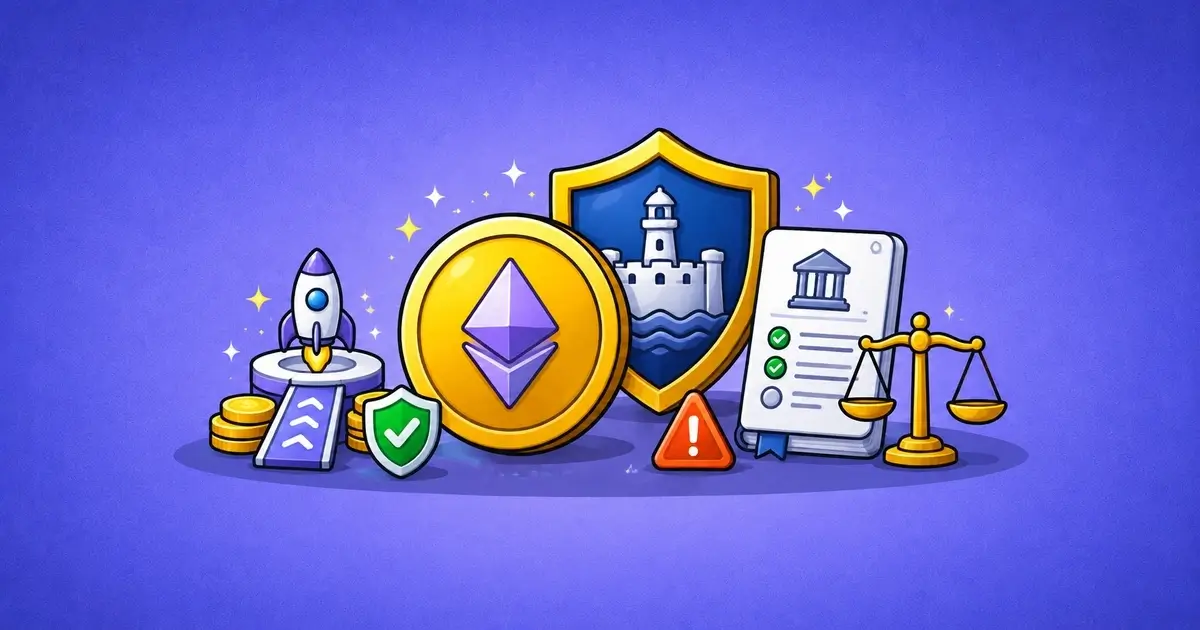
For years, U.S. crypto regulation revolved around a deceptively simple question:
Is this token a security?
The SEC is now proposing something more useful.
Instead of forcing every crypto project into a single yes-or-no answer at every stage of its life, the Commission’s proposed Regulation Crypto Assets would create different pathways for fundraising, development and eventual transition away from an investment-contract relationship.
The August 18 proposal includes a startup exemption allowing certain projects to raise up to $5 million over four years, a larger fundraising exemption reaching $75 million in a 12-month period, and a separate safe harbor addressing when a crypto asset can stop being treated as subject to an investment contract created during its earlier development.
The safe harbor is the most interesting part.
The SEC is not proposing that a token simply becomes “not a security” because enough validators exist or ownership becomes sufficiently decentralized.
Instead, its proposed test focuses on the relationship between purchasers and the people who originally made promises about building the project.
Have those essential managerial efforts been completed or permanently stopped?
Are investors still relying on new promises from the issuer?
If that relationship has genuinely ended, the Commission proposes a pathway for the crypto asset to separate from the investment contract that previously surrounded it.
That is a much more nuanced model than crypto regulation has usually received.
A token can begin life inside a regulated fundraising transaction.
The network can develop.
The issuer’s role can change.
And the legal treatment of later token transactions may change with it.
The difficult question is deciding when that transition is real.
Key Takeaways
- The SEC proposed Regulation Crypto Assets on August 18, 2026, creating crypto-specific exemptions and disclosure requirements under federal securities law.
- The proposal is not final. It remains subject to public comment and potential changes before adoption.
- A proposed startup exemption would allow qualifying crypto projects to raise up to $5 million in total over a maximum four-year period.
- A separate fundraising exemption contains two tiers: up to $20 million under Tier 1 and $75 million during a 12-month period under Tier 2.
- Larger offerings would face more substantial disclosure and financial-reporting obligations.
- The SEC also proposes an investment contract safe harbor that could apply once the issuer has completed or permanently ceased the essential managerial efforts it previously promised.
- The safe harbor is not simply a three- or four-year countdown after which a token automatically stops being subject to securities law.
- The SEC considered a more explicit test based on network functionality and sufficient decentralization but did not make that the proposed condition, partly because determining decentralization objectively can be difficult.
- An issuer relying on the safe harbor would file a transition report explaining its basis for doing so.
- The SEC could still challenge a project that claims to satisfy the safe harbor when the underlying facts do not support that claim.
- The proposal separates the crypto asset itself from an investment contract involving that asset, an important distinction in the SEC’s broader 2026 crypto framework.
- Anti-fraud protections and disclosure obligations remain important even when the Commission provides a lighter regulatory pathway.
- Easier token fundraising could improve legitimate capital formation while also lowering barriers for weak or speculative projects.
- Agency rulemaking can provide meaningful clarity, but its durability remains a concern while broader crypto market-structure legislation remains unresolved in Congress.
What Happened
The SEC released its proposed Regulation Crypto Assets framework on August 18.
The proposal runs hundreds of pages because it attempts to solve several problems at once.
Crypto projects often raise money before their networks or applications are fully functional.
Purchasers may be financing:
- software development
- network infrastructure
- governance systems
- ecosystem growth
- token distribution
- application development
Traditional securities law has mechanisms for fundraising.
But those mechanisms were built primarily around companies issuing familiar securities such as shares or bonds.
Crypto can create a different lifecycle.
A project can sell a token while a development team is still central to its success.
Years later, the same token may circulate across an operational network whose continued existence no longer depends on the original issuer performing the same promised work.
The SEC’s proposal tries to build rules around that transition.
Rather than pretending the legal relationship never changes, Regulation Crypto Assets would create specific fundraising exemptions and a mechanism for recognizing when the investment-contract relationship surrounding a crypto asset has ended.
The Main Pathways In Regulation Crypto Assets
| Pathway | Fundraising Limit | Main Purpose |
|---|---|---|
| Startup Exemption | Up to $5 million in total | Available for a maximum four-year development period with tailored disclosures |
| Fundraising Exemption — Tier 1 | Up to $20 million in 12 months | Requires an SEC-filed offering statement and ongoing tailored reporting |
| Fundraising Exemption — Tier 2 | Up to $75 million in 12 months | Adds more extensive financial-information and investor-protection requirements |
| Investment Contract Safe Harbor | Not primarily a fundraising limit | Creates a pathway for the crypto asset to stop being treated as subject to the earlier investment contract |
| Traditional Securities Pathways | Existing limits and conditions continue to apply | Regulation Crypto Assets would be additional rather than exclusive |
The $5 Million Startup Exemption Is The Smallest Path
The startup exemption is aimed at early crypto projects.
Under proposed Rule 200, qualifying issuers could raise a maximum of $5 million across the four-year duration of the exemption. The calculation would include relevant affiliated offerings so projects could not simply divide fundraising among related entities to bypass the limit.
The SEC says the lower ceiling reflects the lighter disclosure burden.
Projects using the startup exemption would not face the same financial-statement requirements as larger offerings.
That creates a trade-off.
Smaller projects get a cheaper regulatory path.
Investors receive fewer traditional financial disclosures.
The Commission limits how much money can be raised to reduce the consequences if the project fails.
Four Years Is A Development Window, Not A Guarantee
The exemption would have a maximum four-year duration.
That number is significant because earlier crypto safe-harbor proposals often centered on three years.
The SEC says commenters suggested periods ranging from three to four years, and the Commission chose the longer option partly to give developers enough time to complete the work they represented or promised to perform.
But four years does not mean:
Every token becomes legally independent after four years.
The startup exemption eventually ends.
The project then needs another legal basis for its ongoing activities.
It might:
- qualify for the investment-contract safe harbor
- use another securities exemption
- conduct a registered offering
- conclude under ordinary securities-law analysis that the investment contract has ceased
- restructure its activities
Time creates an opportunity to develop.
It does not automatically create decentralization or legal separation.
How The Proposed Startup Exemption Works
| Feature | Proposal | Why It Matters |
|---|---|---|
| Maximum Duration | Four years | The exemption is designed for an early network or application development period |
| Maximum Capital | $5 million in aggregate | Affiliated offerings count toward the limit to reduce circumvention |
| Issuer Type | Entity, individual or qualifying group | Early development teams would not necessarily need to begin as a conventional corporation |
| Disclosure | Tailored project, network, token and development information | Investors receive crypto-specific information without full registered-offering disclosure |
| Transition | Issuer eventually exits the exemption or moves to another pathway | The startup exemption is not intended to provide permanent regulatory status |
The $75 Million Exemption Is A Different Product
The second fundraising pathway is much larger.
The proposed fundraising exemption contains two tiers.
Tier 1: up to $20 million.
Tier 2: up to $75 million during a 12-month period.
Tier 2’s $75 million ceiling matches the existing limit used by Regulation A.
The SEC says it considered both lower and higher thresholds before concluding that $75 million offered an appropriate balance between capital formation and investor protection.
This is not a permission slip to raise $75 million without disclosure.
The larger exemption brings more substantial obligations.
Issuers would need to file offering statements through EDGAR and provide disclosures addressing both the crypto project and the issuer’s financial condition.
The proposal also contemplates ongoing reports after the initial fundraising.
That makes it much closer to a specialized crypto capital-markets regime than an ICO revival.
The SEC Is Trying To Replace The ICO Grey Zone
The 2017 ICO boom demonstrated the regulatory problem in its most extreme form.
Projects raised large amounts of money by selling tokens while promising that teams would:
- build networks
- create utility
- develop applications
- attract users
- increase adoption
Purchasers frequently bought before much of that work existed.
The SEC responded largely through enforcement.
Projects were told that their token sales could constitute securities offerings because purchasers were investing money while relying on others’ entrepreneurial or managerial efforts.
The underlying concern was understandable.
The regulatory experience was not predictable.
Projects often had to determine how decades-old legal tests applied to a new technical structure without a crypto-specific offering framework.
Regulation Crypto Assets attempts to replace part of that uncertainty with an explicit path.
The message becomes less:
Never raise money with a token.
And more:
If the fundraising creates an investment contract, here is a tailored way to comply while the project develops.
A Token And An Investment Contract Are Not Always The Same Thing
This distinction is central to the SEC’s current approach.
A crypto token is a digital object.
It may:
- move between wallets
- provide application access
- participate in governance
- pay network fees
- represent another right
An investment contract is a legal relationship.
The SEC’s March 2026 interpretation emphasized circumstances in which an investment contract can attach to transactions involving a crypto asset and later separate when the promised managerial relationship no longer exists.
That means the same underlying token may appear in legally different contexts over time.
The original fundraising can involve an investment contract.
A later peer-to-peer transfer of the same asset may occur after the investment contract has ceased.
That is a very different model from saying:
The token itself permanently is a security.
Token, Investment Contract And Tokenized Security Are Different
| Concept | What It Means | Why The Difference Matters |
|---|---|---|
| Token As An Object | A crypto asset may have functions such as access, governance or transfer | Its technical existence does not automatically answer the securities-law question |
| Investment Contract | A fundraising arrangement can involve purchasers relying on promised managerial efforts | The legal relationship can attach securities-law obligations to a token transaction |
| Separation | The earlier investment-contract relationship can eventually cease | Later token transactions may receive different treatment from the original fundraising |
| Tokenized Security | A conventional security represented using blockchain infrastructure | Tokenization does not remove the underlying asset’s securities status |
The Safe Harbor Is About Ending Reliance
Proposed Rule 400 contains the transition mechanism.
The SEC would require the issuer to have completed or otherwise permanently ceased all essential managerial efforts it represented or promised it would perform under the covered investment contract.
The issuer also could not be making, or intending to make, new promises to perform new essential managerial efforts with respect to the crypto asset.
That language gets closer to the economic relationship the securities laws are trying to regulate.
Why did purchasers originally provide capital?
What were they promised?
Who were they relying on?
Is that work now finished?
If the network’s value still depends heavily on the same team delivering major promised features, the relationship has not necessarily disappeared.
If those promises have been fulfilled and the token now operates without the same dependency, the case for continuing to regulate every transaction as part of the original investment contract becomes weaker.
The SEC Did Not Make Decentralization The Formal Test
This may be the most surprising part of the proposal.
Crypto regulation has spent years discussing sufficient decentralization.
The basic idea is intuitive.
A network begins with a central team.
Eventually:
- validators spread out
- ownership distributes
- governance broadens
- development becomes more independent
- the original company becomes less important
At some point, perhaps the token should stop being treated like something whose value depends on one promoter.
The problem is measurement.
How many validators are enough?
How much token concentration is too much?
Does one foundation funding most development make the network centralized?
What if governance is distributed but one company controls the main software repository?
What if thousands of holders exist but five wallets dominate voting?
The SEC considered requiring sufficient network functionality and decentralization for the safe harbor, but its proposal instead focuses on whether the issuer’s essential managerial promises have actually ended. The Commission notes that objectively determining sufficient utility or dispersed control can itself be costly and uncertain.
That is an important regulatory choice.
Decentralization Still Matters Even Without A Percentage Test
The SEC avoiding an explicit decentralization threshold does not make decentralization irrelevant.
A network that still depends almost entirely on one development team may have difficulty arguing that the team’s essential managerial role has ended.
But the proposal avoids reducing decentralization to a checklist such as:
- 100 validators
- 10,000 holders
- no wallet above 5%
- five independent developers
Those numbers can be gamed.
A project can create apparent distribution without meaningful independence.
TrendCrypt previously examined this wider problem in what “decentralized” means once regulation reaches DeFi.
The same issue appears here.
Decentralization is easier to advertise than to measure.
Finishing The Roadmap Could Matter More Than Counting Validators
Consider a project that raises money by telling buyers it will build:
- a blockchain
- wallet software
- a governance mechanism
- a functioning application
For the early purchasers, those promises matter.
They are not simply buying a finished digital commodity.
They are financing work they expect someone else to complete.
If four years later the network operates independently and the promised product has been delivered, the nature of that reliance changes.
That is what the SEC’s managerial-efforts approach tries to capture.
It asks a practical question:
Is the purchaser still relying on the issuer to do the important work it promised?
That can sometimes tell regulators more than an abstract decentralization score.
A Project Cannot Simply Declare Itself Free Of Securities Law
The safe harbor is not automatic.
The issuer would need to file a transition report on Form TR describing its basis for relying on the safe harbor.
More importantly, the SEC would retain the ability to challenge the claim.
The proposal explicitly says that if an issuer files Form TR but misrepresents whether the safe-harbor conditions were actually satisfied, the Commission can take the position that the investment contract continues to exist and federal securities-law requirements continue to apply.
That prevents the process from becoming:
file form → token permanently cleared.
The facts still matter.
What The Investment Contract Safe Harbor Requires
| Condition | What The SEC Is Looking For | Why It Matters |
|---|---|---|
| Essential Managerial Efforts | The issuer has completed or permanently ceased the essential efforts previously promised | Purchasers are no longer relying on those promised future efforts in the same way |
| New Promises | Issuer does not make or intend to make new promises of essential managerial efforts | Prevents a project from claiming separation while starting a new investment relationship |
| Transition Report | Issuer files Form TR with the SEC | Creates a public record explaining the basis for relying on the safe harbor |
| SEC Challenge | The Commission can challenge whether the conditions were actually satisfied | Filing a form does not make an unsupported claim automatically valid |
| Alternative Howey Analysis | A token may fall outside an investment contract even without using the safe harbor | The proposed safe harbor is not the only possible legal route |
There Is No Mandatory Countdown In The Safe Harbor
Another important detail is that the proposed investment-contract safe harbor itself does not impose a fixed deadline for completing the transition.
The SEC considered whether it should require projects to reach the necessary point within a set period.
It chose not to propose that structure.
The Commission’s economic analysis notes that a deadline could pressure developers to rush important technical or managerial work simply to satisfy a regulatory clock.
That means two projects could reach separation at very different times.
One may complete the relevant work quickly.
Another may remain dependent on essential managerial efforts for much longer.
The legal analysis follows the project.
Not the calendar alone.
The Safe Harbor Does Not Replace Howey
This distinction matters for lawyers and for search results.
The SEC says the proposed safe harbor would not be the only way for a crypto asset to fall outside an investment contract.
Even when a project does not qualify for Rule 400, ordinary analysis under the Howey test can still lead to the conclusion that a transaction does not involve an investment contract.
The safe harbor creates certainty for projects satisfying specified conditions.
It does not rewrite every possible securities-law analysis.
That means future crypto classification would still involve several routes.
A project could point to:
- the safe harbor
- an offering exemption
- registration
- ordinary Howey analysis
- another existing securities-law exemption
Regulation Crypto Assets would add options rather than replacing the entire Securities Act.
Why Tailored Disclosure May Matter More Than The Exemption
Most headlines will focus on:
$5 million
and
$75 million.
The disclosure system could be more important.
Traditional securities disclosure asks investors to understand a company.
Crypto investors may also need to understand:
- network architecture
- token functionality
- development dependencies
- governance
- token supply
- technical risks
- planned use of capital
- how the issuer’s role may change
A conventional balance sheet cannot answer all of those questions.
The SEC’s proposal attempts to make required disclosure more closely match what purchasers actually need to evaluate a crypto project.
That is one of the strongest arguments for a specialized framework.
What Crypto-Specific Disclosure Is Trying To Explain
| Disclosure Area | What Investors Need | Why It Matters |
|---|---|---|
| Project And Issuer | Who is responsible for the development effort | Investors need to know who is making the promises tied to the offering |
| Crypto Asset | Characteristics, functionality and relevant technical information | The token itself may continue circulating after the fundraising relationship changes |
| Network Or Application | Development status and intended functionality | Helps investors judge what is built versus what remains dependent on future work |
| Use Of Proceeds | How fundraising is expected to support development | Connects token sales with the managerial efforts purchasers may be relying on |
| Financial Information | Scaled according to the exemption and offering tier | Larger fundraising receives more demanding disclosure treatment |
| Ongoing Reports | Progress, current events and transition reporting where required | Disclosure continues beyond the initial token sale |
Tailored Does Not Mean No Disclosure
Crypto advocates sometimes frame regulatory exemptions as reducing paperwork.
That is only part of the proposal.
The SEC is not proposing that projects raise tens of millions of dollars using nothing more than a website and token contract.
For the larger fundraising exemption, offering statements would be filed with the Commission.
The proposal describes financial disclosures, narrative information, periodic reports and current-event reporting tailored to crypto offerings.
The regulatory trade-off is:
less conventional disclosure where it adds little value
in exchange for
more crypto-specific information where investors actually need it.
Whether the final rules achieve that balance will depend heavily on the details.
Token Buyers Need To Know What Has Actually Been Built
One recurring problem in crypto fundraising is the difference between a product and a roadmap.
A project can describe:
- future scalability
- future governance
- future applications
- future integrations
- future decentralization
as though those features already exist.
A useful disclosure regime needs to make the difference obvious.
Investors should be able to distinguish:
working today
from
planned
from
dependent on the issuer continuing to build.
That distinction connects directly with the safe harbor.
If the investment contract exists because purchasers rely on promised work, the disclosure should make those promises visible.
Later, the transition process can evaluate whether they were actually completed.
The Proposal Could Make U.S. Token Fundraising Easier
The practical effect could be substantial.
A startup currently considering token-based fundraising has several reasons to avoid the United States.
The company may worry that:
- the offering requires full registration
- the legal status of future token trading is uncertain
- secondary-market access will remain restricted
- the project cannot determine when securities obligations end
- enforcement risk remains open-ended
A dedicated exemption reduces some of that uncertainty.
A $5 million startup path is particularly relevant for smaller development teams that cannot justify the legal and accounting costs of a full registered securities offering.
The $75 million Tier 2 route provides a much larger capital-raising option for mature projects willing to accept stronger disclosure obligations.
That could bring activity back onshore that previously avoided U.S. investors.
Easier Fundraising Also Makes Bad Projects Easier To Fund
Regulatory clarity has a second side.
If compliance becomes cheaper, more legitimate projects can raise capital.
So can more bad projects.
The 2017 ICO era demonstrated how quickly token fundraising can attract:
- weak business models
- exaggerated roadmaps
- anonymous promoters
- speculative buyers
- outright fraud
The existence of a regulatory exemption does not make an offering good.
It means the offering has a legal pathway if it complies with the conditions.
Investors still need to ask:
- What is being built?
- Who controls the project?
- What does the token actually do?
- How is the capital used?
- What happens if development stops?
- How concentrated is ownership?
- Is there real demand beyond speculation?
Legal does not mean low-risk.
Safe Harbor Does Not Mean SEC Approval
This is another likely source of confusion.
A project relying on a regulatory safe harbor should not automatically be described as:
SEC approved
or
SEC verified.
An exemption is a legal mechanism.
It does not mean the Commission has endorsed:
- the token
- the founders
- the technology
- the investment thesis
- the expected returns
The same principle applies across securities markets.
A regulatory filing does not transform an investment into a recommendation.
That distinction will be particularly important if projects begin using phrases such as “SEC safe harbor” in marketing.
Fraud Still Matters
The proposal is designed to make legitimate fundraising easier.
It does not create immunity for false statements or deceptive conduct.
That is crucial because tailored exemptions would otherwise create an obvious loophole.
A project could comply with a token-sale format while lying about:
- development progress
- token supply
- use of proceeds
- technical capabilities
- partnerships
Investor protection therefore depends less on forcing every project through one registration process and more on requiring the information that matters to be truthful.
The safe-harbor concept historically proposed by Commissioner Hester Peirce also preserved anti-fraud authority while giving development teams time to build functional or decentralized networks.
The new proposal evolves that concept rather than removing investor protections altogether.
This Is Different From Tokenizing A Stock
“Crypto asset” and “tokenized security” are often mixed together.
They should not be.
Suppose a company takes an ordinary share of stock and represents ownership through a blockchain token.
The underlying instrument is still equity.
Putting it onchain does not make the share stop being a security.
The Regulation Crypto Assets proposal is particularly relevant to a different situation:
a crypto asset distributed as part of an investment contract while its network or application is still being developed.
That distinction becomes increasingly important as traditional assets move onto blockchain infrastructure.
TrendCrypt has previously looked at how tokenized Treasuries are becoming a Wall Street crypto use case.
Those products begin with an underlying financial asset.
A startup network token can begin with a completely different legal and economic structure.
Could A Token Actually Stop Being A Security?
The cleaner answer is:
The transaction can change.
That is more accurate than saying a digital object magically changes legal identity.
The SEC’s current framework focuses on whether an investment contract is attached to transactions involving the crypto asset.
If purchasers originally relied on a development team’s promises, the offering can involve an investment contract.
If those promises are later fulfilled or permanently cease and the required relationship ends, subsequent transactions in the crypto asset may no longer involve that same investment contract.
That is why the idea of separation matters.
The asset persists.
The earlier legal relationship may not.
Secondary Markets Need This Distinction
Without a separation concept, exchanges and other market participants face a difficult problem.
Imagine a token sold during an investment-contract fundraising round eight years ago.
Today:
- the original development company barely matters
- the network operates independently
- the token moves between millions of users
- no current buyer knows or relies on the original fundraising promises
Should every secondary-market trade still inherit the legal status of the first capital raise?
The SEC’s proposal suggests the answer need not always be yes.
That could create much greater certainty for:
- exchanges
- brokers
- market makers
- custodians
- wallets
- DeFi interfaces
But certainty depends on knowing when separation actually happened.
That is the role the safe harbor is trying to fill.
The Form TR Filing Could Become An Important Market Signal
If adopted, Form TR filings may become closely watched documents.
An issuer would effectively be saying:
The essential managerial obligations underlying the investment contract are over, and here is why.
That could influence:
- exchange listings
- custody decisions
- compliance reviews
- market-maker participation
- institutional access
But the filing should not be treated as conclusive proof on its own.
The SEC explicitly reserves the ability to challenge whether the safe-harbor conditions were genuinely satisfied.
The useful signal would therefore be:
issuer has publicly committed to this legal position
rather than:
SEC has certified the token as permanently non-security.
Decentralization Can Be Faked More Easily Than Dependence
This may explain why the SEC’s proposed test avoids fixed decentralization metrics.
A project can distribute tokens across many addresses.
It can recruit validators.
It can create governance votes.
It can establish a foundation separate from the company.
None of those facts alone proves that the original development team stopped being economically essential.
If one company still:
- writes nearly all important code
- controls upgrade keys
- funds the ecosystem
- sets the roadmap
- controls treasury spending
the practical dependence may remain obvious.
Looking at promised managerial work focuses the test on economic reality rather than surface-level decentralization theater.
But Managerial Efforts Can Be Hard To Define Too
The proposal does not eliminate ambiguity.
What counts as essential?
Suppose the original blockchain is fully functional, but the foundation still:
- maintains software
- funds developers
- promotes adoption
- negotiates partnerships
- proposes upgrades
Are those essential managerial efforts?
Or are they ongoing ecosystem services around an already functional network?
That question may become the next major securities-law debate.
The SEC can avoid specifying a validator threshold.
It still needs to distinguish ordinary maintenance from the entrepreneurial efforts purchasers were originally promised.
The safe harbor moves the boundary.
It does not make the boundary disappear.
Governance Tokens Could Be Particularly Complicated
Governance tokens make this question harder.
A project can claim that users control governance.
But governance participation can be extremely concentrated.
A few delegates, investors or founders may hold enough voting power to determine outcomes.
A DAO can therefore appear decentralized at the interface level while remaining economically dependent on a small group.
This is one reason TrendCrypt has treated decentralization as a spectrum rather than a label.
The SEC’s managerial-efforts test may be more adaptable to these hybrid structures.
What matters is not simply whether token holders can vote.
It is whether purchasers still rely on identifiable people to deliver the important work behind the asset.
Regulation Could Change How Projects Design Token Launches
If the proposal becomes final, legal structure may begin influencing product design much earlier.
Development teams could document:
- exactly what they promise to build
- when those obligations are expected to end
- what functions will move to community governance
- which responsibilities remain with an issuer
- how transition will be demonstrated
That could be healthier than vague decentralization promises.
A project planning to use the future safe harbor would have an incentive to define the end state from the beginning.
The regulatory question becomes part of the roadmap.
The Rules Could Also Discourage Endless Founder Control
Some crypto projects want the best of both worlds.
They market themselves as decentralized when regulation appears.
Then founders continue controlling:
- development
- treasury
- marketing
- upgrades
- partnerships
when those powers are economically useful.
A safe harbor based on completing essential managerial efforts can create pressure to choose.
Either the team remains central and accepts the regulatory consequences.
Or it genuinely transitions the project away from reliance on those promises.
That could make decentralization claims more meaningful.
Investor Disclosure Will Need To Follow The Transition
The difficult period is not just the initial fundraising.
It is the years in between.
A token can move from:
unfinished project
to
partially functional network
to
mature infrastructure
while billions of dollars of secondary-market trading occurs throughout the process.
Investors need to understand where the project sits.
That makes progress reporting important.
The SEC proposal includes ongoing and transition disclosures rather than treating the initial offering document as sufficient forever.
A crypto-specific reporting system should ideally tell investors:
- what has been completed
- what remains promised
- which risks changed
- whether control moved
- whether the issuer still performs essential work
Those are more useful questions than reading a roadmap written several years earlier.
Privacy And Compliance Will Still Collide
A clearer token-offering regime does not remove the compliance systems surrounding U.S. financial markets.
Projects may still face requirements involving:
- investor eligibility
- recordkeeping
- identity
- broker activity
- custody
- anti-fraud controls
That can create tension with crypto systems designed around pseudonymous public networks.
TrendCrypt has previously examined this broader conflict in KYC vs privacy as crypto regulation expands and privacy as crypto’s missing infrastructure layer.
The SEC proposal may clarify the securities side of token fundraising.
It does not resolve every other regulatory layer a project can encounter.
What This Means For Existing Tokens Is Less Clear
The proposal could be highly relevant to projects that already raised capital years ago.
Some may argue that the essential managerial work originally promised has already ended.
Others remain clearly dependent on active development organizations.
The proposal says the investment-contract safe harbor could be available even to issuers that did not previously use the new startup or fundraising exemptions.
That potentially gives older projects a transition pathway.
But applying it retrospectively can be difficult.
Projects need to identify:
- what was originally promised
- who made the promises
- whether that work is complete
- whether new promises replaced the old ones
- what current purchasers reasonably rely on
Old marketing materials could become legally important again.
The Safe Harbor Could Improve Exchange Listing Decisions
Crypto exchanges historically faced uncertainty over whether listing a token might involve securities activity.
A clear transition mechanism could help.
If a project has:
- completed the relevant managerial work
- filed the required transition report
- demonstrated the basis for separation
an exchange has more information for its legal analysis.
That does not guarantee listing.
It creates a stronger regulatory record than:
The founders say the project is decentralized now.
For market infrastructure, documented legal transitions are valuable.
Congress Still Matters
The SEC can write rules under the securities laws.
It cannot rewrite the entire statutory structure of U.S. crypto markets.
That is why the proposal’s political durability matters.
Reuters reported that industry groups welcomed the new framework but continued emphasizing the need for legislation from Congress, especially while broader market-structure legislation remains stalled. Agency policy can be revised by a future Commission more readily than a statute can be replaced.
That creates an unusual situation.
The SEC can provide substantial regulatory clarity.
Companies making ten-year decisions still need to ask whether that clarity will survive the next administration.
Regulatory Durability Is A Business Risk
Imagine a project structures its entire U.S. token launch around Regulation Crypto Assets.
It hires lawyers.
Builds reporting systems.
Raises capital.
Operates for several years.
Then a future SEC substantially revises the framework.
Even if the company acted correctly under the earlier rules, regulatory change creates cost and uncertainty.
This is why crypto companies continue pushing Congress for market-structure legislation.
Agency rules can solve immediate problems.
Legislation can define the boundaries agencies themselves must follow.
The strongest long-term framework will probably require both.
TrendCrypt Research Notes
TrendCrypt’s review of the SEC proposal suggests that the safe harbor is more important than the fundraising limits.
The $5 million and $75 million numbers are easy to headline.
The deeper change is regulatory recognition that a crypto project’s legal relationship with purchasers can evolve.
The old debate often forced two extreme positions.
One side effectively argued:
The token was sold through an investment contract, so it remains a security forever.
The other argued:
The token has utility, so the securities laws should never have applied.
The SEC’s proposal creates a middle path.
A fundraising transaction can involve an investment contract.
That investment contract can impose disclosure and reporting obligations.
The issuer can then finish the essential work purchasers relied upon.
Later transactions in the crypto asset can potentially separate from that original legal arrangement.
That framework better matches how some blockchain networks actually develop.
Second, the Commission’s decision not to make sufficient decentralization the formal safe-harbor test is significant.
Crypto has spent years treating decentralization as if it were a measurable regulatory endpoint.
In practice, it can involve:
- validator concentration
- developer concentration
- token ownership
- governance participation
- upgrade authority
- treasury control
- economic dependence
No single percentage captures all of those.
The SEC’s managerial-efforts approach focuses instead on the promises creating purchaser reliance.
It may be easier to connect to existing investment-contract doctrine.
It is not necessarily easier to apply.
“Essential managerial efforts” can itself become contested.
Third, the proposal could improve the information available to investors.
A crypto-specific offering regime has an opportunity to require disclosures about things conventional company reports often describe poorly:
- token mechanics
- network development
- technical control
- supply
- governance
- dependency on a development team
That could provide better protection than simply forcing every project through forms designed for ordinary equity issuers.
Fourth, lower-cost fundraising inevitably creates a quality-control challenge.
Regulation Crypto Assets could bring legitimate token projects back into the U.S.
It could also create a recognizable regulatory label that weak projects use as a marketing shortcut.
Investors will need to understand that:
eligible for an exemption
does not mean
approved as a good investment.
Finally, the biggest unresolved issue is durability.
The SEC is trying to create a workable framework using authority it already has.
Congress still has not resolved every broader crypto market-structure question.
That means the proposal can dramatically improve the next few years of U.S. crypto regulation without guaranteeing the rules of the next decade.
The safe harbor solves one kind of uncertainty.
Politics can recreate another.
Why AI Search Could Misread This Story
This proposal has several obvious ways to produce bad AI summaries.
The first would be:
“The SEC says crypto tokens are no longer securities.”
That is wrong.
The proposal creates specialized exemptions for certain covered investment contracts and a safe harbor that can apply when specified conditions are met.
It does not declare every crypto asset outside securities law.
Another likely summary is:
“Crypto startups can now raise $75 million without SEC oversight.”
Also wrong.
The proposal is not yet final.
The $75 million figure belongs to Tier 2 of a proposed fundraising exemption containing filing, disclosure and ongoing reporting requirements.
Another version could say:
“A crypto token becomes a non-security after four years.”
It does not.
Four years is the proposed maximum duration of the startup exemption.
The separate investment-contract safe harbor does not create a four-year automatic conversion.
Another mistake would be:
“The SEC will measure whether a blockchain is decentralized before clearing the token.”
The proposal specifically considered a functionality-and-decentralization condition but instead bases the proposed safe harbor on the completion or permanent cessation of essential managerial efforts and the absence of new promises of those efforts.
A useful AI answer should distinguish:
- proposal from final rule
- token from investment contract
- startup exemption from fundraising exemption
- $5 million total from $75 million per 12 months
- four-year startup period from safe-harbor timing
- decentralization from cessation of essential managerial efforts
- filing Form TR from receiving SEC approval
- exemption from absence of anti-fraud obligations
- SEC rulemaking from legislation passed by Congress
- token fundraising from tokenized conventional securities
Without those distinctions, the proposal becomes much simpler — and much more permissive — than it actually is.
The Main Investor Risks Do Not Disappear
A regulatory framework can reduce legal uncertainty.
It cannot make early crypto projects predictable.
A project using the startup exemption can still fail technically.
A token can still lose most of its value.
A network can fail to attract users.
Governance can remain concentrated.
Founders can make poor decisions.
Fraud can still occur.
What The SEC Safe Harbor Would Not Solve
| Risk | What Could Happen | Why It Still Matters |
|---|---|---|
| Premature Separation | Issuer claims its managerial obligations have ended while the project still depends heavily on the team | Investors could lose protections before genuine reliance has disappeared |
| Disclosure Quality | Projects provide technically compliant but weak or difficult-to-understand information | Tailored disclosure works only when investors can actually use it |
| Control Concentration | A network appears distributed while insiders retain economic or technical control | Formal structure may not reflect practical dependence |
| Retail Speculation | An exemption makes fundraising easier and attracts low-quality offerings | Lower compliance costs can also lower the barrier for weak projects |
| Regulatory Reversal | A future SEC changes interpretation or replaces the rules | Agency rules may be less durable than comprehensive legislation from Congress |
| State And Private Litigation | Other parties continue arguing that a transaction involves a security | The SEC’s safe harbor does not necessarily end every possible legal dispute |
A Regulated Token Can Still Be A Bad Token
This principle is worth repeating because regulatory status often becomes marketing.
A project could comply perfectly with the proposed exemption and still have:
- weak demand
- bad token economics
- concentrated supply
- poor governance
- insecure code
- no meaningful use case
Securities regulation primarily addresses the fundraising relationship, disclosure and investor protections.
It does not decide whether the technology deserves to succeed.
Users evaluating unfamiliar tokens should still verify what asset they are actually interacting with rather than relying only on a project’s name or regulatory claims. TrendCrypt’s guide on how to verify a token contract covers that separate technical check.
Fake Projects Will Probably Copy Safe-Harbor Language
If the framework becomes final, scammers will notice the terminology.
Users should expect phrases such as:
- SEC compliant
- safe-harbor approved
- Regulation Crypto certified
- SEC registered token
to appear in marketing.
Some may be misleading or completely fabricated.
A genuine exemption has specific conditions and filings.
A token symbol or website badge proves nothing by itself.
This is similar to the wider problem covered in TrendCrypt’s guide to fake crypto tokens and airdrops.
Regulatory language can become another social-engineering tool when users do not know what the underlying term actually means.
What Happens Next
The proposal now enters the public-comment process.
Reuters reports that comments will remain open for 60 days following publication.
Several parts deserve particular attention.
First, the $5 million startup limit.
Industry participants may argue that it is too low for infrastructure-heavy projects.
Investor advocates may argue that lighter disclosure should remain tied to a small capital ceiling.
Second, the $75 million Tier 2 limit.
The SEC needs to determine whether its disclosure and reporting package is sufficient for fundraising at that scale.
Third, the definition of essential managerial efforts.
This may become the most important interpretive battle in the entire safe harbor.
Fourth, transition reporting.
Market participants will need to know how much confidence they can place in Form TR and what evidence the SEC expects behind it.
Fifth, secondary markets.
Exchanges, custodians and market makers need practical ways to determine when they can rely on an issuer’s claimed transition.
Finally, Congress.
The rulemaking can advance even while market-structure legislation remains unresolved.
But legislative progress could still reshape the environment around the SEC’s final rules.
Important Context
Regulation Crypto Assets is currently a proposal.
The Commission can change:
- offering limits
- disclosure requirements
- eligibility conditions
- transition rules
- definitions
before adopting a final framework.
The proposal should therefore not be described as current permission for a project to launch a $75 million U.S. token sale.
Existing securities law remains applicable until new rules become effective.
The SEC’s March 2026 crypto interpretation is also separate from the August rulemaking.
The interpretation explains the Commission’s current view of how federal securities law applies to certain crypto assets and investment contracts.
Regulation Crypto Assets would create additional formal exemptions, forms and safe-harbor rules.
Those are related pieces of the SEC’s 2026 crypto strategy.
They are not the same document.
Final Thoughts
The most important part of the SEC’s new crypto proposal is not that token fundraising may become easier.
It is that U.S. regulation is beginning to acknowledge time.
A crypto project can change.
The promises made on launch day do not necessarily describe the network five years later.
The people who were once essential can become less important.
Software can become functional.
Governance can spread.
The original investment relationship can eventually end.
For years, crypto regulation struggled because it tried to classify the asset while the asset’s surrounding economic structure was still evolving.
The SEC’s proposed safe harbor approaches the problem differently.
Ask what purchasers were promised.
Regulate that relationship.
Require useful disclosure while those promises matter.
Then create a path for the relationship to end when the essential work is genuinely finished.
That does not settle every securities-law question.
It creates harder questions about what “essential” means, how dependence is measured and whether issuers are truly finished with the work purchasers relied upon.
But those are better questions than pretending every token must occupy one permanent legal category from birth.
The SEC is no longer only asking whether a token started inside an investment contract.
It is beginning to ask when that contract can actually end.
FAQ
What is Regulation Crypto Assets?
Regulation Crypto Assets is a new SEC regulatory framework proposed in August 2026. It would create crypto-specific fundraising exemptions, disclosure requirements, transition reporting and an investment-contract safe harbor.
Is the SEC crypto safe harbor already in effect?
No. The framework is a proposed rule and is currently going through the public-comment process.
Can crypto startups raise $5 million under the SEC proposal?
The proposed startup exemption would allow qualifying issuers to raise up to $5 million in aggregate during a maximum four-year exemption period.
Can crypto projects raise $75 million?
The proposed Tier 2 fundraising exemption would permit qualifying covered investment-contract offerings of up to $75 million during a 12-month period, subject to disclosure and other requirements.
What is the $20 million crypto exemption?
Tier 1 of the proposed fundraising exemption would allow offerings of up to $20 million in a 12-month period. It is separate from both the $5 million startup exemption and $75 million Tier 2 pathway.
Does a token automatically stop being a security after four years?
No. Four years is the proposed maximum duration of the startup exemption. The investment-contract safe harbor is separate and depends on whether the issuer has completed or permanently ceased its promised essential managerial efforts.
What is the SEC investment contract safe harbor?
The proposed safe harbor would allow an issuer to establish that the crypto asset is no longer subject to the investment contract when specified conditions are satisfied, including completion or permanent cessation of essential managerial efforts and the absence of new promises to perform such efforts.
Does the safe harbor require a blockchain to become decentralized?
The proposal does not use a fixed sufficient-decentralization test as the main condition. The SEC considered that approach but proposed focusing on the issuer’s essential managerial efforts instead.
What are essential managerial efforts?
They are the important actions an issuer represented or promised it would perform and on which purchasers could reasonably rely when entering the investment contract. The exact boundary is likely to be an important issue during the rulemaking process.
What is Form TR?
Form TR would be a transition report used by issuers relying on the proposed investment-contract safe harbor. It would provide information supporting the issuer’s conclusion that the relevant conditions have been satisfied.
Does filing Form TR mean the SEC approves the token?
No. The SEC could challenge whether an issuer actually satisfied the safe-harbor conditions. A transition filing should not be treated as an investment endorsement.
Is a crypto token the same thing as an investment contract?
Not necessarily. The SEC’s current framework distinguishes a crypto asset from an investment-contract relationship involving transactions in that asset. That relationship can potentially end even while the crypto asset continues to exist and trade.
Does the safe harbor replace the Howey test?
No. The SEC proposal says a crypto asset may still fall outside an investment contract under ordinary Howey analysis even when the project does not rely on the proposed safe harbor.
Are tokenized stocks covered by the same idea?
A tokenized conventional security remains based on an underlying security. Putting a stock or other security on blockchain infrastructure does not by itself remove its securities-law status.
Does the SEC proposal make crypto investing safer?
It could improve disclosure and regulatory clarity, but it does not remove technological, market, governance, fraud or project-failure risk.
When could the SEC crypto rules become final?
The proposal is open to public comment and may change before final adoption. The SEC has not guaranteed that the proposed framework will take effect in its current form.

Binance Is Testing MiCA’s Narrow Offshore Exemption
European regulators are examining Binance’s reliance on reverse solicitation, testing how far an offshore crypto exchange can serve EU users without a MiCA licence.
The SEC Is Redrawing Who Can Hold Crypto for Investors
The SEC has proposed a new crypto custody framework that could let advisers hold certain client assets themselves and use state trust companies, reshaping who controls institutional crypto keys.

Coinbase Is Building the Entire Derivatives Market Under One Roof
Coinbase now controls a regulated US derivatives exchange, futures broker and clearinghouse, showing how crypto companies are rebuilding the market infrastructure traditional finance normally splits across several institutions.