
TrendCrypt Guide
Crypto Platform Complaints: How to Check
Learn how to research crypto platform complaints by checking the issue, evidence, operator response, resolution, timing, and repeated patterns before trusting a platform.
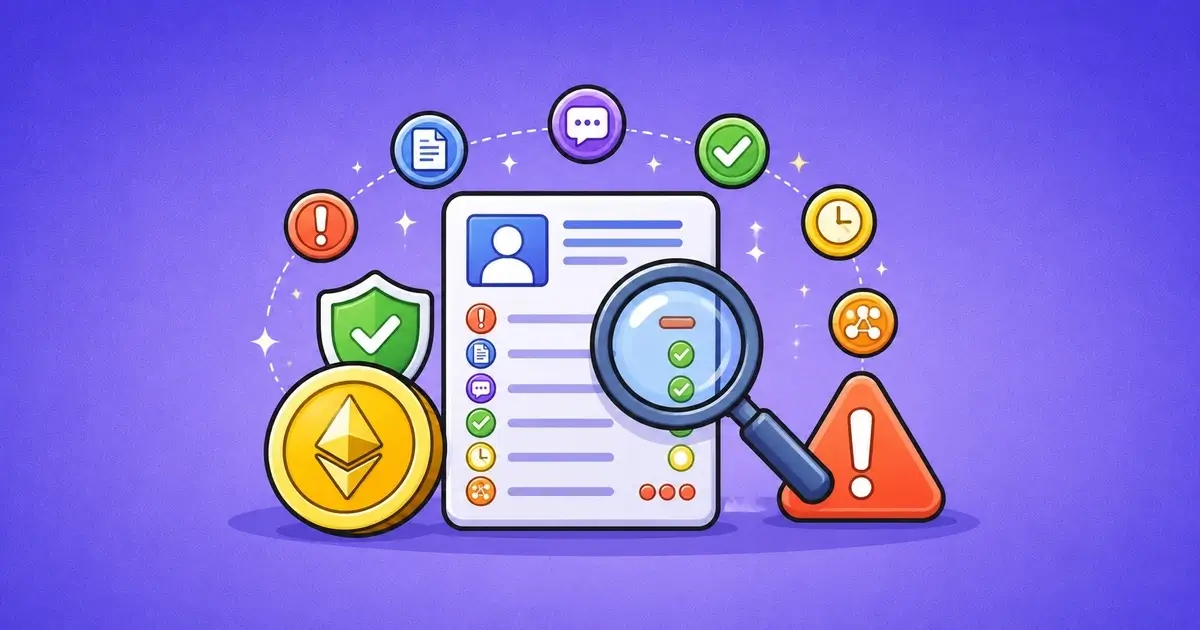
A public complaint can be useful, but it needs context.
One angry review does not prove a crypto platform is unsafe. At the same time, repeated complaints about the same issue should not be ignored.
The important part is not only how many complaints exist. It is what the complaint says, whether there is evidence, how the platform replied, whether the issue was resolved, and whether the same pattern keeps appearing.
This guide explains how to research crypto platform complaints before trusting an exchange, wallet app, payment service, casino, betting site, trading platform, or investment-style platform.
Related safety pages include How to Check a Crypto Platform, Crypto Scams and Warning Signs, Solve a Problem, Crypto Casino Safety Guide, and Editorial Policy.
Key Takeaways
- Complaint volume matters, but it is not enough by itself
- Look at the issue, evidence, date, operator response, and final outcome
- Repeated withdrawal, KYC, account-freeze, or bonus disputes deserve closer attention
- A resolved complaint is different from an ignored complaint
- Screenshots, TXIDs, terms, and support messages make a report more useful
- Old complaints may still matter if the same pattern continues today
- Fake support and copied platforms can create complaints around real brands
- Do not trust only star ratings or affiliate reviews when checking platform risk
Start With the Type of Complaint
Not every complaint says the same thing.
A user upset about a lost bet is different from a user showing a confirmed deposit that was never credited. A bonus misunderstanding is different from a platform repeatedly blocking withdrawals without a clear reason.
Start by asking what the complaint is actually about.
Common Crypto Platform Complaint Types
| Complaint Type | What It May Suggest | What to Check |
|---|---|---|
| Delayed withdrawals | Users say payouts are slow or stuck | Check whether delays are repeated and recent |
| KYC at withdrawal | Verification appears only when funds are being withdrawn | Read the platform’s KYC wording carefully |
| Account frozen | Users report locked balances or restricted access | Look for written reasons and resolution history |
| Bonus dispute | Terms may be used to cancel winnings | Check wagering rules, max cashout, and restricted play |
| Fake support claims | Scammers may be copying the platform or targeting users | Verify support channels through official pages |
A complaint about a slow reply may be annoying but not always serious.
A complaint with transaction hashes, screenshots, changing support explanations, and a locked balance deserves more attention.
Check the Evidence, Not Just the Emotion
Complaints are often written when someone is angry or worried. That does not make them false, but it can make them hard to read clearly.
Look for evidence.
Useful evidence can include:
Evidence That Makes a Complaint More Useful
| Evidence | Why It Matters | Where It Helps |
|---|---|---|
| Transaction hash | Shows whether a crypto payment happened on-chain | Useful for deposit or withdrawal disputes |
| Screenshots | Show account messages, balance changes, or support replies | More useful when dates and URLs are visible |
| Terms page | Shows the rule the platform may rely on | Check whether the rule existed before the issue |
| Support transcript | Shows how the platform responded | Look for clear answers or repeated avoidance |
| Public resolution | Shows whether the issue was fixed or ignored | Resolved complaints weigh differently from abandoned ones |
A good complaint usually explains:
- what happened
- when it happened
- how much money was involved
- which asset and network were used
- what support said
- what rule the platform cited
- whether the issue was resolved
A weak complaint may only say “scam” without details.
That does not mean the platform is clean. It only means the complaint is harder to use as evidence.
Check the Date
Timing matters.
A complaint from three years ago may not reflect how a platform works today. The platform may have changed ownership, payment providers, licence, support team, KYC rules, or bonus terms.
But old complaints are not always useless.
They matter more when the same issue keeps appearing.
For example:
- old withdrawal complaints plus new withdrawal complaints
- old KYC complaints plus new KYC complaints
- old bonus-confiscation complaints plus new bonus-confiscation complaints
- old support complaints plus new support complaints
A single old report may be weak.
The same complaint pattern across months or years is different.
Look for Repeated Patterns
One complaint can be noise.
A pattern is more important.
Complaint Patterns That Deserve Attention
| Pattern | Why It Matters | How to Read It |
|---|---|---|
| Same issue repeated | Several users report similar withdrawal, KYC, or account problems | Treat as stronger warning than one isolated case |
| Same time period | Many complaints appear after a recent policy or payment change | Check whether the platform acknowledged the issue |
| Same wording from support | Users receive copied or vague replies | Look for clear case-specific explanations |
| No public response | The platform ignores detailed complaints | Higher concern if the complaint includes evidence |
| Resolved with proof | The platform explains and fixes the issue | Still note the problem, but weigh it differently |
Repeated complaints about the same issue are more useful than a pile of unrelated frustration.
For example, these patterns should be checked carefully:
- many users say withdrawals are delayed after large wins
- many users say KYC appears only after a withdrawal request
- many users say support stops replying after documents are submitted
- many users say bonus terms are enforced in unexpected ways
- many users say deposits are confirmed on-chain but not credited
- many users say the platform changes the reason for holding funds
The pattern does not prove every complaint is true.
It tells you where to look before depositing.
Read the Platform’s Response
A platform’s reply can be as important as the complaint itself.
A useful response usually includes:
- a clear explanation
- a reference to the relevant rule
- a case-specific answer
- a timeline
- a request for missing information
- confirmation when the issue is resolved
A weak response often looks like:
- copied text
- vague “risk review” language
- no timeline
- no direct answer
- moving the user to private messages without public follow-up
- blaming the user without explaining the rule
- asking for extra crypto, fees, or unusual steps
A platform does not have to reveal private account details in public.
But it should still show that real review happened.
If every public complaint ends with silence, vague wording, or no visible resolution, that is a warning sign.
Check Whether the Complaint Was Resolved
A complaint that ends with payment confirmed, account reopened, or the issue explained is not the same as a complaint that stays unresolved.
When reading a complaint, check the ending.
Ask:
- Did the platform reply?
- Did the user confirm the issue was fixed?
- Did the platform provide a clear reason?
- Did the user disappear after being asked for evidence?
- Did the complaint site mark it as resolved?
- Did the same issue happen to other users later?
A resolved complaint can still matter. It may show that the platform has delays or poor communication.
But an unresolved complaint with strong evidence usually carries more weight.
Complaint Volume Can Be Misleading
Big platforms naturally attract more complaints because they have more users.
Small platforms may have fewer complaints because fewer people use them, or because users do not know where to report problems.
So do not judge only by the number.
A better question is:
How many serious complaints appear compared with the size, age, and visibility of the platform?
A large casino with thousands of users may have more complaints than a small new site. That does not automatically make the large casino worse.
But if the same large platform has repeated unresolved complaints about withdrawals, KYC, bonus confiscation, or ignored support, that matters.
Separate Real Platform Complaints From Fake Support Scams
Sometimes complaints are not about the real platform.
A scammer may copy a brand, create a fake support account, or send users to a lookalike website.
This creates confusion because the victim may think the real platform stole the funds.
Check:
- exact domain
- official social links
- support email
- Telegram or Discord username
- app download source
- wallet address used
- whether the platform confirms the channel is official
- whether the user clicked an ad, DM, or comment link
If the complaint involves a copied website or suspicious support message, read Fake Crypto Platforms: Warning Signs.
If a wallet was connected or a suspicious signature was signed, read Compromised Crypto Wallet: What to Do.
Where to Research Complaints
No single source is enough.
Check several places:
- search engines
- Reddit posts
- Bitcointalk threads
- Trustpilot pages
- casino complaint forums
- app store reviews
- social media posts
- official community channels
- platform status pages
- news reports
- review updates
Be careful with both extremes.
Some review pages are too promotional. Some social media posts are too emotional. Some complaint sites may have incomplete evidence. Some platforms may encourage positive reviews after a small bonus or support interaction.
Read across sources, then look for patterns.
Search Terms That Help
Use searches that include the platform name plus a specific issue.
Examples:
[platform name] withdrawal delayed[platform name] KYC withdrawal[platform name] account frozen[platform name] bonus confiscated[platform name] missing deposit[platform name] scam[platform name] complaints[platform name] Trustpilot[platform name] Bitcointalk[platform name] Reddit[platform name] support not replying
Search the exact brand name and the exact domain.
If a platform has a common name, include the domain too.
For example, search both the brand name and the full website address.
Watch for Fake Positive Signals
Complaints are not the only thing that can mislead you.
Positive signals can be weak too.
Be careful with:
- review pages that only praise bonuses
- star ratings with no detail
- copied “best platform” text across many sites
- comments that sound identical
- sudden waves of positive reviews
- testimonials with no dates or context
- claims of “instant withdrawals” without examples
- paid-looking comments under complaint posts
A platform can have both happy users and serious complaints.
The question is not whether any positive review exists.
The question is whether the platform handles real problems fairly when money is at stake.
Mistakes to Avoid
Complaint research is useful only if you read carefully.
Mistakes to Avoid When Reading Platform Complaints
| Mistake | Why It Can Mislead You |
|---|---|
| Counting complaints only | A large platform may naturally have more reports than a small one |
| Ignoring dates | Old complaints may not reflect current behavior |
| Trusting every claim | Some complaints are incomplete, emotional, or missing evidence |
| Ignoring operator replies | A platform’s response can change how serious the issue looks |
| Reading only reviews | Star ratings can hide payment, KYC, or account-specific problems |
How TrendCrypt Uses Complaints in Reviews
TrendCrypt does not treat every complaint as proof.
We look for:
- issue type
- evidence
- timing
- operator response
- resolution
- repeated patterns
- whether similar complaints appear across different sources
A complaint can affect how we describe a platform, especially when it relates to withdrawals, KYC, account restrictions, bonuses, payment handling, responsible gambling, or support quality.
At the same time, we try to avoid overstating claims that are not supported by evidence.
A fair review should say what is known, what is claimed, and what remains unclear.
For more detail, read How We Review and Editorial Policy.
If You Are the Person With a Complaint
If you are dealing with a platform issue yourself, save evidence before posting publicly.
Keep:
- account username or user ID
- platform URL
- transaction hashes
- wallet addresses
- deposit or withdrawal screenshots
- support messages
- KYC request wording
- bonus terms
- dates and times
- the exact reason the platform gave
- any final response or resolution
Do not post seed phrases, private keys, account passwords, authentication codes, full identity documents, or anything that could give access to your wallet or account.
If your issue is a missing crypto deposit, read Crypto Deposit Not Showing? What to Check.
If your issue is a delayed casino withdrawal, read Delayed Crypto Casino Withdrawals.
Report a Complaint Pattern
If you found repeated complaints about a crypto platform, copied website, fake support channel, blocked withdrawal pattern, missing-deposit issue, or suspicious payment request, you can send a redacted report to [email protected].
Useful details may include:
- platform URL
- complaint links
- screenshots
- transaction hashes
- wallet addresses
- support messages
- dates and times
- whether the issue was resolved
- whether the same issue appears across multiple sources
Do not send seed phrases, private keys, wallet passwords, authentication codes, full identity documents, or anything that could provide wallet or account access.
TrendCrypt can review patterns and publish safety warnings, but we cannot access accounts, force withdrawals, reverse blockchain transactions, or guarantee that a platform will respond.
Final Thoughts
Public complaints are useful, but they need careful reading.
Do not ignore complaints just because a platform has a polished website or a high affiliate ranking.
Do not believe every complaint without looking for evidence.
The best approach is slower: check what happened, what proof exists, how old the report is, how the platform replied, whether the issue was resolved, and whether the same pattern appears again.
A single complaint may not tell the full story.
A repeated pattern often does.
FAQ
Are public complaints enough to prove a crypto platform is unsafe?
Not by themselves. Complaints are signals, not automatic proof. The issue, evidence, timing, operator response, and resolution all matter.
What type of complaint matters most?
Complaints about withdrawals, missing deposits, KYC at withdrawal, account freezes, bonus confiscation, fake support, and repeated unresolved support issues deserve close attention.
Should I trust Trustpilot or Reddit complaints?
Use them as signals, not final proof. Check details, dates, evidence, platform replies, and whether the same issue appears elsewhere.
Does a resolved complaint still matter?
Yes, but it should be weighed differently. A resolved complaint may show a delay or communication problem. An unresolved complaint with strong evidence may suggest higher risk.
What if a platform has many complaints because it is large?
Large platforms often have more complaints because they have more users. Look for the seriousness of the complaints, how recent they are, and whether the same pattern repeats.
How can I tell if a complaint is about a fake copy of a real platform?
Check the exact domain, support channel, wallet address, app source, and official links. Fake support accounts and copied websites often create confusion around real brands.
What should I save if I have a complaint?
Save TXIDs, wallet addresses, screenshots, support messages, account notices, dates, platform URLs, and the exact rule or reason the platform gave.
Can TrendCrypt help resolve my complaint?
TrendCrypt can review patterns and publish safety warnings, but we cannot access accounts, reverse blockchain transactions, force withdrawals, or guarantee a platform response.

Unexpected KYC During Withdrawal: What to Check
Learn what to check when a crypto platform or crypto casino asks for KYC during withdrawal, including verification timing, requested documents, privacy rules, support channels, and payout status.

Crypto Casino and Betting Scams: Warning Signs
Learn how crypto casino and betting scams use unclear ownership, fake bonuses, cloned sites, withdrawal release fees, private support messages, fake KYC links, and wallet-drainer tactics.

Fake Crypto Support Scams: Warning Signs
Learn how fake crypto support accounts target users after wallet, withdrawal, deposit, KYC, or account problems by pretending to represent platforms, exchanges, casinos, wallets, or recovery teams.