
TrendCrypt Guide
Who Owns a Crypto Platform? How to Check
Learn how to check who owns or operates a crypto platform by reviewing the legal company, registered entity, licence details, jurisdiction, contact information, payment terms, and public records.
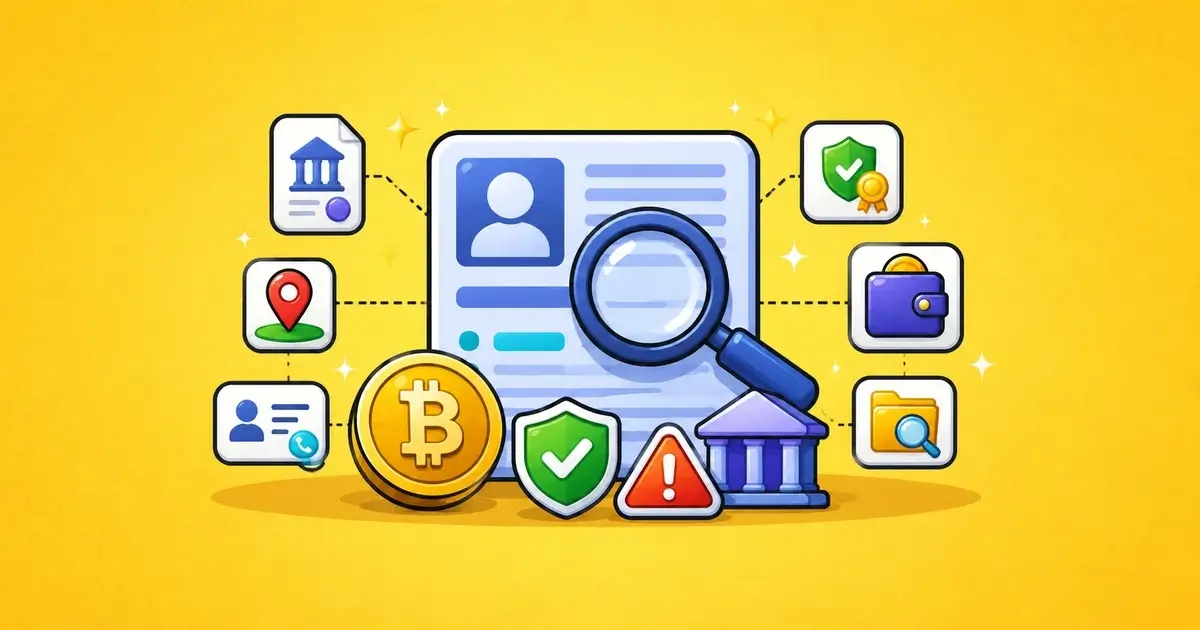
A crypto platform’s brand name is not always the legal company behind it.
The website may use one name in the logo, another name in the terms, another company in the privacy policy, a different licence holder, and a separate payment processor for deposits or withdrawals.
Sometimes that is normal. Many platforms use brands, parent companies, subsidiaries, payment providers, and outsourced support.
But the relationship should be clear.
If a platform holds user funds, processes withdrawals, requests KYC documents, offers casino play, handles crypto payments, or asks users to deposit more money, users should be able to identify who operates it.
This guide explains how to check who owns or operates a crypto platform, where to find legal company details, which mismatches matter, and which warning signs should make you pause.
Related safety pages include How to Check a Crypto Platform, Crypto Platform Licence: How to Check, Crypto Platform Warning Signs to Check, Fake Crypto Platforms: Warning Signs, and Editorial Policy.
Key Takeaways
- A brand name is not always the legal operator
- Check the terms, privacy policy, footer, licence page, and payment terms
- The operator name should match or be clearly connected across legal pages
- A licence badge does not prove ownership by itself
- The exact website domain should be covered by the licence or explained clearly
- Platforms that hide ownership, use copied terms, or rely only on private chat deserve caution
- Ownership details matter most when withdrawals, KYC, account restrictions, or disputes begin
- Do not send documents, passwords, seed phrases, or authentication codes to unverified support channels
Why Platform Ownership Matters
Platform ownership matters because the operator is usually the company responsible for rules, funds, support, privacy, KYC, complaints, and withdrawals.
If something goes wrong, the brand name alone may not help.
You need to know:
- who operates the platform
- who users contract with
- who holds or processes funds
- who handles KYC data
- which jurisdiction applies
- which licence or registration is claimed
- where complaints should be sent
- whether support is official
This is especially important for exchanges, crypto casinos, betting platforms, wallets, payment processors, investment-style platforms, and trading dashboards.
A platform that handles money should not make ownership hard to find.
Brand Name vs Legal Operator
The brand is the name users see.
The legal operator is the company behind the service.
They are not always the same.
Ownership Details to Separate
| Detail | What It Means | What to Check |
|---|---|---|
| Brand name | The public-facing name users recognize | Do not assume it is the legal company |
| Legal operator | The company users may be contracting with | Check the terms, footer, privacy policy, and licence page |
| Registered entity | The company listed in a business registry or licence record | Compare it with the operator named on the website |
| Jurisdiction | Where the company claims to be registered or licensed | Check what protection or supervision that place offers |
| Contact details | How users can reach the operator | Look for official email, address, support route, and complaint process |
For example, a platform may advertise under one brand name but be operated by a company registered elsewhere.
That can be fine if it is explained clearly.
It becomes a problem when the website hides the operator, uses different names without explanation, or shows a licence that belongs to another company or domain.
Where to Find the Operator Name
Do not look only at the homepage.
The operator is often buried in legal or footer pages.
Where to Check Platform Ownership
| Source | What It May Show | How to Use It |
|---|---|---|
| Terms and conditions | Usually names the legal operator and user agreement | Search for “operated by,” “company,” “we,” or “contracting entity” |
| Privacy policy | Shows who handles user data | Check whether the same company name appears |
| Footer | Often lists licence, operator, address, or copyright details | Compare it with the terms |
| Licence page | May show the registered company and covered domain | Verify the licence through the official source |
| Payment or withdrawal terms | May reveal the payment processor or merchant entity | Check whether funds are handled by another company |
Useful search terms inside legal pages include:
- operated by
- owned by
- company
- contracting entity
- service provider
- merchant
- licence holder
- registered office
- payment processor
- data controller
- controller
- operator
- we/us/our
If the platform has no terms, no privacy policy, no company name, and no contact details, that is a weak trust signal.
TrendCrypt Research Notes: Ownership Checks
Ownership research is not about finding one name and stopping there.
A platform can involve several connected names.
TrendCrypt Research Notes
| Research Note | Why It Matters |
|---|---|
| One name is not enough | A platform may use a brand, operator, payment company, and licence holder |
| Consistency matters | The same company details should appear across terms, privacy, licence, and footer |
| Domain coverage matters | A real licence record may still not cover the exact website you are using |
| Contact route matters | A platform handling money should not rely only on anonymous private chat |
| Ownership affects disputes | If funds are held or withdrawals blocked, the operator name becomes important |
When TrendCrypt checks a platform, we do not treat a brand logo as ownership proof.
We look for consistency across the public record.
The key question is simple:
Can a normal user identify the company responsible before depositing or uploading documents?
If the answer is no, the platform needs closer review.
Check the Terms and Conditions
The terms and conditions are usually the best first place to check.
Look for the company users are agreeing with.
Useful sections may include:
- introduction
- definitions
- account rules
- company information
- governing law
- disputes
- withdrawals
- KYC
- restricted countries
- bonus terms
- contact details
The operator name should be clear.
If the terms only say “the company” or “the platform” without naming the legal entity, that is weak.
If the terms name a company, compare it with the footer, privacy policy, licence claim, and payment terms.
A mismatch is not always bad, but it needs explanation.
Check the Privacy Policy
The privacy policy can reveal who handles personal data.
This matters because crypto platforms may request sensitive information during KYC, account reviews, withdrawals, or source-of-funds checks.
Look for:
- data controller
- legal company name
- company address
- privacy contact
- third-party KYC providers
- data-sharing rules
- retention period
- user rights
- complaint contact
If the privacy policy names a different company than the terms, check whether the relationship is explained.
If a platform asks for KYC documents but does not clearly identify who receives and stores the data, be cautious.
Read Crypto Platform KYC Rules: What to Check for a deeper privacy and verification checklist.
Check the Footer
The footer can be useful, but it should not be trusted alone.
A footer may show:
- company name
- licence number
- registration number
- address
- copyright line
- support email
- social links
- restricted-country warning
- responsible gambling details
- payment provider names
Compare footer details with the legal pages.
If the footer says one company and the terms say another, search for a connection.
If no connection is explained, save the mismatch as a warning sign.
Check Licence and Registration Claims
A licence can help identify the legal operator, but it must be verified.
Check:
- licence number
- operator name
- licence holder
- status
- jurisdiction
- covered activity
- covered domain
- issue date
- expiry date
- regulator or authority website
Do not trust only a badge.
A licence badge can be copied.
A real licence can also belong to another website, another brand, or a related company that does not clearly cover the platform you are using.
For a full checklist, read Crypto Platform Licence: How to Check.
Check Whether the Domain Is Covered
Domain coverage is easy to miss.
A licence or company page may mention one domain, while the user is using another.
Be careful with:
- mirror domains
- regional domains
- old domains
- app-only domains
- short domains
- copied brand domains
- domains sent by support
- domains from sponsored ads
- domains with extra words or misspellings
If a licence or operator record does not mention the exact domain, check whether the platform explains the relationship.
Do not assume a similar brand name is enough.
Mismatched Company Names
Different company names can be normal in some cases.
A brand may be owned by one company, operated by another, licensed by another, and use a separate payment processor.
But users should not have to guess.
Company Name Mismatches to Check
| Mismatch | What It Could Mean | What to Do |
|---|---|---|
| Brand and operator differ | This can be normal if a brand is owned by a company | Look for a clear explanation |
| Terms name one company, footer names another | The legal structure may be unclear | Check whether both are connected |
| Licence belongs to a different domain | The licence may not cover the site you are using | Verify the exact domain in the licence record |
| Support uses a different domain | Could be outsourced support or fake support | Use links from the official website only |
| Payment recipient differs | A processor or related entity may handle funds | Check whether this is disclosed in the terms |
A clear platform explains its structure.
A risky platform may use confusion to borrow trust from another company or avoid accountability.
Check Contact Details
Contact details matter because disputes need a real route.
Look for:
- official support email
- support ticket system
- contact form
- business address
- privacy contact
- complaint email
- licence or regulator complaint route
- official social links
- security or abuse contact
Be careful if contact is limited to:
- Telegram only
- WhatsApp only
- private DMs
- anonymous chat widget
- changing usernames
- support accounts that contact you first
- no official email domain
Private chat can be useful for quick support, but it should not be the only contact route for a platform holding user funds or documents.
Hidden Ownership Warning Signs
Some ownership problems should slow you down.
Platform Ownership Warning Signs
| Warning Sign | Why It Matters | What to Do |
|---|---|---|
| No legal company name | Users may not know who holds funds or handles disputes | Treat as a weak trust signal |
| Copied legal pages | The platform may have reused another site’s documents | Search exact phrases from the terms |
| Unverifiable licence claim | A badge or logo may be copied or outdated | Search the official licence authority directly |
| Only private chat contact | Support may be hard to verify or impersonate | Avoid sending funds or documents through DMs |
| Operator hidden until withdrawal | Important rules may appear only after funds are deposited | Read all legal and payment pages before use |
Hidden ownership becomes more serious when combined with other issues:
- withdrawal delays
- KYC only after deposit
- copied licence claims
- fake support links
- pressure to deposit more
- unclear bonus terms
- unresolved public complaints
- private wallet fee requests
One weak detail may need context.
Several weak details together are a stronger warning.
Copied Terms and Legal Pages
Some risky platforms copy terms from other websites.
This can make the platform look more professional than it is.
You can check by copying a unique sentence from the terms and searching it in quotes.
Look for:
- another platform name left inside the text
- wrong company name
- wrong jurisdiction
- broken links
- copied privacy policy
- copied responsible gambling text
- copied licence wording
- inconsistent dates
- contact email from another domain
Copied legal text does not automatically prove theft or fraud.
But if a platform handles money and cannot produce its own consistent legal pages, that is a trust problem.
Payment Processor and Merchant Names
Sometimes the company receiving payments is not the same as the brand.
A payment processor may appear in:
- payment page
- card statement
- crypto invoice
- withdrawal page
- terms
- support message
- receipt
- email confirmation
This can be normal.
But it should be explained.
If a platform tells users to send funds to a private wallet address controlled by a person, agent, or “manager,” treat that very carefully.
Official payment routes should be inside the platform interface or clearly documented.
If support asks for extra crypto to unlock withdrawals, read Crypto Platform Warning Signs to Check.
Public Complaints About Ownership
Search for complaints that mention ownership, company names, licence claims, support contact, or payment processors.
Useful searches include:
[platform name] operator[platform name] owner[platform name] company[platform name] licence[platform name] withdrawal complaint[platform name] KYC complaint[platform domain] complaints[company name] complaints[licence number] platform
Read complaints carefully.
A complaint is not proof by itself. Look for evidence, dates, platform replies, and repeated patterns.
Read Crypto Platform Complaints: How to Check for a full method.
What If You Cannot Find the Operator?
If you cannot identify the operator, pause before depositing.
Ask:
- Does the platform hold user funds?
- Does it request KYC?
- Does it process withdrawals?
- Does it offer casino or betting products?
- Does it claim a licence?
- Does it have public complaints?
- Does it provide official support?
- Can users file disputes?
- Are fees and account rules clear?
If the platform is only an informational website, hidden ownership may be less urgent.
If the platform asks users to deposit crypto, connect wallets, trade, gamble, or upload documents, hidden ownership matters much more.
Before Depositing or Uploading Documents
Before using a crypto platform, check:
- legal operator
- brand name
- domain
- licence claim
- jurisdiction
- terms and conditions
- privacy policy
- support route
- payment processor
- withdrawal rules
- KYC rules
- complaint history
- social links
- public reputation
If these details are missing or inconsistent, do not ignore it.
A platform that is clear before deposit is easier to judge than one that only explains rules after funds are locked.
Mistakes to Avoid
Ownership checks are simple, but users often skip them.
Mistakes to Avoid When Checking Platform Ownership
| Mistake | Why It Can Mislead You |
|---|---|
| Trusting only the logo | A professional brand name does not prove who operates the platform |
| Skipping the terms | The operator is often hidden in legal text, not the homepage |
| Ignoring company-name mismatches | Different names need a clear explanation |
| Assuming a licence badge proves ownership | A badge can be copied or linked to another operator |
| Sending documents to unverified support | Fake support can collect KYC data or account access |
The biggest mistake is trusting the brand name alone.
A brand is marketing.
The operator is accountability.
How TrendCrypt Reviews Platform Ownership
TrendCrypt treats ownership transparency as a major platform-safety signal.
We look at:
- whether the legal operator is named
- whether company details are consistent
- whether licence claims are verifiable
- whether the domain is covered
- whether contact routes are official
- whether privacy and KYC policies name a responsible company
- whether public complaints mention ownership confusion
- whether support gives clear answers
- whether users can understand who controls funds and account decisions
A platform does not need to expose every internal business detail.
But it should identify the company users are dealing with.
For more detail, read How We Review and Editorial Policy.
Report Hidden or Suspicious Ownership
If you found hidden ownership, mismatched company names, copied legal pages, fake licence claims, suspicious payment recipients, unclear contact details, or repeated complaint patterns, you can send a redacted report to [email protected].
Useful details may include:
- platform URL
- brand name
- operator name shown
- licence number
- screenshots of footer, terms, and privacy policy
- payment or withdrawal screenshots
- support messages
- complaint links
- dates and times
- a short timeline
Do not send seed phrases, private keys, wallet passwords, authentication codes, full identity documents, or anything that could give access to your wallet or accounts.
TrendCrypt can review patterns and publish safety warnings, but we cannot access accounts, reverse blockchain transactions, recover funds, force withdrawals, remove websites, verify identity documents, or guarantee platform action.
Final Thoughts
A crypto platform’s name is not always the company behind it.
That matters.
When money, documents, withdrawals, bonuses, wallet connections, or account restrictions are involved, users need to know who they are dealing with.
Check the operator. Check the terms. Check the privacy policy. Check the licence. Check the domain. Check contact details. Check whether the same company name appears consistently.
If the platform is clear, it becomes easier to judge.
If the platform hides ownership or uses mismatched details, slow down before depositing.
A brand can be copied.
A legal operator should be verifiable.
FAQ
Is a brand name the same as the legal operator?
Not always. The brand is the public name. The legal operator is the company users may be contracting with. Check the terms, footer, privacy policy, and licence page.
Where can I find who operates a crypto platform?
Look in the terms and conditions, privacy policy, footer, licence page, payment terms, contact page, and official company records where available.
Is it bad if the brand and company name are different?
Not automatically. Many platforms use brand names operated by legal companies. The relationship should be explained clearly.
Why does jurisdiction matter?
Jurisdiction can affect licensing, disputes, privacy, consumer protection, and legal obligations. It helps users understand which rules may apply.
Can a licence badge prove who owns a platform?
No. A badge can be copied or outdated. Verify the licence number, operator name, domain, status, and covered activity through the official source.
What if the platform has no company name?
That is a weak trust signal, especially if the platform holds funds, requests KYC, or controls withdrawals. Be careful before depositing.
Should I trust support if it only uses Telegram or WhatsApp?
Be cautious. Private chat can be impersonated. A platform handling funds should have official support routes from its website.
Can TrendCrypt verify ownership for every platform?
No. TrendCrypt can review public signals and publish safety research, but we cannot guarantee ownership claims, access private company records, or force a platform to respond.
Unexpected KYC During Withdrawal: What to Check
Learn what to check when a crypto platform or crypto casino asks for KYC during withdrawal, including verification timing, requested documents, privacy rules, support channels, and payout status.
Crypto Casino and Betting Scams: Warning Signs
Learn how crypto casino and betting scams use unclear ownership, fake bonuses, cloned sites, withdrawal release fees, private support messages, fake KYC links, and wallet-drainer tactics.
Fake Crypto Support Scams: Warning Signs
Learn how fake crypto support accounts target users after wallet, withdrawal, deposit, KYC, or account problems by pretending to represent platforms, exchanges, casinos, wallets, or recovery teams.