
TrendCrypt Guide
Hot Wallet vs Cold Wallet: How to Choose
Compare hot wallets, hardware wallets, exchange accounts, and multisignature wallets so you can choose the right crypto wallet for daily use, long-term storage, trading, and platform payments.
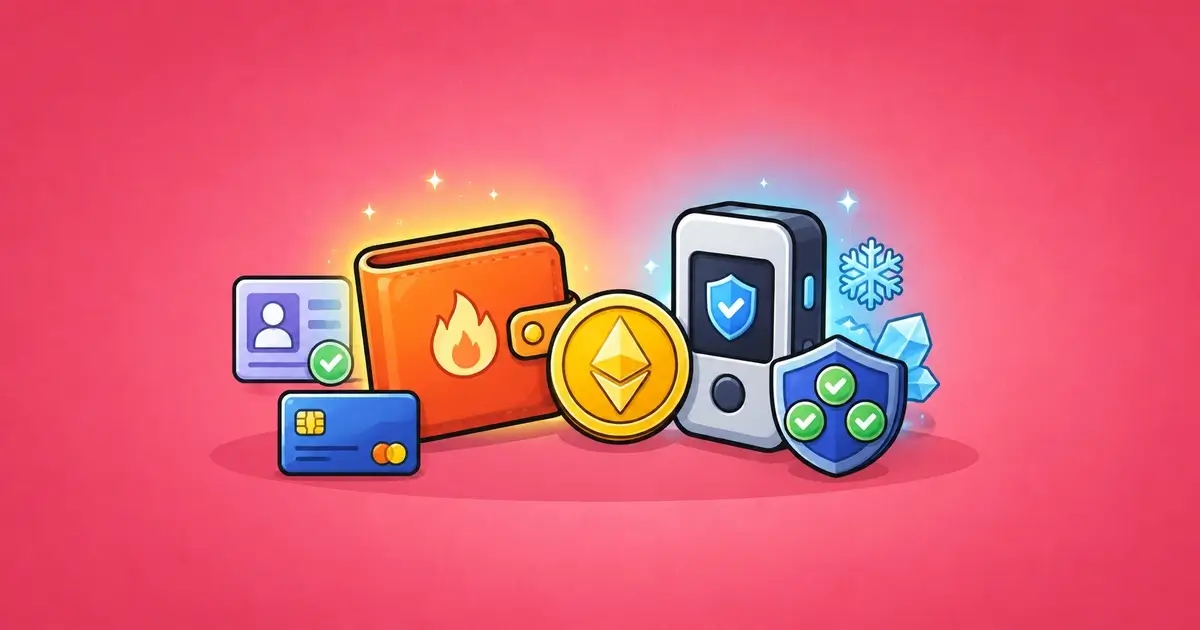
Choosing a crypto wallet is not only about picking the most popular app.
Different wallets solve different problems.
A hot wallet is convenient for daily use, DeFi, games, payments, and small balances. A hardware wallet is better for reducing online exposure. An exchange account can be useful for trading, but it is not the same as self-custody. A multisignature wallet can protect shared or higher-value funds, but it takes more planning.
There is no single best wallet for every situation.
The safer question is: what is this wallet for?
This guide compares hot wallets, cold wallets, exchange accounts, and multisignature wallets so you can choose the right setup for daily spending, long-term storage, crypto payments, casino deposits, trading, and wallet safety.
Related safety pages include Wallet Safety, Wallet Approvals: How to Check and Revoke, Crypto Wallet Signatures Explained, Crypto Wallet Phishing Scams: Warning Signs, and Editorial Policy.
Key Takeaways
- A hot wallet is convenient, but it faces more phishing, approval, and signing risk
- A hardware wallet can reduce online exposure, but seed phrase safety still matters
- An exchange account is custodial, meaning the platform controls withdrawals and account access
- A multisignature wallet can reduce single-person risk, but setup and recovery are more complex
- The safest wallet setup often uses more than one wallet for different purposes
- Do not use the same wallet for long-term storage and risky app testing
- Never store seed phrases in screenshots, cloud notes, chats, or email drafts
- Start with small test transactions when using a new wallet, network, or platform
What Is a Crypto Wallet?
A crypto wallet is a tool for managing blockchain addresses and signing transactions.
The wallet may help you:
- receive crypto
- send crypto
- connect to apps
- approve token spending
- sign messages
- use DeFi
- use crypto casinos or payment platforms
- manage NFTs
- interact with smart contracts
- store long-term funds
A wallet does not usually “hold coins” in the same way a physical wallet holds cash.
The assets are recorded on the blockchain. The wallet controls the keys or signing access that can move those assets.
That is why wallet choice matters.
The wrong setup can expose too much to one device, one app, one platform, or one mistake.
Main Wallet Types
Start with the basic wallet types.
Common Crypto Wallet Types
| Wallet Type | What It Means | Best Fit |
|---|---|---|
| Hot wallet | A wallet connected to the internet, often as a browser extension or mobile app | Daily use, small balances, DeFi, games, payments, and testing |
| Hardware wallet | A device that keeps keys offline and signs transactions through the device | Longer-term storage and larger balances |
| Exchange account | A custodial account where the platform controls the wallet infrastructure | Trading, fast conversions, and temporary balances |
| Multisignature wallet | A wallet that requires more than one approval to move funds | Teams, treasuries, shared funds, and high-value storage |
| Paper or offline backup | A written or offline record of recovery information | Backup only, not daily spending |
These types can overlap.
For example, a hardware wallet may connect through a wallet app. A multisig wallet may use hardware wallets as signers. An exchange account may show deposit addresses, but the user does not control the private keys behind them.
The details matter.
Hot Wallets
A hot wallet is connected to the internet.
It may be:
- a browser extension
- a mobile wallet
- a desktop wallet
- an app wallet
- a wallet connected to DeFi, games, or payment platforms
Hot wallets are useful because they are fast and convenient.
They are often used for:
- small payments
- DeFi activity
- swaps
- bridges
- crypto casino deposits
- NFT mints
- test wallets
- airdrop checks
- daily spending
The risk is that hot wallets are exposed to more interaction.
They may connect to websites, sign messages, approve token access, and run on devices that also use browsers, extensions, downloads, and messaging apps.
A hot wallet is not automatically unsafe.
But it should not usually be the place where all long-term funds are stored.
Cold Wallets and Hardware Wallets
A cold wallet usually means keys are kept offline or away from normal internet-connected signing activity.
A hardware wallet is a common cold-storage tool.
It keeps the private key inside a separate device and signs transactions through that device. This can reduce risk from browser malware, fake wallet extensions, or infected computers.
Hardware wallets are useful for:
- long-term storage
- larger balances
- savings wallets
- treasury wallets
- reducing daily signing exposure
- separating storage from app activity
But hardware wallets are not magic.
They still require careful use.
Risk can still come from:
- entering the seed phrase into a website
- storing recovery words in cloud notes
- buying a tampered device
- approving a malicious transaction
- blind signing without understanding the prompt
- losing the recovery phrase
- failing to test recovery safely
A hardware wallet protects keys better than a normal hot wallet, but the user still has to protect the recovery phrase and read signing prompts.
Exchange Accounts
An exchange account is not the same as a self-custody wallet.
When funds are held on an exchange, casino, broker, or custodial platform, the platform controls the wallet infrastructure. The user controls an account with login access, not the private keys directly.
Exchange accounts can be useful for:
- trading
- buying and selling crypto
- fiat conversions
- fast swaps
- temporary balances
- withdrawals to personal wallets
But they carry platform risk.
Withdrawals can be affected by:
- KYC
- account restrictions
- withdrawal limits
- platform outages
- regulatory changes
- security reviews
- supported network rules
- internal risk controls
- platform failure
A strong password and 2FA help, but they do not remove custodial risk.
If the platform freezes withdrawals, the user cannot bypass that with a seed phrase because they do not control the platform wallet.
Read Crypto Platform KYC Rules: What to Check and Crypto Platform Warning Signs to Check before treating a platform account as a storage wallet.
Multisignature Wallets
A multisignature wallet, often called multisig, requires more than one approval before funds can move.
For example, a wallet may require two out of three signers.
This can be useful for:
- teams
- families
- business funds
- project treasuries
- higher-value storage
- reducing single-device risk
- reducing one-person control
Multisig can make theft or mistakes harder, because one compromised signer may not be enough to move funds.
But multisig is more complex.
You need to think about:
- who the signers are
- how many signatures are required
- where recovery information is stored
- what happens if one signer is unavailable
- what happens if a signer dies or loses access
- which networks and wallets are supported
- whether the setup has been tested with small amounts
A poorly planned multisig can lock funds just as badly as a stolen seed phrase can expose them.
Use multisig only when you understand the recovery and signing process.
Which Wallet Fits Which Use Case?
A good wallet setup depends on the job.
Wallet Type by Use Case
| Use Case | Likely Better Fit | Why |
|---|---|---|
| Daily payments | Hot wallet | Keep only what you need for normal activity |
| Long-term holding | Hardware wallet or multisig | Reduce exposure to phishing, browser risks, and daily signing mistakes |
| Trading often | Exchange account plus separate storage wallet | Do not keep all funds on the exchange if not needed |
| Testing new apps | Separate hot wallet | Avoid using the same wallet that holds important funds |
| Shared funds | Multisignature wallet | Avoid one person having full control alone |
Many users should not choose one wallet.
They should separate wallets by purpose.
For example:
- one wallet for long-term storage
- one wallet for daily payments
- one wallet for testing new apps
- one wallet for casino or platform deposits
- one exchange account for trading only when needed
This reduces the damage if one wallet signs something risky.
Wallet Risks to Compare
Every wallet type has trade-offs.
Wallet Type Risks
| Risk Area | What Can Go Wrong | How to Reduce It |
|---|---|---|
| Hot wallet risk | Phishing, malicious approvals, browser extensions, device malware, rushed signatures | Use small balances and review approvals |
| Hardware wallet risk | Seed phrase loss, fake device setup, blind signing, unsafe backups | Buy from trusted sources and protect recovery words |
| Exchange account risk | Platform failure, withdrawal freezes, KYC issues, account restrictions, hacks | Use strong security and avoid unnecessary long-term balances |
| Multisig risk | Setup complexity, lost signer access, unclear recovery plan | Document the setup and test recovery safely |
| Backup risk | Lost, stolen, photographed, or cloud-synced seed phrase | Store offline and never share recovery words |
A hot wallet gives convenience.
A hardware wallet gives stronger key separation.
An exchange gives easy trading but less control.
A multisig gives shared control but more complexity.
There is no free option with zero risk.
The goal is to match the wallet to the risk.
What to Check Before Choosing a Wallet
Before choosing a wallet, answer a few practical questions.
Questions Before Choosing a Crypto Wallet
| Question | Why It Matters | Safer Approach |
|---|---|---|
| Who controls the keys? | Shows whether you or a platform controls access | Self-custody means more control and more responsibility |
| How often will it be used? | Daily wallets face more signing risk | Separate daily-use funds from long-term funds |
| How much value is stored? | Higher balances need stronger protection | Do not expose large funds to experimental apps |
| What networks are needed? | Different wallets support different chains and tokens | Check support before sending funds |
| What happens if access is lost? | Recovery planning matters before a mistake happens | Backup safely and test small transactions first |
Also check:
- supported networks
- supported tokens
- backup process
- recovery process
- hardware wallet support
- multisig support
- transaction preview quality
- approval visibility
- open-source status, if relevant
- reputation and complaint history
- official download links
- phishing risk around fake apps
Do not install wallet apps from random links, ads, DMs, or fake support messages.
Use official websites, official app stores, and verified project links.
Why One Wallet for Everything Is Risky
Using one wallet for everything is convenient, but risky.
The same wallet may be used for:
- long-term holdings
- swaps
- airdrops
- games
- NFTs
- casino deposits
- mints
- bridges
- unfamiliar apps
- test transactions
That creates one point of failure.
One phishing page, fake airdrop, malicious approval, or rushed signature can affect assets that were never meant to be exposed.
A safer setup is separation.
Keep meaningful long-term funds away from wallets used for high-risk activity.
Use a small-balance wallet for testing.
Use a hardware wallet or better-protected setup for storage.
Wallets for Crypto Casino and Platform Payments
If you use crypto platforms, casinos, or payment services, wallet separation matters.
A casino or platform deposit wallet should not necessarily be the same wallet used for long-term storage.
Before sending funds to a platform, check:
- supported asset
- supported network
- deposit address
- memo, tag, or payment ID
- minimum deposit
- withdrawal options
- KYC rules
- withdrawal fees
- account restriction rules
- platform complaint history
A wallet can send funds correctly, but the platform may still have internal rules around crediting, withdrawals, and verification.
Read How to Read a Crypto Transaction and Crypto Deposit Not Showing? What to Check if a platform payment does not appear.
Wallets for DeFi, Mints, and Airdrops
DeFi apps, NFT mints, token claims, and airdrops involve more signing risk.
They may ask for:
- wallet connections
- token approvals
- NFT approvals
- permit signatures
- contract interactions
- bridge approvals
- message signatures
Some are legitimate.
Some are wallet drainers.
Use a separate wallet for this activity.
Do not use a wallet that holds long-term funds for unknown claims, free mints, social links, or test apps.
Read Crypto Wallet Drainers Explained before interacting with unfamiliar claim pages.
Seed Phrase and Backup Safety
The wallet type does not matter if the seed phrase is exposed.
A seed phrase can restore the wallet.
Anyone with it may be able to control the wallet.
Do not store recovery words in:
- screenshots
- cloud notes
- email drafts
- chat messages
- browser password managers
- photos
- shared documents
- online forms
- support tickets
Do not send seed phrases to support.
Do not type them into websites.
Do not enter them into “wallet verification,” “recovery,” “sync,” or “airdrop” pages.
A hardware wallet with a leaked seed phrase is not safe.
A hot wallet with a well-protected seed phrase is still exposed to daily signing risk, but the seed phrase itself must remain private.
Read Crypto Wallet Phishing Scams: Warning Signs for common seed phrase traps.
Hardware Wallet Buying and Setup
If you choose a hardware wallet, buy carefully.
Check:
- official manufacturer website
- trusted reseller list
- sealed packaging
- device initialization process
- recovery phrase generated by the device
- firmware update process
- official setup guide
- fake support warnings
- recovery test with small funds
Be careful if the device arrives with a pre-written seed phrase.
A new wallet seed should be generated during setup, not supplied in the box.
Never type the hardware wallet recovery phrase into a website or support form.
Mistakes to Avoid
Wallet mistakes often happen because users mix convenience with storage.
Mistakes to Avoid When Choosing a Wallet
| Mistake | Why It Can Hurt You |
|---|---|
| Using one wallet for everything | One bad signature can expose too much |
| Keeping long-term funds in a browser wallet | Daily-use wallets face more phishing and approval risk |
| Treating exchanges like personal wallets | The platform controls withdrawals and account access |
| Storing seed phrases in screenshots or cloud notes | Cloud or device compromise can expose the wallet |
| Testing new apps with a main wallet | Fake claims, mints, and games can request risky approvals |
The most common mistake is using a main wallet for everything.
A main wallet should not be the same wallet used for unknown links, claims, games, or experiments.
A Simple Wallet Setup for Many Users
A practical setup may look like this:
- exchange account for buying, selling, or trading when needed
- hot wallet for daily crypto activity and small balances
- test wallet for unfamiliar apps, claims, games, mints, or casinos
- hardware wallet for long-term funds
- multisig for shared or higher-value funds, if needed
This is only a general model.
The right setup depends on your experience, funds, networks, devices, and risk tolerance.
Start simple.
Test with small amounts.
Do not move large balances into a setup you do not understand.
If You Already Used the Wrong Wallet
If you used your main wallet on a risky website, do not panic, but do check it.
Review:
- connected sites
- token approvals
- NFT approvals
- recent signatures
- recent transactions
- unknown contract interactions
- assets on other networks
- wallet security settings
- browser extensions
If you signed an approval, review and revoke suspicious permissions.
If you entered a seed phrase, treat the wallet as compromised.
Read Compromised Crypto Wallet: What to Do if you notice unknown activity or believe the wallet is unsafe.
Report Wallet Safety Concerns
If you found a fake wallet app, suspicious wallet download, phishing link, wallet-drainer page, fake hardware wallet listing, copied wallet website, or unsafe support message, you can send a redacted report to [email protected].
Useful details may include:
- website URL
- app link
- screenshots
- wallet address
- transaction hash
- contract address
- support username
- social media account
- a short timeline
Do not send seed phrases, private keys, wallet passwords, authentication codes, full identity documents, or anything that could give access to your wallet or accounts.
TrendCrypt can review patterns and publish safety warnings, but we cannot access wallets, reverse blockchain transactions, recover funds, choose wallets for you, or guarantee action from any provider.
Final Thoughts
The right wallet depends on the job.
A hot wallet is useful for daily activity, but it should not hold everything.
A hardware wallet is stronger for storage, but it still depends on safe backups and careful signing.
An exchange account is convenient for trading, but the platform controls access and withdrawals.
A multisig wallet can protect shared or larger funds, but it requires planning.
The safer approach is separation.
Use different wallets for different risks. Keep long-term funds away from daily signing. Use small test transactions. Protect recovery phrases offline. Avoid wallet links from ads, DMs, and fake support.
A wallet is not only a tool.
It is part of your risk setup.
FAQ
What is the difference between a hot wallet and a cold wallet?
A hot wallet is connected to the internet and is useful for daily activity. A cold wallet keeps keys offline or away from normal online signing, making it better for longer-term storage.
Is a hardware wallet always safe?
No wallet is always safe. A hardware wallet can reduce key exposure, but users still need to protect the seed phrase, avoid fake setup pages, and read transaction prompts carefully.
Is an exchange account a wallet?
It can function like a wallet for deposits and withdrawals, but it is custodial. The platform controls the wallet infrastructure and can apply withdrawal limits, KYC, or account restrictions.
Should I use one wallet for everything?
Usually no. Using one wallet for storage, trading, claims, games, casinos, and DeFi increases risk. Separate wallets reduce the damage from one bad signature or approval.
What wallet should I use for long-term storage?
Many users prefer a hardware wallet or multisignature setup for larger long-term balances. The right choice depends on experience, recovery planning, and the value being protected.
What wallet should I use for airdrops or new apps?
Use a separate small-balance wallet. Do not use a main storage wallet for unfamiliar claims, mints, games, or apps.
Where should I store my seed phrase?
Store it offline in a safe place. Do not keep it in screenshots, cloud notes, emails, chats, online documents, or support tickets.
Can TrendCrypt choose a wallet for me?
No. TrendCrypt provides educational wallet-safety information, but we do not choose wallets for users, manage funds, recover wallets, or provide personal financial or security advice.
Unexpected KYC During Withdrawal: What to Check
Learn what to check when a crypto platform or crypto casino asks for KYC during withdrawal, including verification timing, requested documents, privacy rules, support channels, and payout status.
Crypto Casino and Betting Scams: Warning Signs
Learn how crypto casino and betting scams use unclear ownership, fake bonuses, cloned sites, withdrawal release fees, private support messages, fake KYC links, and wallet-drainer tactics.
Fake Crypto Support Scams: Warning Signs
Learn how fake crypto support accounts target users after wallet, withdrawal, deposit, KYC, or account problems by pretending to represent platforms, exchanges, casinos, wallets, or recovery teams.